
A new hope with amazing results
Post Traumatic Stress Disorder (PTSD) develops in some people when they experience a scary, shocking or dangerous event. It can have long-term effects including flashbacks, sleeping complications, and anxiety. Events such as accidents, wars, fires, crimes, death or separation of a loved one, or any form of abuse can result in PTSD.
It is natural to feel frightened during and after a distressing state of affairs. The human body is made so that it can adapt to many split-second changes which is often the most common reaction to a sudden fear. The “fight-or-flight” response is the reflex that works in a person when faced with anything troublesome. Generally, most of us can recover from the initial symptoms naturally. Those who continue to experience aftermaths may have PTSD. People who have PTSD often continue feeling frightened or stressed, even when they are not in danger.
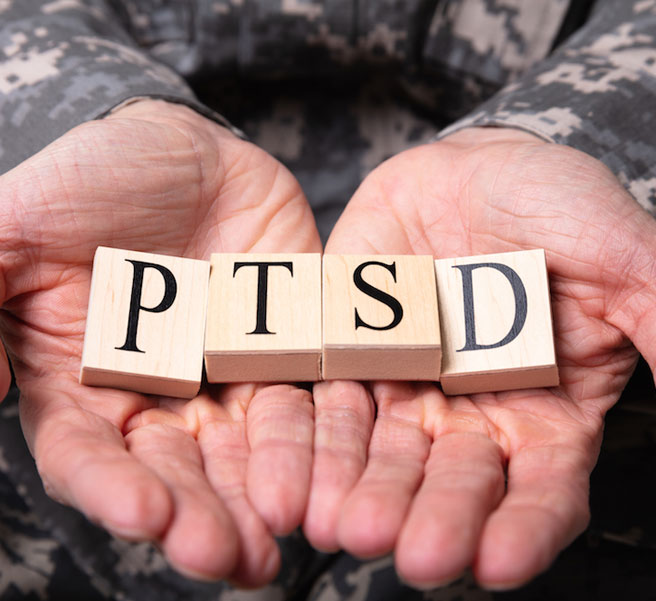
Symptoms of PTSD usually fall into four main categories and last more than one month, causing distress or problems in daily life.
Intrusive symptoms (re-experiencing)
Avoidance
Negative changes in thoughts and mood
Changes in arousal and reactivity (hyperarousal)
In children and teens
Symptoms may also include:
TMS Center gives special attention to the military people, their families and veterans. It is heartbreaking to see these great people suffering from PTSD from all the tension they had to take on during their service. Studies show more than 30% of the military/veterans suffer from this disorder and are not likely to seek help. We are here for you. TMS Center has Deep TMS™ and Swift Deep TMS™ to support those that have served.