
Nothing is wrong with them. Depression and anxiety are biologically complex, and medication response varies widely from person to person. According to NIMH's STAR*D trial, about a third of participants reached remission on their first medication, with another 10-15% responding without full remission. That leaves a lot of people still searching.
This guide covers non-medication paths that actually have evidence behind them: Deep TMS™, neurofeedback, ketamine, and lifestyle interventions that support (not replace) clinical treatment.
Key Takeaways
- Roughly two-thirds of patients don't reach remission on their first antidepressant, making alternatives worth exploring early
- FDA-approved Deep TMS™ offers non-invasive, medication-free relief for treatment-resistant depression
- Combining brain-based treatments with sleep, diet, and exercise changes produces the strongest long-term results
- Anxiety and treatment-resistant depression are diagnosable conditions that specialized clinics can treat with targeted, non-medication care
Understanding Treatment-Resistant Depression and Why Alternatives Matter
Treatment-resistant depression means depression that hasn't improved after two or more adequate medication trials at the correct dose and duration, typically 4-6 weeks each. It's not rare. Research suggests at least 30% of people with depression meet this definition.
Why do standard antidepressants fail so often?
- Wrong medication or dose for that individual's brain chemistry
- Side effects severe enough to stop treatment before it works
- Biological variability — no two brains respond identically to the same drug
- Pseudo-resistance — the trial wasn't long enough or consistent enough to count as adequate

When medication falls short, severity and pattern matter for what comes next.
Mild, Moderate, Severe — and "Breakthrough" Depression
Clinicians measure depression severity by symptom count, intensity, and how much daily function is affected. Severe cases often include suicidality, anhedonia, or persistent worthlessness that moderate depression doesn't show as strongly.
There's also "breakthrough depression" — symptoms that resurface despite ongoing treatment. Clinical literature puts breakthrough rates somewhere between 10% and 30%, which is why medication alone can leave gaps.
Signs You May Need to Explore Alternatives
- No improvement after two or more different medications
- Side effects that feel worse than the depression itself
- Symptoms that worsen, rather than ease, over time
- A clear preference to avoid long-term daily medication
If any of these sound familiar, talk with a provider who specializes in interventional options—such as TMS or neurofeedback—rather than another round of prescription adjustments alone.
Deep TMS™: A Leading Non-Medication Option
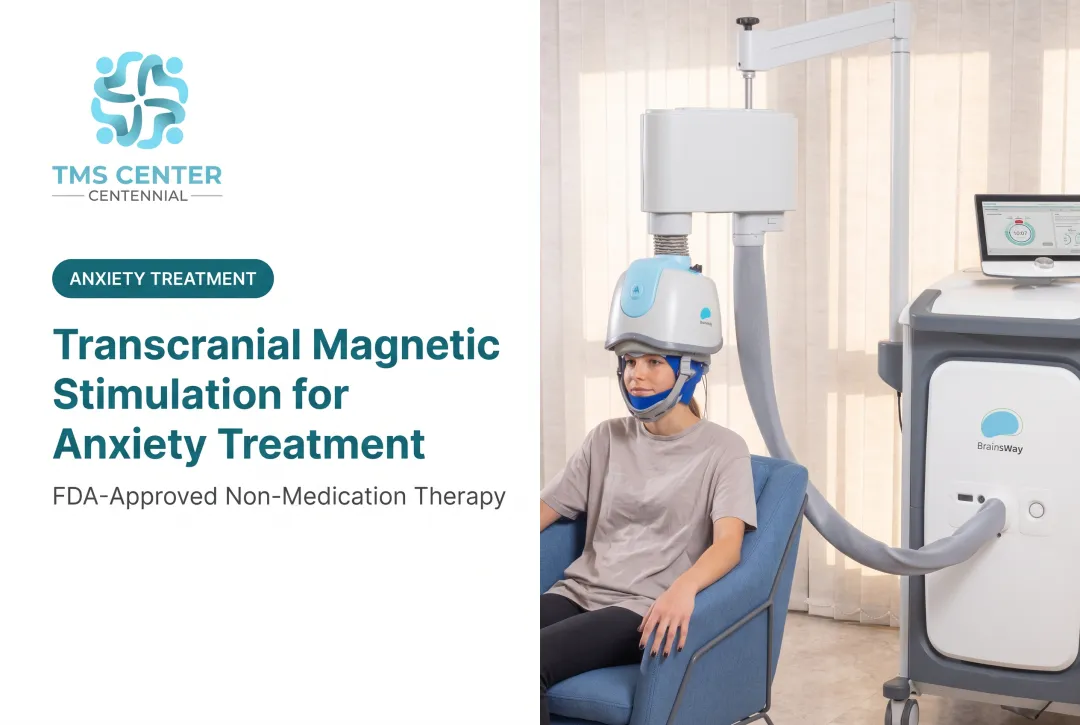
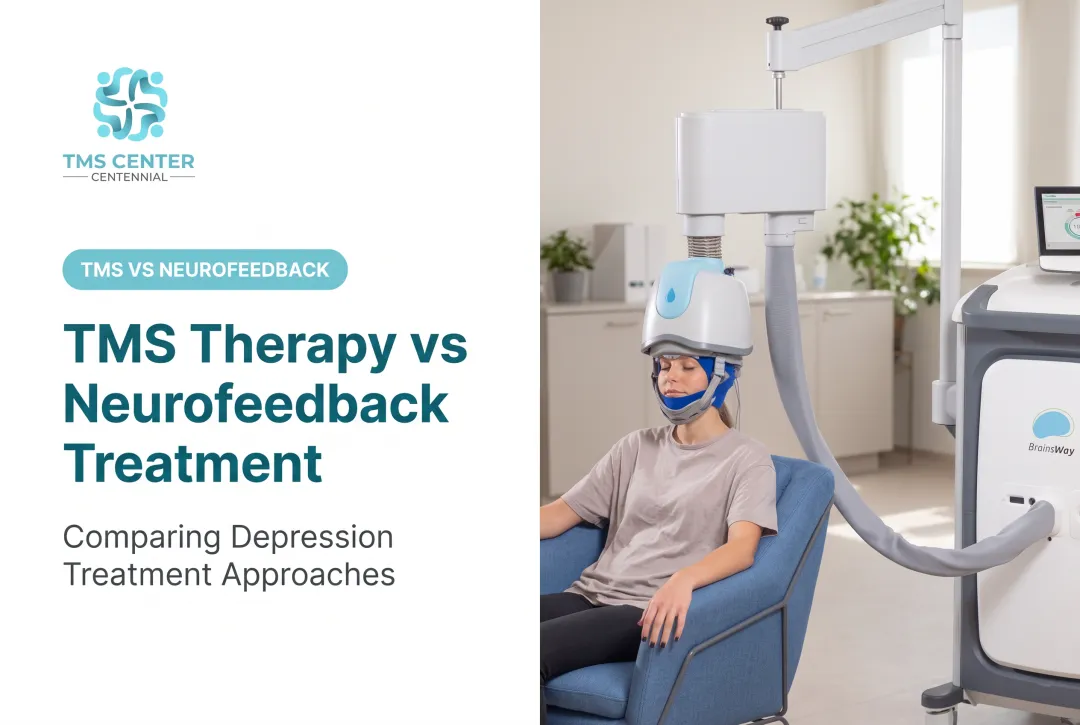
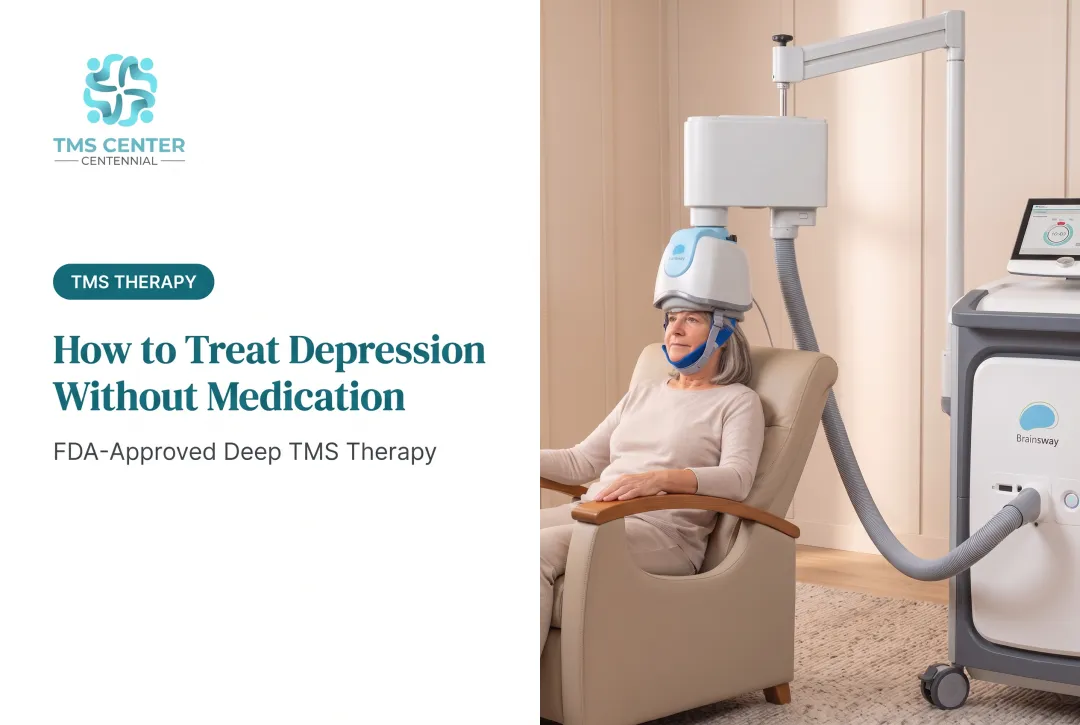
Deep Transcranial Magnetic Stimulation uses magnetic pulses to stimulate the dorsolateral prefrontal cortex, a brain region that tends to be underactive in depression. There is no surgery, no sedation, and none of the systemic side effects common with antidepressants — such as weight gain or sexual dysfunction.
The FDA first cleared TMS for depression in 2008, and BrainsWay's Deep TMS™ system followed as an advanced version with deeper, broader magnetic field penetration. A pivotal trial found 38.4% response and 32.6% remission with active Deep TMS versus 21.4% and 14.6% for sham treatment by week five, in patients who'd already failed 1-4 antidepressants (Levkovitz et al.).
At TMS Center Centennial, outcomes run higher still: 89% of patients report significant symptom reduction, and about 69% achieve complete remission, per BrainsWay clinical data used by the clinic.

What Treatment Looks Like
- Sessions take about 30 to 45 minutes in the office, depending on the protocol, five days a week, for four to six weeks (around 30 total sessions)
- An accelerated option, Swift Deep TMS™, compresses treatment into roughly two weeks using Theta Burst Stimulation
- Most common side effect: mild scalp discomfort or headache, usually during week one, that fades on its own
- Fewer than 5% of patients discontinue treatment due to side effects
TMS isn't limited to depression, either. It's FDA-cleared as an adjunct for OCD and has been studied for anxiety symptoms and PTSD — conditions that often overlap with depression.
That real-world mix of conditions is part of why clinic experience matters. Clinical Director Rodney Placzek, a retired Army Sergeant Major, underwent TMS himself before co-founding TMS Center Centennial. The team includes military-friendly staff and accepts TriCare along with Cigna, Aetna, Anthem BCBS, and United Healthcare.
The clinic handles insurance paperwork and provides a benefits breakdown before treatment starts. A history of psychotherapy is generally required as part of the clinical evaluation - you'll just need to tell us who you saw for therapy and roughly when.
Neurofeedback: Training the Brain Without Medication
Neurofeedback doesn't stimulate the brain directly. It shows the brain its own activity in real time and lets it learn to self-regulate.
TMS Center Centennial uses the NeurOptimal® system. A trainer attaches sensors to the scalp, and the client listens to music while watching geometric patterns for 33 minutes. Brief interruptions in the audio act as cues, prompting the brain to reset unhelpful patterns on its own.

Why it helps with depression and anxiety:
- Supports steadier emotional regulation day to day
- Eases sleep disruption tied to racing thoughts
- Sharpens focus and cognitive clarity
A 2023 review of neurofeedback for depression found most included studies showed improvement, though sample sizes were small and protocols varied (de Souza Dobbins et al.). Results are promising, but neurofeedback works best as part of a broader plan—not as a standalone fix.
At TMS Center Centennial, neurofeedback is often paired with Deep TMS™ and collaborative counseling rather than used alone. That layered approach targets brain activity, symptom reduction, and emotional processing together.
Other Medical Alternatives: Ketamine, Esketamine, and ECT
Esketamine (Spravato) is an FDA-approved nasal spray for treatment-resistant depression, given in-office with at least two hours of monitoring afterward. Patients can't drive themselves home.
Ketamine infusion therapy can work within 24 hours, but it comes with tradeoffs:
- Dissociative side effects during infusion
- Requires on-site medical supervision
- Often not covered by insurance
A pooled analysis found 46% response and 27% remission across studies (Price et al.).
ECT remains an option for the most severe cases, with strong response rates (around 66% in one Treatment-Resistant Depression study). Memory-related side effects are a real consideration for many patients.
A 2025 network meta-analysis found IV ketamine outperformed rTMS at the two-week mark, but showed no significant difference between ECT and either ketamine or rTMS overall (Terao et al.). There is no single best option. The right choice depends on severity, side-effect tolerance, and access.

TMS Center Centennial does not provide ECT and refers patients out for that level of care.
Complementary Approaches: Therapy, Lifestyle, and Holistic Support
Medication and brain-stimulation treatments work better alongside supportive habits, not instead of them.
Cognitive Behavioral Therapy is one of the strongest evidence-backed complements. One meta-analysis found 36% remission versus 15% for controls. Collaborative counseling, including the trauma-informed work Carolyn Riviere provides at TMS Center Centennial, supports recovery alongside brain-based treatment.
Lifestyle factors that help:
- Regular exercise (walking, jogging, or strength training) with measurable benefit
- Consistent sleep habits: treating insomnia has been shown to reduce depression symptoms
- Anti-inflammatory diet patterns, as seen in the SMILES trial's strong improvement in depression scores
Supplements like vitamin D, omega-3s, and probiotics show small positive effects in research, but they're not FDA-regulated for treating disease and shouldn't be self-prescribed without medical guidance.
TMS Center Centennial keeps two therapy dogs, Finn and Furgus, in the office. Patients often describe sessions as less clinical and more like visiting a friend's house.
Frequently Asked Questions
How long does it take to recover from depression and anxiety?
It varies by treatment and severity. Deep TMS™ often shows improvement within four to six weeks for depression and anxiety symptoms, while therapy and lifestyle changes may take longer to build lasting effects.
What is treatment-resistant depression?
Depression that hasn't improved after two or more adequate antidepressant trials. It affects at least 30% of people with depression and typically requires specialized intervention.
What is the most effective treatment for treatment-resistant depression?
Deep TMS™, ketamine, and ECT are the leading evidence-based options. TMS generally offers the best balance of effectiveness and minimal side effects for most patients.
What should I do when nothing helps depression?
Seek an evaluation from a clinic offering interventional psychiatry, such as TMS or neurofeedback, rather than giving up. Standard medication isn't the only path forward. If you move into a TMS course, yes, patients can continue their current medications during the TMS protocol. Most people remain on their prescribed medications throughout treatment and should stay stable on them. Keeping medications stable helps limit variables during treatment, so the clinical team can tell what is actually working. Any medication changes should be made under medical supervision, and preferably after finishing the TMS protocol rather than during it, always guided by the prescribing clinician.
What are the treatment options for severe depression?
Deep TMS™, intensive psychotherapy, ketamine or esketamine, and ECT are the primary options typically considered for severe or treatment-resistant cases.
What is breakthrough depression?
Breakthrough depression is when symptoms resurface despite ongoing treatment. Rates range from 10–30% and usually signal a need to reassess or add another approach.