
Introduction
Roughly 21 million U.S. adults, or 8.3%, experienced a major depressive episode in 2021, and 14.5 million had symptoms severe enough to disrupt daily life, according to the National Institute of Mental Health. Many of them tried an antidepressant first.
But medication doesn't work for everyone. If you've cycled through two, three, or more prescriptions and still feel stuck, you already know the frustration: the side effects, the weeks of waiting to see if a dose "kicks in," the hopelessness when it doesn't.
Transcranial Magnetic Stimulation, or TMS, is an FDA-approved, non-medication therapy built for exactly this situation. This guide covers how TMS works, who qualifies, what a typical course of treatment looks like, and the results patients can expect. TMS Center Centennial, in the Denver metro area, offers Deep TMS™ with BrainsWay technology for people whose depression has not responded to medication.
Key Takeaways
- Magnetic pulses stimulate underactive brain regions tied to depression—no drugs or surgery required
- Typically reserved for treatment-resistant depression after standard antidepressants fail
- A depression session takes about 30 minutes in the office with no anesthesia, and patients can drive themselves home
- Most major insurers, including Tricare, cover TMS when medical necessity is documented
- TMS Center Centennial reports 89% of patients experience significant reduction in depression symptoms
Understanding Treatment-Resistant Depression
Treatment-resistant depression isn't just depression that's hard to shake. It has a clinical definition: major depressive disorder that doesn't adequately respond to at least two different antidepressants, each taken at a proper dose for a sufficient trial period, usually 6-8 weeks.
This isn't a rare edge case. A 2023 peer-reviewed review estimates that at least 30% of people with depression meet this definition, though real-world estimates range from 6% to 55% depending on how strictly Treatment-Resistant Depression is defined (2023 peer-reviewed review).
The bigger problem is what happens between failed prescriptions. Each unsuccessful medication trial takes weeks to months to evaluate properly. Patients often go through this cycle two, three, or four times before anyone suggests an alternative, and that delay compounds the hopelessness that depression already creates.
Signs and Symptoms of Treatment-Resistant Depression
Treatment-Resistant Depression shares the same core symptoms as standard depression, but with a few distinguishing features:
- Persistent sadness or emptiness that doesn't lift between treatment attempts
- Constant fatigue, even after medication adjustments
- Anhedonia — a loss of interest in activities that used to bring joy
- Poor concentration and difficulty making decisions
- Sleep disturbances that continue despite trying multiple prescriptions
What sets Treatment-Resistant Depression apart is how long episodes last and how hard symptoms hit. Patients also report more anxiety and a higher lifetime frequency of depressive episodes.
Standard Treatment Options for Treatment-Resistant Depression
Before reaching TMS, most patients have already tried:
- SSRIs and SNRIs — In the STAR*D trial, citalopram produced only a 28–33% remission rate (STAR*D trial)
- Psychotherapy (CBT, IPT) — Helpful for many, yet adjunctive CBT in resistant cases reached only a 46% meaningful response rate
- Lifestyle changes — Exercise, sleep hygiene, and diet support recovery but rarely resolve Treatment-Resistant Depression alone

When these approaches stall, next steps typically include ECT, esketamine, or TMS. Unlike ECT, TMS needs no anesthesia and carries no risk of memory loss—so it is often the first non-drug option patients try.
What Is TMS Therapy and How Does It Work?
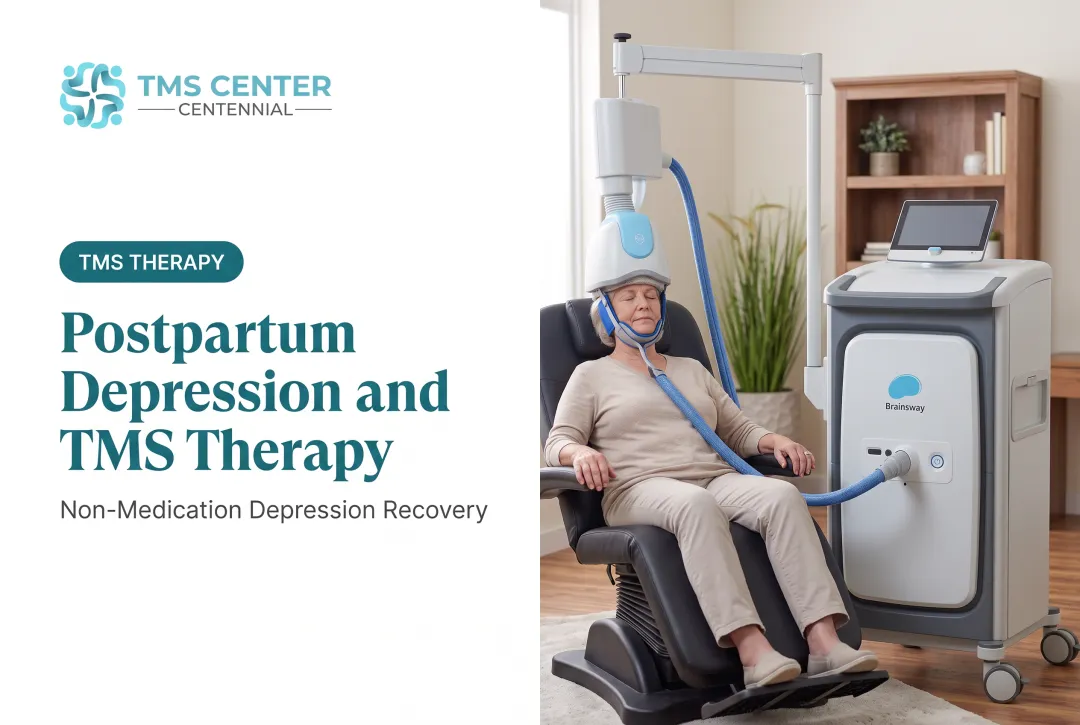
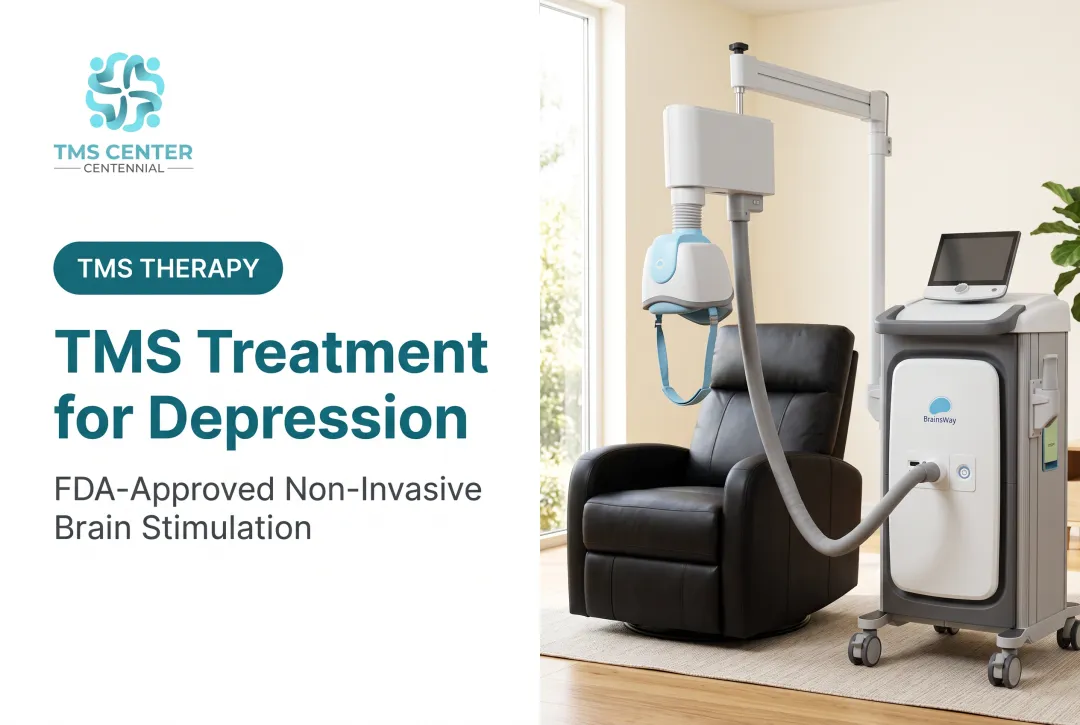
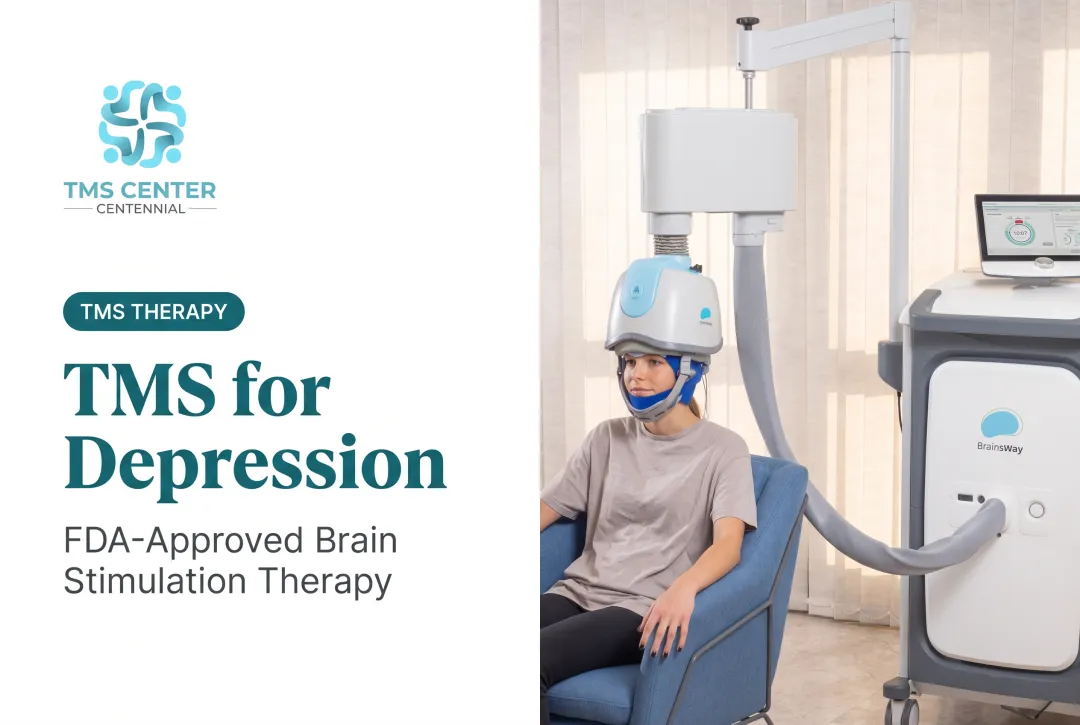
TMS uses an electromagnetic coil placed against the scalp to deliver targeted magnetic pulses into the brain. These pulses stimulate the left dorsolateral prefrontal cortex, a region frequently underactive in people with depression.
The FDA cleared TMS for major depression back in 2008, and its approved uses have since expanded to include OCD (2018) and smoking cessation (2020).
Deep TMS™ (BrainsWay) vs. Standard rTMS
| Feature | Standard rTMS | Deep TMS™ |
|---|---|---|
| Coil type | Figure-8 coil | H1 coil |
| Field depth | Focal, roughly 1.5 cm | Broader, roughly 4-5 cm |
| Brain coverage | Narrow, targeted | Deeper and wider regions |
| Available at TMS Center Centennial | No | Yes, via certified BrainsWay technicians |
That deeper reach - approximately four times the depth of standard rTMS, covering a substantially broader network of neural pathways - is why TMS Center Centennial built its program around BrainsWay's Deep TMS system rather than the older figure-8 style.
How TMS Compares to ECT
Unlike electroconvulsive therapy, TMS:
- Requires no anesthesia
- Does not induce seizures
- Does not cause memory loss
- Lets patients stay awake and drive themselves home afterward
Who Is a Candidate?
TMS generally fits people who:
- Have tried at least two antidepressants without adequate relief
- Want to avoid medication side effects
- Prefer a drug-free treatment path
A physician evaluation confirms fit. A history of psychotherapy is generally required as part of that evaluation - you'll just need to tell us who you saw for therapy and roughly when. Things we need to know about metal: removable items such as earrings, necklaces, hearing aids, and hairpins are taken off before the session and are not a disqualifier. Implanted or permanent metal needs a clinical evaluation, including cochlear implants or deep-brain stimulators, aneurysm clips, stents, metal within about 30 centimeters of the treatment area, retained bullet fragments or other ferrous metal fragments, and tattoos containing inks formulated with metals. Please raise anything you are unsure about during your evaluation.
What to Expect During TMS Treatment at TMS Center Centennial
Treatment begins with a mapping session. A certified TMS technician and the assigned physician find the exact coil placement and the patient's motor threshold—the minimum magnetic dose that produces a small, involuntary twitch in the fingers or face. That threshold becomes the personalized "prescription" for every session that follows.
A typical course looks like this:
- Daily sessions: five days a week, for four to six weeks
- Session length: a depression session takes about 30 minutes in the office
- Sensation: a tapping or clicking feeling on the scalp as pulses are delivered
- Mild side effects: scalp discomfort or mild soreness, typically resolving within the first week

One patient described the first session as leaving mild soreness for about 20 minutes afterward, with no headache at all. Others describe the pulses as more annoying than painful, like a series of light knocks.
That physical experience is easier to handle in a calm setting, and TMS Center Centennial builds visits around comfort. Two resident therapy dogs, Finn and Fergus, can sit with patients during sessions. Lead TMS Coordinator Christine Cook completed TMS herself before certifying on the BrainsWay system, and that firsthand experience shapes how she supports nervous first-time patients.
Some patients pair TMS with NeurOptimal® neurofeedback, a separate 33-minute brainwave session that supports focus, sleep, and emotional regulation as part of the same care plan.
How Effective Is TMS and How Long Do Results Last?
TMS Center Centennial reports that 89% of patients experience a significant reduction in depression symptoms, with approximately 69% achieving complete remission after a full course of Deep TMS™.
Controlled trials support Deep TMS efficacy, though published rates are often more conservative than real-world clinic data. In a randomized, sham-controlled Deep TMS study of 212 patients with prior treatment failures, active treatment produced a 38.4% response rate and 32.6% remission rate, compared with 21.4% and 14.6% for sham (Levkovitz et al., 2015). Benefits held through the full 16-week study period.
How long do results last?
Durability varies by patient. Some research shows continued response for a full year when patients stay on medication and can access retreatment if needed. Other reviews find that roughly half of patients who initially recover relapse within 12 months. During the TMS course itself, yes - patients can continue their current medications. Most people remain on their prescribed medications throughout treatment. Staying stable on medications during the protocol is encouraged - keeping medications stable helps limit variables during treatment, so the clinical team can tell what is actually working. If medication changes become necessary, they should be made under medical supervision, and preferably after finishing the TMS protocol rather than during it. Any changes should always be guided by the prescribing clinician.
There's no guaranteed symptom-free window, but many patients report benefits lasting several months after their initial course.
If symptoms return, repeat or maintenance TMS sessions are an option. Most major insurance plans, including Tricare, cover follow-up courses when medical necessity is documented, though authorization requirements vary by plan.
Why Choose TMS Center Centennial for TMS Therapy
TMS Center Centennial puts a full care team under one roof: psychiatrist Dr. Cheryl Dasler, co-owner and LMFT Carolyn Riviere, and certified TMS technicians including founder Rodney Placzek and Christine Cook. Psychiatric evaluation, medication history review, and TMS delivery happen in one clinic—no shuffling between offices.
The clinic accepts most major insurance plans:
- Cigna
- Anthem Blue Cross Blue Shield
- Tricare
- United Healthcare
- Aetna
- Most Medicare plans
Its military connection runs deeper than a coverage list. Founder Rodney Placzek is a retired Army Sergeant Major who discovered TMS as a patient after his own mental health struggles following service. That recovery story shapes how the clinic treats veterans and active-duty service members, groups where PTSD rates often exceed 30%.

Results matter too: about 89% of patients see significant symptom reduction, and roughly 69% reach full remission (BrainsWay clinical data). If you're in Centennial, Denver, Greenwood Village, Aurora, or the surrounding metro area and standard treatments haven't worked, schedule a consultation to see whether TMS fits your care plan.
Frequently Asked Questions
How long do the effects of TMS for treatment-resistant depression last?
Benefits often last several months after a full treatment course, though durability varies by individual. Some patients need occasional maintenance sessions if symptoms return.
What are the treatment options for treatment-resistant depression?
Options include combining or switching antidepressant medications, psychotherapy like CBT, and next-step treatments such as ECT, esketamine, and TMS. TMS is often chosen for its lack of anesthesia and minimal downtime.
What are the signs and symptoms of treatment-resistant depression?
Persistent low mood, fatigue, loss of interest, and poor concentration that continue after multiple medications at proper doses. Episodes also tend to last longer and hit harder than typical depression.
Is TMS therapy covered by insurance?
Most major insurers, including Cigna, Anthem BCBS, United Healthcare, Aetna, and Tricare, cover TMS for depression when medical necessity criteria are met. Coverage specifics vary by plan, so verification beforehand is recommended.
Is TMS therapy painful?
Most patients describe a tapping or knocking sensation rather than pain, with possible mild scalp discomfort that fades quickly. No anesthesia is needed, and most people tolerate sessions well.
How soon will I notice improvement from TMS treatment?
Many patients notice initial changes within two to three weeks of consistent daily sessions. Full results typically build over the complete four-to-six-week course.