
It doesn't have to be. Transcranial Magnetic Stimulation (TMS) is an FDA-approved, non-medication treatment specifically designed for people whose depression hasn't improved with drugs. This article covers how it works, how effective it is, who qualifies, what side effects to expect, and what treatment actually looks like day-to-day.
TMS Center Centennial has been providing Deep TMS™ and neurofeedback to patients across the Denver-Centennial area since 2017.
Key Takeaways
- FDA-approved TMS uses targeted magnetic pulses to stimulate underactive brain regions linked to depression—without surgery or implants
- About 89% of patients see significant symptom reduction; roughly 69% reach full remission in clinical data
- Outpatient sessions are drug-free, and patients typically resume normal activities right after each visit
- Most major insurance plans cover TMS, including Tricare for veterans
What Is TMS and How Does It Treat Depression?
TMS stands for Transcranial Magnetic Stimulation. It uses magnetic pulses to stimulate the dorsolateral prefrontal cortex (DLPFC) — a mood-regulation region that tends to be underactive in depression. Research from NIMH links this prefrontal underactivity to depressive symptoms.
Magnetic pulses generate small electrical currents in targeted brain tissue. Those currents "wake up" quiet nerve cells and neural circuits, helping the brain rebuild healthier communication patterns.
The FDA cleared TMS for major depressive disorder in 2008. It has been in routine clinical use for more than 15 years.
Standard TMS vs. Deep TMS™
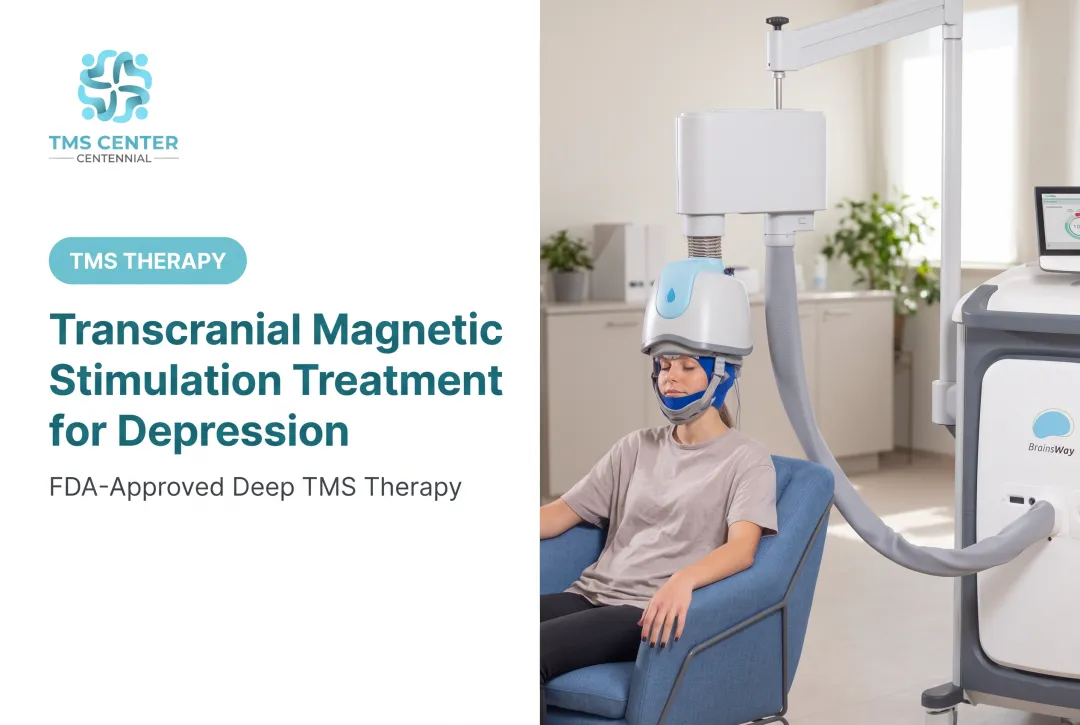
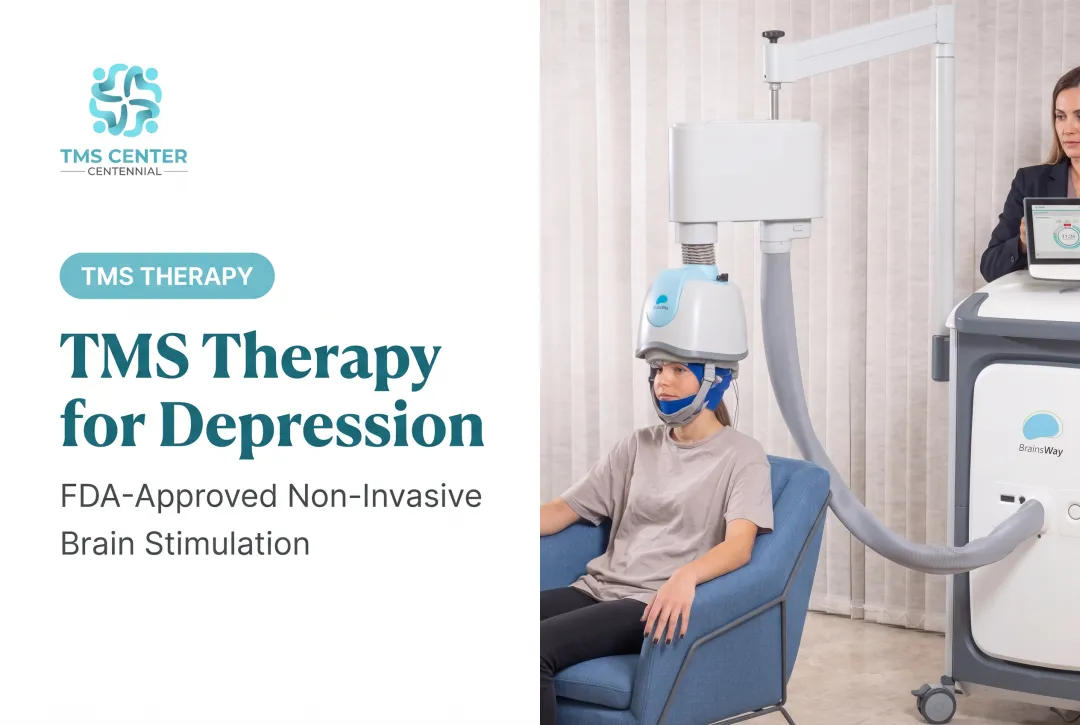
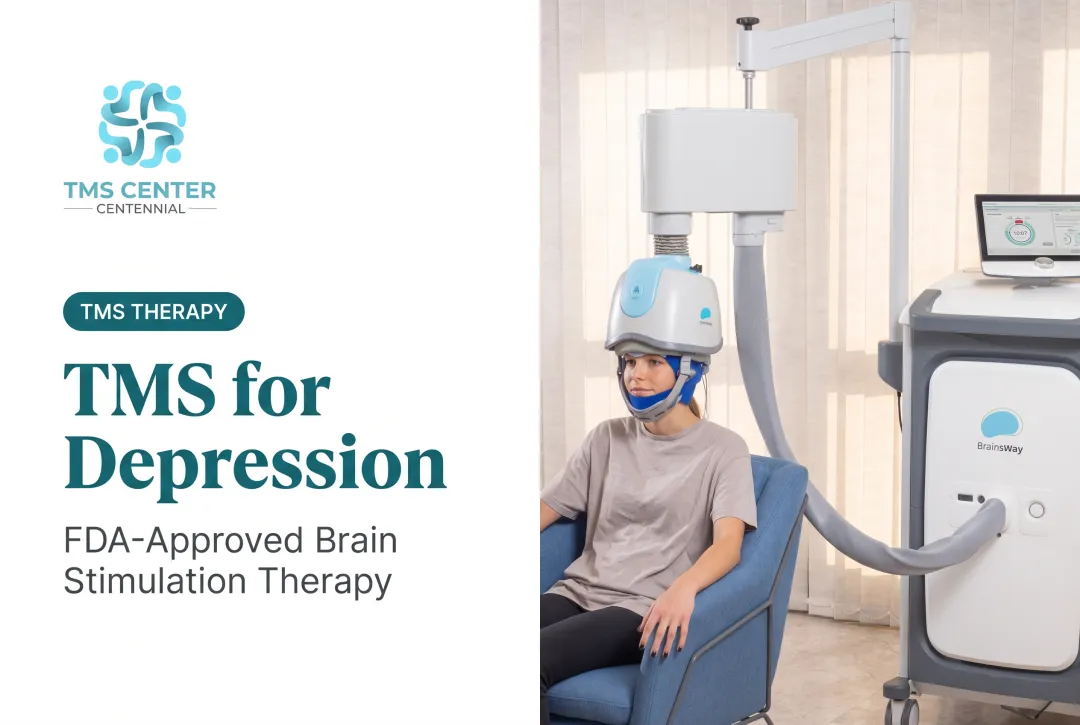
TMS Center Centennial uses BrainsWay Deep TMS™ technology rather than standard rTMS. The difference comes down to coil design:
- Standard rTMS uses figure-eight coils that focus on a narrower, more surface-level area
- Deep TMS uses H-shaped coils built into a helmet, reaching broader and deeper brain regions

What a Treatment Course Looks Like
A typical course looks like this:
- Sessions: 20–30 minutes of stimulation (about 45 minutes door to door)
- Schedule: Five days a week
- Course length: Four to six weeks
Before treatment starts, a certified technician maps each patient's motor threshold to set coil placement and pulse strength for that individual brain.
How Effective Is TMS for Depression?
The numbers here matter, especially if you want clear evidence before committing weeks of your schedule.
A peer-reviewed analysis of standard rTMS studies for treatment-resistant depression reports response rates around 40-50% and remission rates near 25-30%. Newer accelerated and theta-burst protocols show similar effectiveness in a shorter timeframe.
Real-world outcomes often run higher at specialized centers. TMS Center Centennial reports:
- 89% of patients experience a significant reduction in depression symptoms
- Approximately 69% achieve complete remission

These figures come from the clinic's own outcome tracking rather than a published trial, so treat them as real-world clinical experience rather than peer-reviewed data. Still, they align with what BrainsWay's broader research, spanning more than 60 clinical trials, has shown for Deep TMS specifically.
When Do Patients Notice a Difference?
Most people start noticing changes somewhere between two and four weeks into treatment. Individual timing varies based on:
- Depression severity and duration
- Number of prior antidepressant trials
- Concurrent counseling alongside TMS
Combining TMS with therapy tends to produce better, more durable results. At TMS Center Centennial, collaborative counseling with licensed therapists Carolyn Riviere and Barbra Ori runs alongside TMS so the psychological and neurological work reinforce each other.
Can TMS Treat Depression? Who's a Good Candidate
Yes. TMS is FDA-cleared specifically for major depressive disorder in adults who haven't responded adequately to antidepressant medication. The FDA has also expanded clearance to cover OCD, and Deep TMS is used off-label for anxiety symptoms in many clinical settings.
You're likely a good candidate if you:
- Have moderate-to-severe depression that hasn't improved with one or more antidepressant trials
- Want a non-drug treatment option
- Prefer a treatment with minimal systemic side effects
- Have OCD or anxiety alongside depression that medication hasn't resolved
TMS is generally not recommended if you have a history of seizures or seizure disorders, or non-removable metal implants or devices near the head (cochlear implants, aneurysm clips, deep brain stimulators).
A thorough medical history review during your initial evaluation determines whether TMS is safe and appropriate for you.
Is TMS Worth It? Benefits, Side Effects, and Costs
Most people weighing TMS want a straight answer on three things: what you gain, what side effects to expect, and what it costs. Here is a clear breakdown.
Benefits that drive the “worth it” decision:
- Avoids systemic drug side effects such as weight gain or sexual dysfunction
- Requires no anesthesia, sedation, or recovery downtime
- Lets you drive home and return to normal activities the same day
- Allows most patients to stay on current medications during the course
- Delivers strong response rates in treatment-resistant depression — including reported figures around 89% symptom reduction and 69% remission in BrainsWay clinical data
Short-Term Side Effects
The most common issue is mild discomfort at the treatment site, especially in the first week. It often fades on its own or settles with an over-the-counter pain reliever. Less common effects include:
- Scalp tingling
- Mild headache
- Facial muscle twitching
- Brief lightheadedness
According to NIMH safety reporting on TMS, fewer than 5.5% of patients stop treatment because of side effects.
Long-Term Safety
TMS has a strong long-term safety record compared with more invasive options:
- No routine risk of memory loss or cognitive impairment like that associated with ECT
- Seizures remain rare in modern protocols
- Clinics screen seizure history and medications at intake to further reduce risk
Cost and Coverage
A full TMS course is a multi-week commitment, and cash-pay totals in the U.S. often land in the several-thousand-dollar range before insurance. Many patients pay far less out of pocket when coverage applies.
TMS Center Centennial accepts most major plans, including:
- Cigna
- Anthem Blue Cross Blue Shield
- TRICARE
- United Healthcare
- Aetna
- Medicare

Coverage still depends on your plan, copay, and deductible. The center runs a personal benefits analysis and handles prior-authorization paperwork before treatment starts, so you know expected costs up front.
Bottom line: For people who have not improved on medication, TMS is often worth it when insurance covers a large share of care, side effects stay mild, and daily life does not have to stop for treatment.
What Is a "TMS Dip"? Does TMS Help With Emotional Regulation?
Some patients experience what's informally called a "TMS dip": a stretch mid-treatment where mood feels more unstable, or emotions run more intensely than usual. It's not a formally studied clinical term, but it's common enough in patient experience to be worth addressing.
Common symptoms include:
- Irritability
- Fatigue
- Heightened emotional sensitivity
This is generally part of the brain's recalibration process, not a sign that treatment is failing. The brain is rewiring communication pathways, and that process isn't always linear. If symptoms feel severe or persistent, contact your provider so they can assess whether any adjustments are needed.
The Emotional Regulation Connection
TMS strengthens communication between the prefrontal cortex (your brain's "control center") and deeper limbic structures involved in mood and stress response. Better prefrontal-limbic connectivity generally means better top-down regulation of emotional reactivity.
Pairing TMS with NeurOptimal® neurofeedback (a 33-minute, non-invasive session that monitors brainwave activity in real time) can further support emotional stability. Combined with collaborative counseling, this gives patients multiple tools working toward the same goal.
What to Expect at TMS Center Centennial
Your first visit is easier when you know what the process looks like.
- Initial psychiatric evaluation — A thorough review of your treatment history, current medications, and prior antidepressant trials
- Personalized treatment planning — If TMS is appropriate, the team builds a plan tailored to your diagnosis and history
- Mapping session — A certified BrainsWay™ technician and the assigned psychiatrist determine correct helmet placement and stimulation threshold
- Treatment sessions — 20-30 minutes daily, five days a week, for four to six weeks

The care team is multidisciplinary. Psychiatric oversight comes from board-certified physicians, certified TMS coordinators manage day-to-day sessions, and licensed therapists provide collaborative counseling alongside treatment.
There's also a smaller detail that patients mention often: therapy dogs Finn and Fergus are on-site and available to sit with patients during sessions. It's a small thing, but for many people, it makes a clinical setting feel less clinical.
If you're in Denver, Centennial, Greenwood Village, or anywhere in the surrounding Colorado communities and medication hasn't worked, scheduling a consultation is the next practical step.
Frequently Asked Questions
Can TMS be used to treat depression?
Yes. TMS is FDA-cleared for major depressive disorder in adults, particularly those who haven't responded to antidepressant medication. It is also FDA-cleared for OCD, and many clinics use it to help with anxiety symptoms.
Is TMS worth it?
For many patients with treatment-resistant depression, yes — it offers meaningful symptom reduction with minimal side effects and broad insurance coverage. The main trade-off is the time commitment: daily sessions for four to six weeks.
What are the long-term side effects of TMS?
TMS has a strong long-term safety profile, with no documented cognitive or memory impairment, unlike ECT. Serious risks like seizures are rare in modern clinical practice.
What are the common symptoms of a TMS dip?
Some patients experience temporary irritability, fatigue, or emotional sensitivity mid-treatment. These effects are usually temporary and often ease as the full course continues.
Does TMS help with emotional regulation?
Yes. TMS strengthens communication between the prefrontal cortex and deeper brain structures involved in mood and stress response, supporting better emotional control over time.
How much does TMS cost and is it covered by insurance?
Most major insurers cover TMS for eligible patients, including Cigna, Anthem BCBS, Tricare, United Healthcare, Aetna, and Medicare. Your out-of-pocket cost depends on your plan, deductible, and prior-authorization requirements.