
Introduction
Antidepressants and talk therapy help millions of people. But they don't help everyone.
A 2023 peer-reviewed review found that roughly 30% of people with depression meet criteria for treatment-resistant depression—meaning at least two adequate antidepressant trials brought little relief.
If you've cycled through medication after medication, chasing side effects instead of relief, you know how exhausting that cycle feels. Transcranial Magnetic Stimulation (TMS) offers a different path: an FDA-cleared, non-medication therapy that uses magnetic pulses instead of pills.
This guide covers how TMS works, how effective it is, what a typical treatment course looks like, safety considerations, and how it compares with other options. For local context, we reference TMS Center Centennial in Centennial, Colorado—a clinic that specializes in this therapy.
Key Takeaways
- Noninvasive, FDA-cleared option when medication or therapy alone hasn’t brought relief
- Clinical trials show 38–49% response rates and 27–33% remission rates by protocol
- Standard course: five days a week for four to six weeks; most major insurers cover it
- Side effects are usually mild—brief headache or scalp discomfort that fades quickly
Understanding TMS: What It Is and How It Works
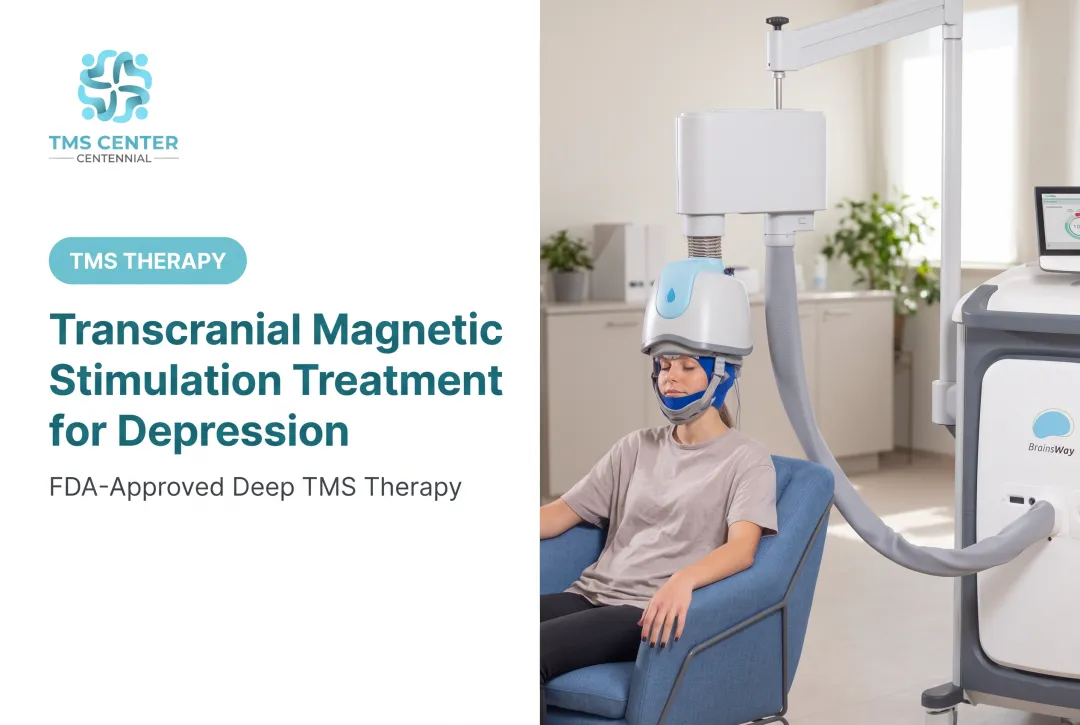
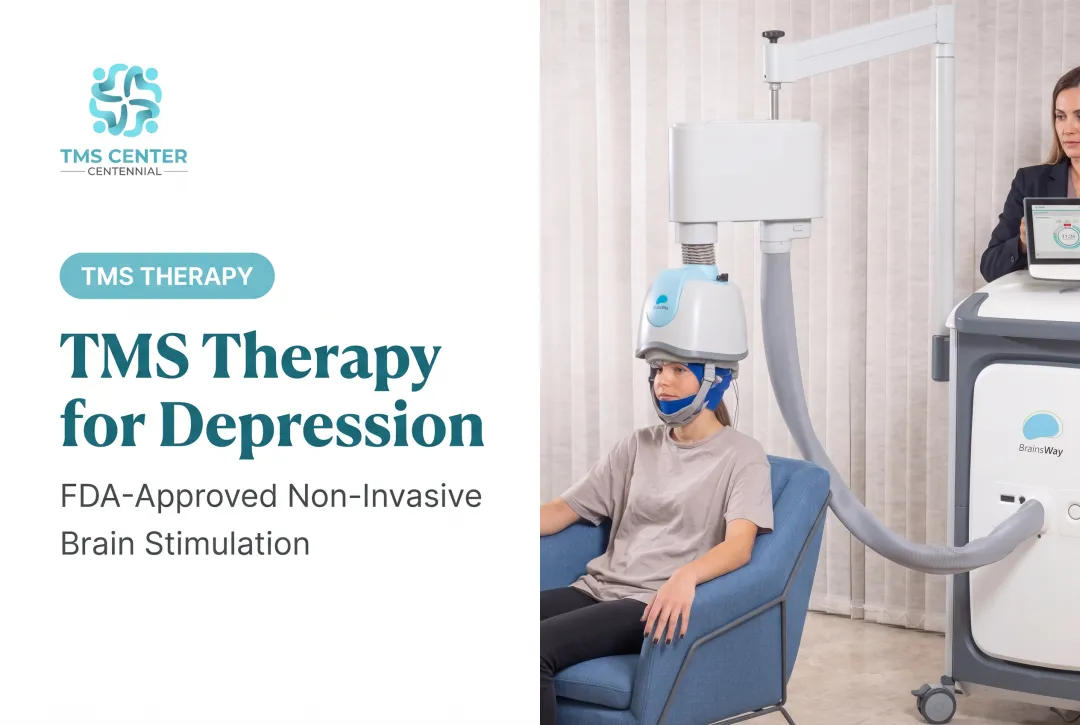
TMS is a noninvasive procedure that uses magnetic fields to stimulate the dorsolateral prefrontal cortex, a brain region tied to mood regulation. No anesthesia. No surgery. No sedation. You sit in a chair while a coil positioned near your scalp delivers targeted magnetic pulses.
The FDA first cleared TMS for major depression in 2008 for patients who hadn't improved after at least one adequate antidepressant trial. Since then, the technology has expanded into other indications:
- OCD (cleared in 2018)
- Migraine with aura (cleared in 2013)
- Smoking cessation (cleared in 2020)
How Magnetic Pulses Affect the Brain
Depression is often linked to underactivity in certain prefrontal brain circuits. TMS delivers repeated magnetic pulses that generate small electrical currents in targeted neurons, triggering action potentials that ripple outward to connected regions.
Repeated sessions appear to produce cumulative effects on cortical plasticity, nudging underactive circuits back toward healthier patterns of firing. Researchers haven't fully mapped the exact antidepressant mechanism, but imaging studies show measurable changes in dopamine activity and network connectivity following left-DLPFC stimulation.
Deep TMS vs. Traditional TMS
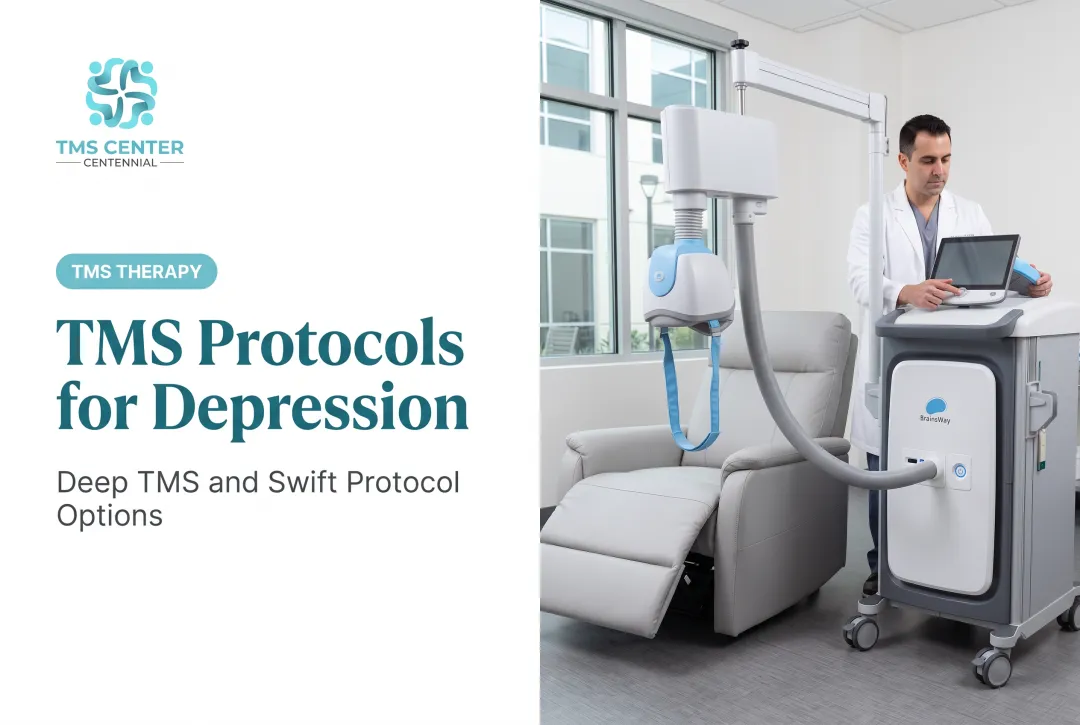
Not all TMS coils are built the same. Standard rTMS uses a figure-8 coil, which is highly focal but relatively shallow. Deep TMS relies on a broader H-coil design that reaches deeper brain structures, stimulating neural pathways more broadly and approximately four times deeper than standard rTMS.
| Feature | Standard rTMS (Figure-8) | Deep TMS (H-Coil) |
|---|---|---|
| Depth | Shallower, more focal | Modeled at 1.7-2.4 cm, reaching deeper |
| Coverage | Narrower field | Broader, more diffuse stimulation |
| Trade-off | Better precision | Depth gained at the cost of some focality |
Independent engineering research confirms that no coil can maximize both depth and focality simultaneously, so the H-coil design intentionally trades some precision for reach. TMS Center Centennial uses BrainsWay™ Deep TMS technology, which received its own FDA clearance for major depressive disorder in 2013 as an advancement over earlier figure-8 systems.
How Effective Is TMS for Treatment-Resistant Depression?
Numbers vary by trial, protocol, and patient population, but the overall picture is encouraging for people who've run out of options.
In the pivotal randomized trial for H1-coil Deep TMS, adults who had failed one to four antidepressant trials achieved a 38.4% response rate and 32.6% remission rate at week five, versus 21.4% and 14.6% with sham treatment (Levkovitz et al., World Psychiatry).
A separate large comparative trial of standard rTMS reported response rates around 47% and remission around 27%.
A few things matter beyond the headline numbers:
- Durability varies. One-year follow-up data found that about 62.5% of acute responders maintained their improvement throughout the year, though roughly a third eventually needed retreatment.
- Completing the full course matters. Patients who stop early are less likely to see lasting benefit than those who finish the recommended session count.
- Maintenance sessions are common, not universal. Some patients do fine without ongoing treatment; others benefit from periodic "booster" sessions.
TMS Center Centennial reports outcomes that track closely with, and in some measures exceed, published research: 89% of patients experience significant symptom reduction, and about 69% achieve complete remission.

Those clinic-reported figures reflect patients treated with Deep TMS at the center. They are not a substitute for the broader research base, but they show what's achievable with consistent treatment and Deep TMS specifically.
What to Expect During TMS Treatment
Wondering what actually happens once you walk through the door? Here's the breakdown.
The First Appointment and Brain Mapping
Your first visit centers on motor threshold mapping. The technician positions the coil over your head and delivers small pulses while watching for an involuntary twitch in your thumb or fingers.
That twitch response helps the clinical team pinpoint two things:
- The exact treatment location on your scalp, corresponding to your prefrontal cortex
- Your motor threshold — the lowest intensity that triggers a response and sets your treatment dose
At TMS Center Centennial, this first session typically continues into your first actual treatment once mapping is complete. You'll also get a personalized cap fitted for future visits, so each subsequent appointment starts faster.
Daily Treatment Sessions
Once your treatment location and dose are set, daily sessions follow a predictable rhythm. You'll feel a tapping or clicking sensation on your scalp as the coil pulses. Most people find it odd at first, then tolerable within a session or two.
Session length depends on the protocol:
- Standard Deep TMS: about 30 minutes in the office for a depression session
- Theta Burst Stimulation (TBS): as short as 3 minutes
- Other device protocols: typically 20-30 minutes, depending on settings
You stay awake and alert the entire time. There's no sedation involved, so you can drive yourself home and return to work or errands right after.
Treatment Timeline and When to Expect Results
The standard protocol runs five sessions per week for four to six weeks, adding up to around 30 total sessions. Some clinics add continuation sessions after that, tapering frequency over additional weeks.
Patience matters here. Most patients don't notice meaningful symptom relief until weeks three through six. TMS builds cumulative change in brain activity. It isn't a single-dose fix, so sticking with the full course gives you the best shot at real improvement.

Is TMS Safe? Candidacy, Side Effects & Who Should Avoid It
TMS carries a strong safety profile compared to more invasive psychiatric treatments, but it's not risk-free and it's not right for everyone.
Common Side Effects
The most frequently reported side effects in clinical trials were:
- Headache (reported by roughly 27% of patients in pivotal trials)
- Scalp discomfort or application-site pain
- Facial muscle twitching
- Insomnia or mild back pain (less common)
These effects typically improve within the first week of treatment as your scalp and muscles adjust to the sensation. Fewer than 5% of patients in clinical trials discontinued treatment because of side effects. Severe events like seizures are rare, occurring in roughly 1 in 10,000 patients.
Who Is a Good Candidate
TMS is generally considered for adults with major depression who:
- Haven't achieved adequate relief from two or more antidepressant trials, the threshold most insurers apply
- Have tried psychotherapy without full symptom resolution
- Want to avoid medication side effects or are looking for a non-drug option
- Are medically cleared after a thorough history and suitability screening
A comprehensive evaluation with a psychiatrist or medical director reviews your treatment history and current health status to determine whether TMS fits. A history of psychotherapy is generally required as part of that evaluation - we'll ask for your therapist's name and about when you were seeing them. There's no universal checklist; it's an individualized clinical decision.
Things We Need to Know About Before TMS
Certain factors require extra caution and are framed as things we need to know about, not automatic turn-aways:
- Removable metal around the head and neck (earrings, necklaces, hearing aids, hairpins, and similar items): taken off before the session and not a disqualifier
- Implanted or permanent metal needing clinical evaluation: aneurysm clips, cochlear implants, stents, metal within about 30 centimeters of the treatment area, retained bullet fragments or other ferrous metal fragments, and tattoos containing inks formulated with metals
- Pacemakers or implanted electronic devices, which require device-specific safety review
- History of seizure disorders, which needs close monitoring rather than an automatic exclusion
- Recent alcohol withdrawal or significant sleep deprivation, both of which can lower seizure threshold
Please raise anything you are unsure about during your evaluation.

A full medical evaluation before starting treatment catches these issues early. Reputable clinics require that screening before the first session.
TMS vs. Other Depression Treatment Options
Medication and psychotherapy remain first-line treatments for depression, and for good reason: they work for most people. But when symptoms persist despite adequate trials of both, exploring alternatives becomes reasonable rather than a last resort.
TMS vs. ECT is the comparison patients ask about most. A 2025 peer-reviewed review found ECT generally more effective, with response rates around 64.4% and remission around 53%, compared to roughly 48.7% response and 32.2% remission for high-frequency rTMS. But that higher efficacy comes with trade-offs:
| Factor | TMS | ECT |
|---|---|---|
| Anesthesia | Not required | General anesthesia required |
| Memory effects | Minimal | Temporary memory loss possible |
| Recovery | Immediate, drive yourself home | Recovery period after anesthesia |
Many patients find TMS appealing precisely because it skips the anesthesia and memory concerns tied to ECT.
TMS also pairs well with other non-medication approaches:
- Neurofeedback trains the brain toward healthier patterns and can support sleep, focus, and emotional regulation alongside a TMS course
- Ongoing counseling addresses the psychological and relational factors brain stimulation alone doesn't touch
Patients who combine TMS with therapy generally report better long-term outcomes than those who rely on TMS alone.
Frequently Asked Questions
What are the treatment options for treatment-resistant depression?
Common options include adjusting or switching antidepressants, psychotherapy, and TMS. For more severe or urgent cases, some patients are referred for ECT elsewhere. Most people start with the least invasive option and escalate only if needed.
Is it normal to feel worse after TMS treatment for depression?
Mild, temporary discomfort like headache or fatigue is common, especially early in treatment. Actual worsening of depression symptoms is uncommon and should be reported to your treating provider right away.
What is the success rate of TMS in treating treatment-resistant depression?
Clinical trials show response rates around 38-49% and remission rates around 27-33%. TMS Center Centennial reports higher real-world outcomes, with 89% of patients experiencing significant symptom reduction and roughly 69% achieving remission.
How many TMS sessions are needed to see results?
The standard course is about 30 sessions over four to six weeks. Most patients notice initial improvement between weeks three and six, not immediately.
Does insurance cover TMS therapy for depression?
Most major insurers cover TMS for treatment-resistant depression once specific medical necessity criteria are met. TMS Center Centennial accepts plans including Cigna, Aetna, Anthem, United Healthcare, and Tricare, and handles authorization paperwork directly.
Can I continue taking my medications during TMS treatment?
Patients can generally continue their current medications during the TMS protocol. They should stay stable on those medications during treatment so the course remains consistent from session to session. Keeping medications stable helps limit variables during treatment, so the clinical team can tell what is actually working. Any medication changes should be made under medical supervision, and preferably after finishing the TMS protocol rather than mid-course. The prescribing clinician should guide every change.
Is TMS painful?
Most patients describe it as a light-to-moderate tapping sensation on the scalp rather than pain. Discomfort typically decreases over the first several sessions as you adjust to the sensation.