
Here's a hard truth from the NIMH's landmark STAR*D trial: about one-third of patients reached remission on their first antidepressant, and roughly 10-15% more improved without fully remitting (NIMH STAR*D). That leaves a large group still searching for answers.
This guide covers lifestyle strategies, evidence-based therapy, complementary approaches, and advanced options like TMS for those who haven't found relief elsewhere.
Key Takeaways
- Exercise, sleep hygiene, and nutrition meaningfully reduce symptoms—especially alongside therapy or other treatments
- CBT and related psychotherapies match medication's effectiveness for many patients
- Supplements and light therapy offer modest benefits and should only be used with medical oversight
- Deep TMS offers FDA-approved, non-medication relief for treatment-resistant depression
- Severe or persistent symptoms always warrant professional evaluation
Lifestyle Changes and Self-Help Strategies
Small daily changes add up. Research backs several specific approaches over generic "stay positive" advice.
Exercise rivals medication. In a 16-week trial of older adults with major depression, aerobic exercise performed as well as sertraline (JAMA Internal Medicine). A larger follow-up study found 41% of participants reached remission after four months of exercise, with no significant difference between exercise, medication, or combined treatment (PubMed).
Exercise also triggers endorphin release and boosts brain-derived neurotrophic factor (BDNF), a protein tied to mood regulation.

Sleep hygiene breaks a vicious cycle. Depression disrupts sleep, and poor sleep worsens depression. Try:
- Keeping a consistent wake time, even on weekends
- Limiting daytime naps to 20 minutes
- Getting morning sunlight within an hour of waking
Diet plays a larger role than many people expect. A study tracking 31,172 women found higher intake of ultra-processed foods was linked to increased depression risk (JAMA Network Open). Swapping packaged snacks for whole foods will not cure depression, but it can remove one contributing factor.
Two more habits interrupt common depression loops:
- Mindfulness: Even 10 minutes of daily present-focused practice can cut rumination, the repetitive negative thinking that fuels depressive episodes
- Social contact: Volunteering, joining a group, or calling a friend weekly counters the withdrawal depression often drives

Building a Sustainable Daily Routine
Depression makes big tasks feel impossible. Instead of "clean the whole house," try "sort one load of laundry." Those small wins build momentum. Stack a few each day and you rebuild a sense of control that oversized to-do lists usually wipe out.
Evidence-Based Psychotherapy Options
Therapy isn't a consolation prize for people who can't take medication. For many patients, it's equally effective.
Cognitive Behavioral Therapy (CBT)
CBT is the most studied psychotherapy for depression. It targets distorted thought patterns, like catastrophizing or all-or-nothing thinking, and replaces them with more balanced ones. In a head-to-head trial, CBT and medication both produced a 58% response rate; remission was 40% for CBT versus 46% for medication (PubMed). Cognitive therapy's benefits tend to last: one study found it reduced relapse risk as effectively as staying on medication long-term (JAMA Psychiatry).

Behavioral Activation
Behavioral Activation strips CBT down to its most practical component: getting people to re-engage with enjoyable or meaningful activities. Among more severely depressed patients, it performed comparably to medication and outperformed standard cognitive therapy in one trial (PubMed).
Interpersonal Therapy (IPT)
IPT focuses on relationship conflicts and life transitions, like divorce, job loss, or grief, that often trigger depressive episodes. Early NIMH research found IPT outperformed placebo and matched medication's benefits. Therapy works well alone or paired with other non-medication approaches. At TMS Center Centennial, the collaborative counseling team includes licensed marriage and family therapists trained in trauma-informed and Emotionally Focused Therapy. They coordinate directly with the psychiatric and TMS staff, so therapy sessions reinforce the rest of a patient's treatment plan rather than running on a separate track.
Non-Medical Alternative Treatments to Consider
Some patients try supplements or light-based therapies before or alongside other care. Evidence is mixed, and neither should replace clinician-guided treatment.
Commonly researched supplements include:
- Omega-3 fatty acids: linked to lower depression risk in some studies, though effects appear modest (PMC review)
- Vitamin D: evidence remains mixed; large trials have not shown consistent benefit (NIH ODS)
- SAMe: some evidence supports it as monotherapy or an add-on, though more rigorous trials are needed
- St. John's Wort: inconsistent results; should never replace conventional care (NCCIH)
The FDA does not approve supplements before they reach shelves. Manufacturers handle their own safety claims, and interactions with other medications are possible. Talk with a doctor before starting any of these.
Light therapy works well for seasonal patterns. Research shows daily use for several weeks is roughly as effective as CBT tailored for seasonal affective disorder (NIMH).
For moderate-to-severe depression, supplements and light therapy work best as complements—not standalone care. Patients seeking non-medication options should weigh these adjuncts against clinician-guided treatments with stronger evidence for lasting symptom relief.
TMS and Neurofeedback: Advanced Non-Medication Options
When lifestyle changes and therapy aren't enough, and medication hasn't helped, FDA-approved brain-stimulation and brain-training options can fill the gap.
What Is Deep TMS?
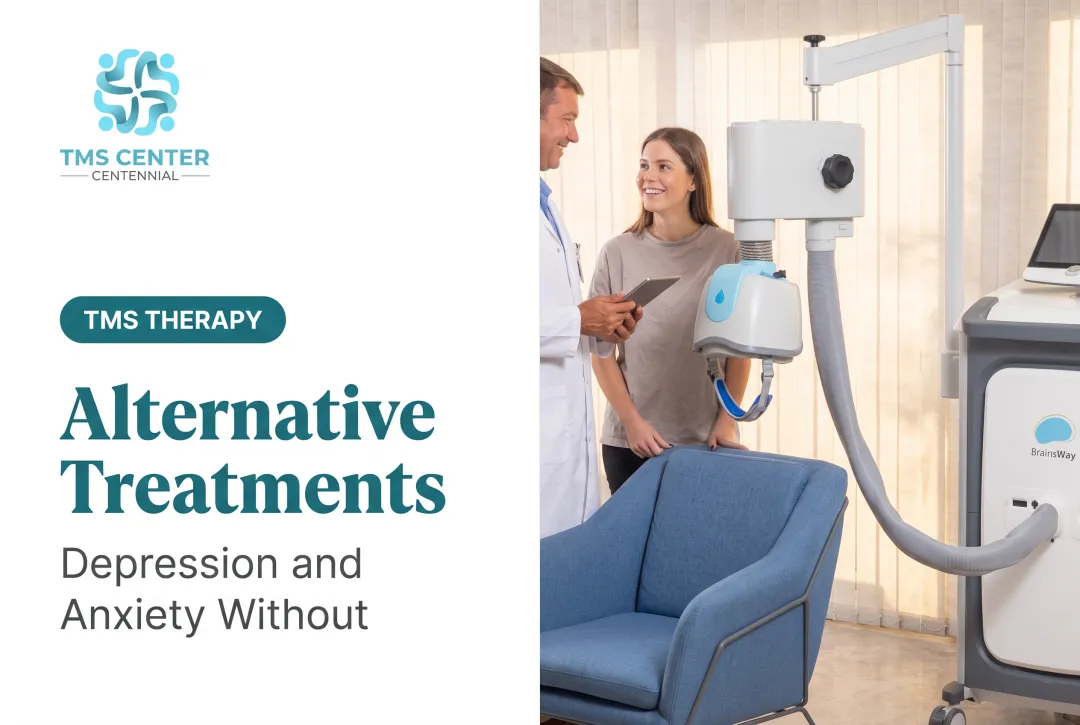
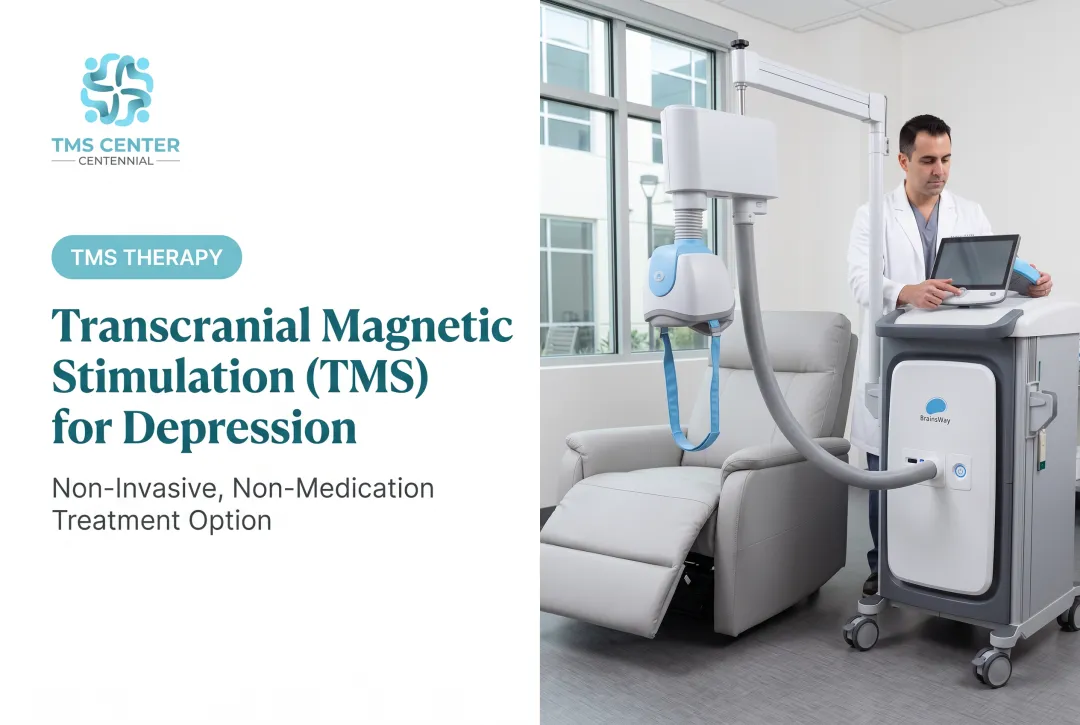
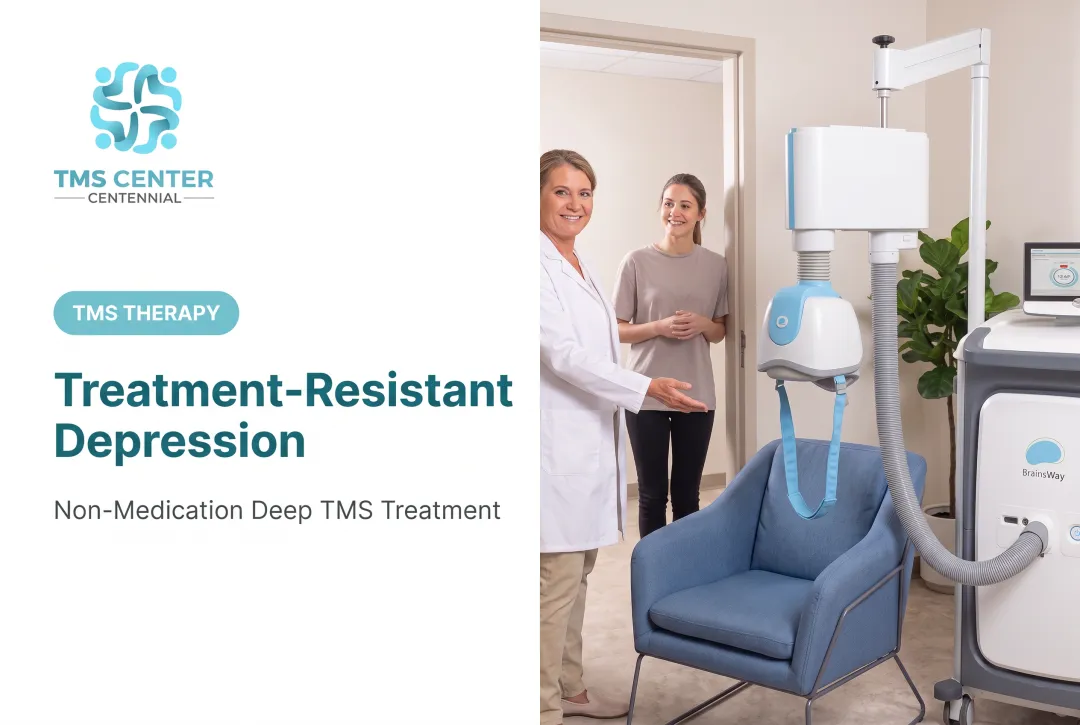
Transcranial Magnetic Stimulation uses magnetic pulses to stimulate brain regions involved in mood regulation.
Deep TMS, delivered through BrainsWay technology, reaches deeper and broader brain areas than standard TMS—without drugs or systemic side effects. TMS has held FDA approval for depression since 2008.
At TMS Center Centennial, a standard Deep TMS course runs about 30 sessions over four to six weeks. The clinic reports:
- 89% of patients showing significant symptom reduction
- 69% achieving complete remission
- An accelerated Swift Deep TMS protocol, completed in roughly two weeks, associated internally with a 78% remission rate

These figures are the clinic's reported real-world outcomes, not a peer-reviewed study, and should not be read as a universal guarantee. Independent research on high-frequency rTMS shows pooled response and remission rates closer to 49% and 32%, respectively (PMC). Results vary by protocol and provider.
Neurofeedback as a Complement
Many patients pair stimulation with brain training. NeurOptimal® neurofeedback trains brainwave activity to support focus, sleep, and emotional regulation. Each session lasts 33 minutes: sensors monitor brain activity while brief pauses in music cue the brain to self-correct. It uses no medication and is typically added alongside TMS or therapy, not used as a stand-alone replacement.
Who's a Good Candidate?
- People who haven't responded to two or more antidepressants
- Veterans and active-duty service members seeking non-pharmaceutical care
- Anyone who wants a path that doesn't rely on daily medication
At TMS Center Centennial, psychiatrists, certified TMS technicians, and therapists coordinate Deep TMS with collaborative counseling under one insurance-covered care plan. Patients usually continue current medications during treatment; any changes are made with the prescribing doctor, typically after the protocol ends.
When Lifestyle Changes Aren't Enough
Self-help strategies have limits. Watch for these signs that professional evaluation is needed:
- Persistent low mood or loss of interest lasting more than two weeks
- Significant changes in appetite, weight, or sleep
- Difficulty concentrating or making decisions
- Feelings of worthlessness or excessive guilt
- Thoughts of death or suicide
Treatment-resistant depression is generally defined as inadequate response to two or more adequate antidepressant trials. Research suggests at least 30% of people with depression meet these criteria, and some estimates reach 55% (PMC). When medication trials fall short, non-medication clinical options such as TMS become especially relevant.
If you're having thoughts of suicide or self-harm, call or text 988 to reach the Suicide and Crisis Lifeline, available 24/7, free, and confidential.
Frequently Asked Questions
What are the most effective non-medication treatments for depression?
Exercise, CBT, and Deep TMS are among the most evidence-backed options. Research shows each can match medication for many patients, and results often improve when these approaches are used together.
Is there a way to treat depression without medication?
Yes. Therapy (including CBT), lifestyle changes, and treatments like TMS or neurofeedback can all work without medication. The best path depends on symptom severity and what you have already tried.
How do you manage treatment-resistant depression?
Combination approaches work best: pairing TMS or neurofeedback with therapy, alongside a full evaluation from a psychiatrist or specialist to rule out other contributing factors.
What should I do if nothing seems to help my depression?
Consult a psychiatrist to explore options like Deep TMS or neurofeedback, especially if you've already tried two or more medications without relief.
What lifestyle changes and self-help strategies can help relieve depression?
Regular aerobic exercise, consistent sleep habits, a diet low in processed foods, and mindfulness practices all show measurable benefits for mood.
Can you fully recover from depression?
Many patients reach major symptom reduction or full remission with the right treatment mix. Timelines vary, but lasting relief is a realistic goal when care matches your symptoms and history.