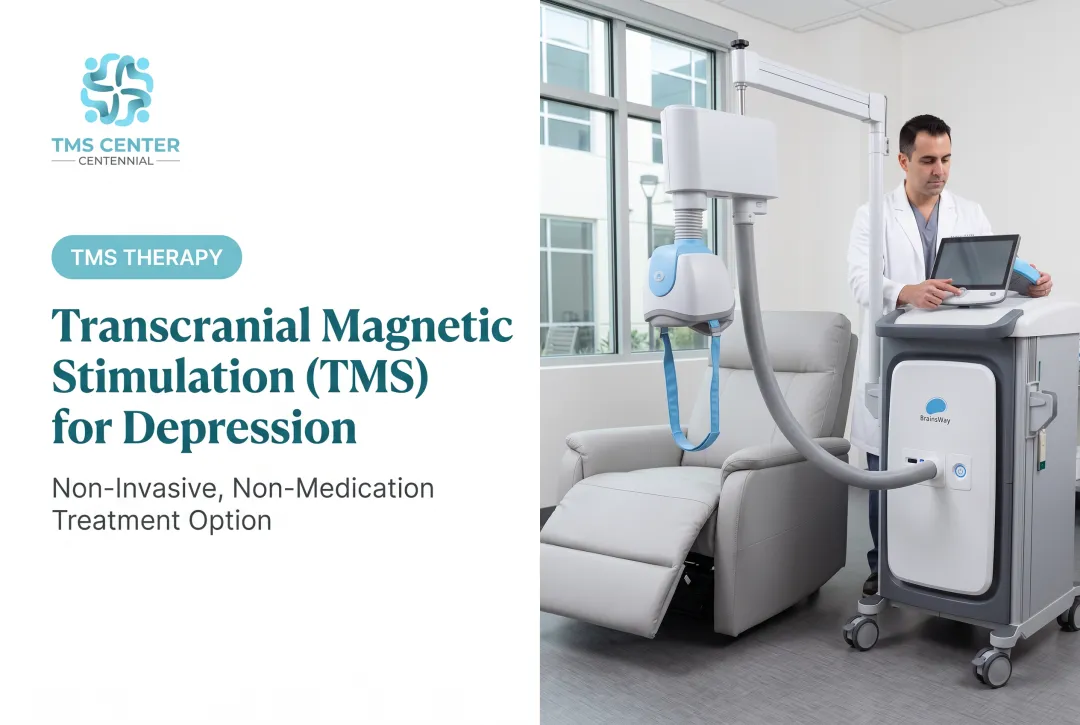

For patients with treatment-resistant depression, TMS offers a non-invasive, FDA-approved path forward. It doesn't require anesthesia, doesn't induce seizures, and doesn't come with the systemic side effects common to antidepressants. It's also gaining ground as a treatment for OCD, anxiety, and PTSD.
This guide breaks down what TMS actually is, how the treatment works step-by-step, and what to expect if you're considering it.
TL;DR
- TMS uses magnetic pulses to stimulate underactive brain regions linked to depression
- No anesthesia, no surgery, no downtime — most patients drive themselves home after each session
- A typical course runs five days a week for four to six weeks
- About 89% of patients see significant symptom reduction; roughly 69% reach full remission
- FDA-approved for depression and OCD; actively studied for anxiety and PTSD
What Is Transcranial Magnetic Stimulation (TMS)?
TMS is a non-invasive medical procedure that uses magnetic pulses, delivered through a coil placed against the scalp, to stimulate specific brain regions. The primary target is the dorsolateral prefrontal cortex, an area linked to mood regulation that tends to show reduced activity in people with depression.
The FDA first cleared TMS for depression in 2008. It gave patients who hadn't responded to medication or therapy a new option without the cognitive side effects linked to electroconvulsive therapy (ECT).
TMS is not ECT. There's no seizure induction, no anesthesia, and no hospital stay. It's also not surgery — nothing is implanted, and nothing is cut. TMS stays relevant for its safety profile and its results with patients who have already tried multiple medications without success.
Standard rTMS vs. Deep TMS™
There are two main forms of magnetic stimulation:
- Standard repetitive TMS (rTMS): Uses a figure-8 coil that reaches roughly 3 cm into the skull, generally targeting the prefrontal cortex
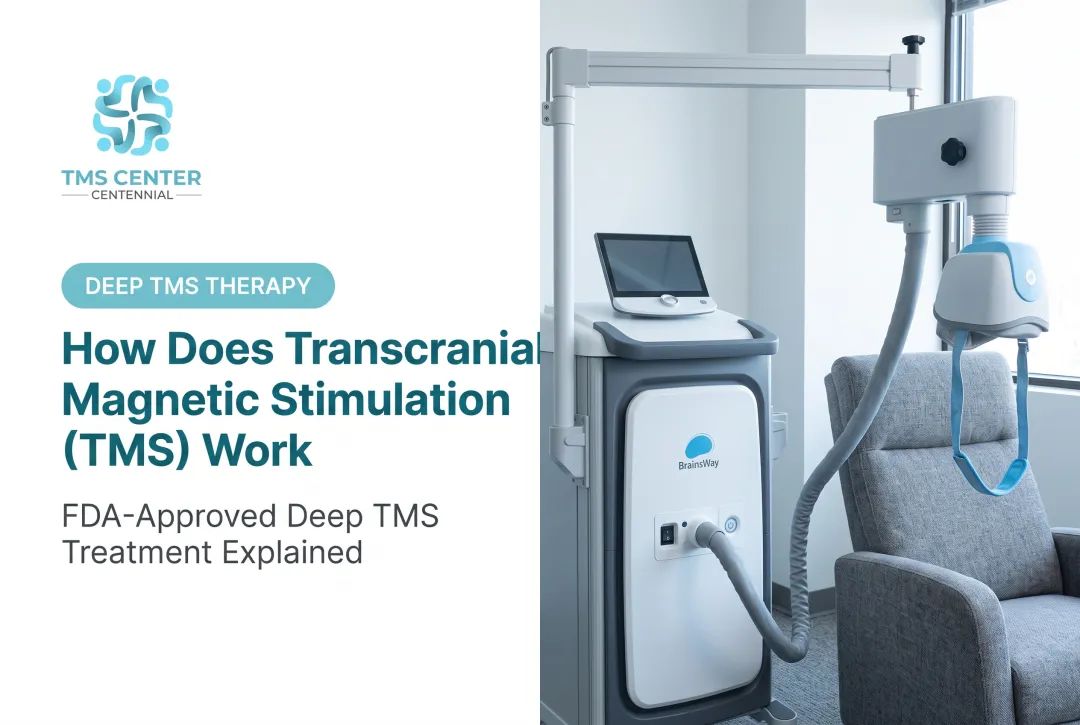
- Deep TMS™ (H-coil): Uses a helmet-style H-coil, reaching up to 4 cm, allowing broader and deeper stimulation of brain structures
TMS Center Centennial uses BrainsWay Deep TMS™ technology, administered by certified TMS coordinators, as a non-medication brain-stimulation option for treatment-resistant symptoms.

How Does TMS Therapy Work?
TMS follows a defined sequence, from initial calibration through ongoing monitoring to final evaluation. Each stage builds on the one before it.
Mapping and Motor Threshold
Before treatment starts, a clinician determines the patient's "motor threshold" by stimulating the motor cortex until it produces a small thumb or finger twitch. That threshold is unique to each person.
This calibration is manual and personalized to each patient's skull shape, brain anatomy, and symptom severity. At TMS Center Centennial, both a certified TMS technician and the assigned physician participate in this mapping to determine correct helmet placement. This initial visit sets the coil position and magnetic dosage used in every subsequent session.
Magnetic Stimulation During a Session
An electric current runs through the coil, generating a magnetic field. That field painlessly passes through the skull and induces small electrical currents in the targeted neurons underneath.
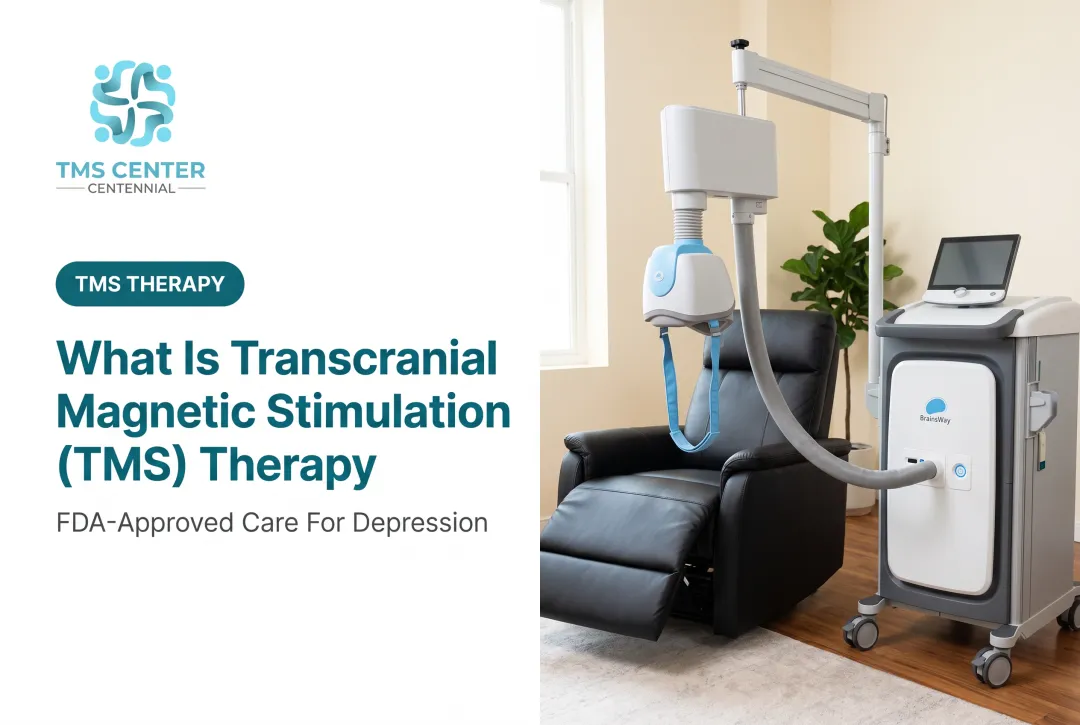
During a session, the patient sits in a reclining chair while pulses are delivered in bursts. Most people notice a tapping sensation on the scalp and a clicking sound with each pulse.
Session length depends on the protocol:
- Standard Deep TMS: Around 20 minutes of active treatment, with the full appointment scheduled for about 45 minutes
- Theta Burst Stimulation (TBS): Just 3 minutes, using rapid pulse bursts to stimulate the frontal cortex
Whatever the protocol, consistency matters more than any single session. The brain's neural circuits need repeated, daily stimulation over several weeks to reset and produce lasting change.

Monitoring Throughout Treatment
Trained coordinators stay in the room during each session, checking patient comfort and adjusting intensity when needed. Periodic symptom rating scales help track progress across the course of treatment and flag when a protocol adjustment might help.
This monitoring matters for two reasons:
- Catching rare adverse reactions early, including the uncommon risk of seizure
- Keeping the treatment calibrated to how each patient is actually responding, rather than following a rigid schedule
What Results to Expect
The goal is gradual normalization of brain circuits tied to mood regulation, focus, and emotional control. Most patients notice improvement within two to six weeks of consistent, daily sessions, not after a single visit.
A 2023 peer-reviewed meta-analysis found an overall remission rate of nearly 36% for active rTMS among treatment-resistant depression patients, according to research published in PMC. TMS Center Centennial reports stronger clinic outcomes, with 89% of patients reporting a significant positive response after a full course of 30 sessions.

What Conditions Can TMS Treat?
TMS is FDA-approved for:
- Major depressive disorder (approved in 2008)
- Obsessive-compulsive disorder (OCD) (Deep TMS cleared in 2018)
- Migraine with aura (cleared for acute treatment)
It's also used off-label or studied actively for PTSD, anxiety disorders, and smoking cessation. A 2022 peer-reviewed review found TMS generally effective at reducing PTSD symptoms over time, though more large-scale trials are still underway.
TMS Center Centennial treats depression, anxiety, PTSD, and OCD. The clinic has particular experience supporting military veterans and active-duty service members through TRICARE coverage.
Founder Rodney Placzek, a retired Army Sergeant Major who experienced TMS firsthand, brings that perspective to patient care.
Who Is a Good Candidate for TMS?
TMS is typically recommended for adults with depression who haven't responded adequately to at least one antidepressant and a course of psychotherapy. Medical safety and treatment goals matter just as much as medication history.
You may be a strong candidate if you:
- Still have major depression symptoms after medication and psychotherapy
- Want a non-invasive option without anesthesia or downtime
- Can attend brief, repeated in-office sessions over several weeks
Key contraindications include:
- Metal implants in the head or neck (such as aneurysm clips or cochlear implants)
- Implanted electronic devices such as pacemakers
- History of seizures or a lowered seizure threshold
- Certain neurological conditions that raise treatment risk

A psychiatric evaluation is required before starting treatment. At TMS Center Centennial, that visit covers your symptoms and daily impact, medical history, and prior antidepressant response.
Patients generally continue current medications during TMS. Any changes are guided by the prescribing clinician and are usually made after treatment is complete, not during the course.
Is TMS Safe? Side Effects to Know
TMS is considered safe and well-tolerated. There's no anesthesia involved, and you face no activity restrictions afterward — you can drive yourself home and return to work the same day.
Common, mild side effects include:
- Scalp discomfort at the treatment site
- Headache
- Lightheadedness
These typically resolve shortly after the session, and often fade within the first week of treatment. A 2020 peer-reviewed safety analysis found headache occurred in about 6.9% of patients and site discomfort in about 2.7%.
Seizure is the rare but serious risk, though incidence with standard clinical protocols is well under 0.1%. Sessions also use ear protection to reduce hearing-related effects from the repetitive clicking sound.
Frequently Asked Questions
How much does one TMS session cost?
Clinics rarely sell TMS as a single visit—effective care is a multi-session course, and cash-pay rates vary by provider and protocol. Most major plans, including Cigna, Aetna, and Medicare, typically cover TMS for qualifying patients with treatment-resistant depression.
How does TMS treatment work for depression?
Magnetic pulses stimulate the dorsolateral prefrontal cortex, an area linked to mood regulation that's often underactive in depression. Repeated stimulation over several weeks helps normalize activity in that circuit.
How long does a TMS treatment last?
Individual sessions run anywhere from about 3 minutes with theta-burst protocols to around 20-40 minutes with standard protocols. A full course typically spans four to six weeks of daily weekday visits.
Is TMS treatment effective for depression?
Research shows a majority of patients experience meaningful symptom reduction, and many reach full remission. TMS Center Centennial reports 89% of its patients see a significant reduction in symptoms after a full course.
What are the side effects and risks of TMS treatment?
Most side effects are mild, including scalp discomfort, headache, and lightheadedness that resolve quickly. Seizure is a rare but serious risk, occurring in well under 0.1% of treatment courses.
Can TMS treatment be used to treat anxiety, OCD, or other conditions?
TMS is FDA-approved for OCD and migraine with aura, alongside its core depression indication. Anxiety and PTSD are currently supported by growing clinical research, though not yet FDA-approved indications.