
Deep TMS (dTMS) is one of those paths. It's a non-invasive, non-medication brain stimulation therapy that uses magnetic pulses to activate mood-regulating regions of the brain. No pills, no surgery, no sedation.
This article breaks down how dTMS works, what it treats, and what to expect from treatment. TMS Center Centennial has provided BrainsWay Deep TMS™ therapy since 2017, backed by a multidisciplinary team that includes board-certified psychiatrists, a medical director, and certified TMS technicians.
Key Takeaways
- Deep TMS uses an H-coil to stimulate broader, deeper brain regions than standard TMS
- Deep TMS is FDA-cleared for major depression (2013), OCD (2018), smoking cessation (2020), and anxious depression (2021)
- Non-invasive treatment with mild, temporary side effects and no systemic drug effects
- BrainsWay clinical data report about 89% symptom reduction and 69% full remission in depression
What Is Deep TMS (dTMS) and How Does It Work?
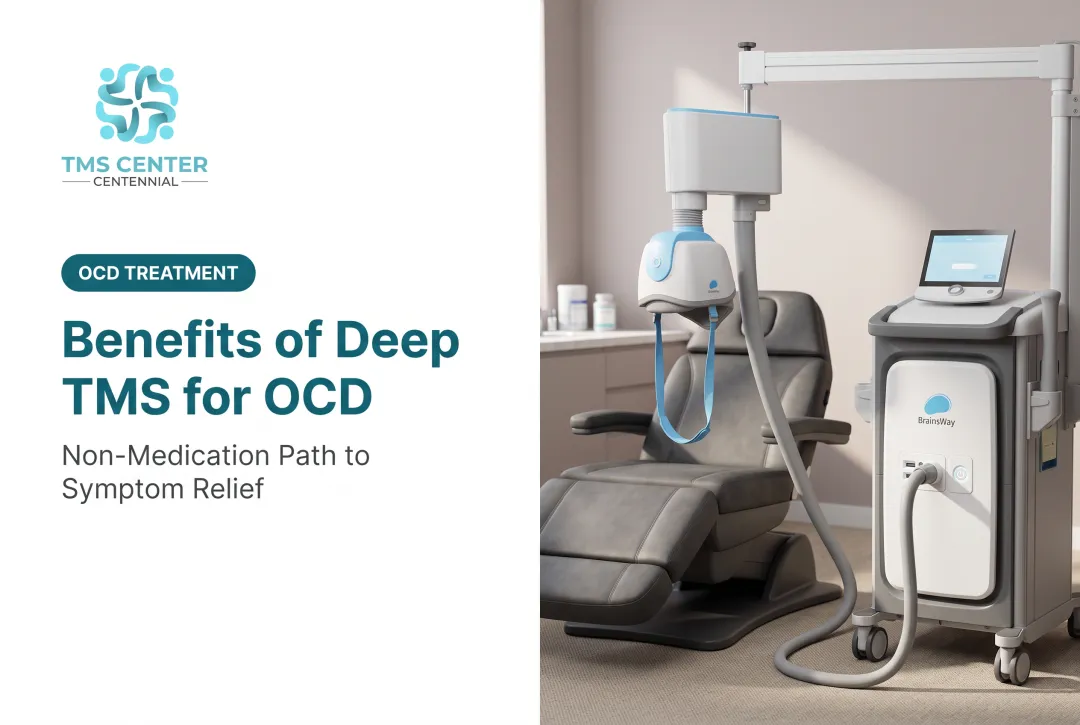
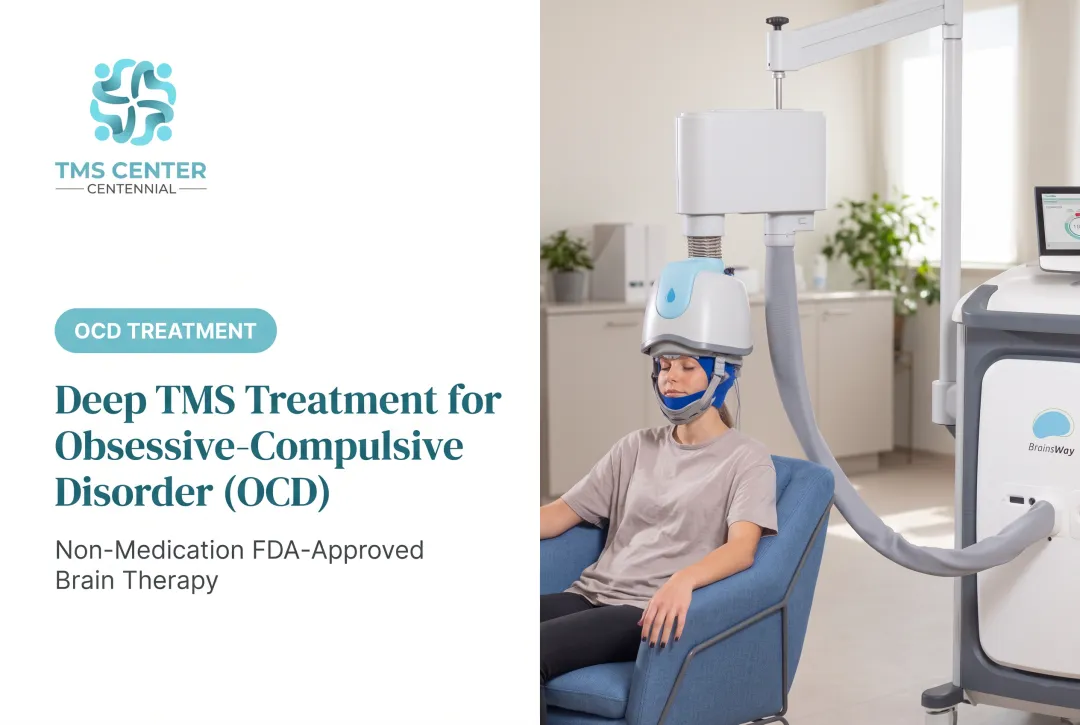
Deep TMS stands for Deep Transcranial Magnetic Stimulation. It uses an electromagnetic coil, positioned in a helmet-like device, to send magnetic pulses through the skull. These pulses stimulate neural activity in brain regions tied to mood regulation, most notably the dorsolateral prefrontal cortex.
A Typical Treatment Session
You sit in a chair, fully awake, while a technician positions the coil against your scalp. Here's what to expect:
- No anesthesia or sedation required
- Sessions typically take about 30 to 45 minutes in the office, depending on the protocol
- Clicking or tapping sounds as the pulses fire
- Drive yourself home immediately after
Why the H-Coil Matters
BrainsWay's patented H-coil is designed to stimulate deeper and broader brain volumes than the figure-8 coils used in standard TMS. One published comparison found a figure-8 coil produces a focal field reaching roughly 1.5 cm deep, while H-coils target larger, deeper regions. That's a design distinction worth knowing, not a guarantee of better results for every patient.

The Treatment Course
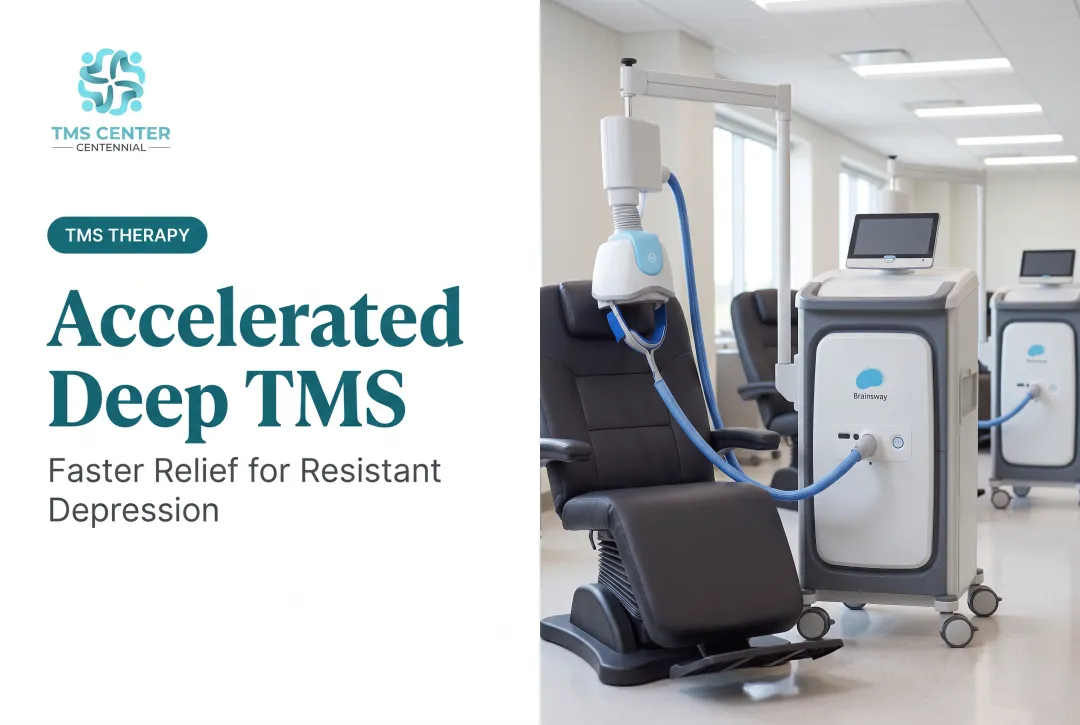
A standard course runs five sessions per week for four to six weeks — often 20 to 30 total sessions. TMS Center Centennial also offers Swift Deep TMS™, an accelerated protocol that condenses acute treatment into about six intensive days, then twice-weekly sessions for two weeks.
Certified BrainsWay technicians administer every session under physician oversight. Head mapping with the treating physiatrist sets exact helmet placement.
Deep TMS vs. Traditional TMS: What's the Difference?
Coil Design and Brain Coverage
Standard rTMS uses a figure-8 coil that delivers a focused, narrow pulse. Deep TMS's H-coil spreads that stimulation across a wider and deeper area of brain tissue, stimulating neural pathways more broadly and reaching approximately four times deeper than traditional rTMS. Think of it as the difference between a flashlight beam and a floodlight.
Treatment Applications and Approval History
Traditional rTMS has been FDA-cleared for depression in the U.S. since 2008. BrainsWay's Deep TMS technology received its own FDA clearance for major depressive disorder in 2013, then expanded:
- 2018 — OCD
- 2020 — Smoking cessation
- 2021 — Anxious depression (comorbid with MDD)
That expansion history matters. It means dTMS has cleared FDA review for a wider set of conditions than older rTMS devices typically carry on their labels.

Patient Experience Differences
Both treatments feel similar. You notice a tapping sensation on the scalp, there is no downtime, and you can drive home afterward. Standard TMS sessions can run longer because the pulse is more localized. Many patients find the Deep TMS helmet more secure and comfortable because it does not need precise arm-mounted coil positioning.
What Conditions Does Deep TMS Treat?
Deep TMS's primary FDA-cleared use is treatment-resistant major depression, for patients who haven't found relief through antidepressants or talk therapy alone.
It's also FDA-cleared for OCD. A randomized, multicenter trial reviewed by the FDA found 38% of patients responded to active BrainsWay treatment for OCD, compared to just 11% with sham treatment.
Other FDA-cleared Deep TMS indications include:
- Anxious depression (anxiety symptoms that occur with depression), cleared in 2021
- Short-term smoking cessation support
PTSD is still in active clinical trials and is not an FDA-cleared dTMS indication.
TMS Center Centennial treats depression, OCD, anxiety, and PTSD. Clinical director Rodney Placzek, a retired Army Sergeant Major, first discovered TMS as a patient himself.
Roughly 30% of military personnel and veterans experience PTSD symptoms, and many are reluctant to seek help. Rodney's service background shapes how the center supports that community.
Important distinction: PTSD and anxiety-only diagnoses remain research areas, not FDA-cleared dTMS indications. A physician can still discuss them as options, but they should be framed as investigational.
Does Deep TMS Actually Work? Effectiveness and What to Expect
A landmark randomized, sham-controlled trial of 212 outpatients with treatment-resistant depression found active dTMS produced a 38.4% response rate and 32.6% remission rate, compared to 21.4% and 14.6% with sham treatment, per research published in World Psychiatry.
Real-world naturalistic studies report even higher clinician-assessed response rates, though those studies lack a sham comparison group.
TMS Center Centennial reports its own outcomes from treated patients: 89% experiencing significant symptom reduction and approximately 69% achieving complete remission.
These are clinic-reported figures, not independent published research, but they align with the pattern seen in peer-reviewed studies.

What Influences Results
Several factors shape how well dTMS works for an individual:
- Diagnosis accuracy — correctly identifying depression versus other overlapping conditions
- Treatment adherence — completing the full course of sessions
- Combined care — pairing dTMS with counseling or NeurOptimal® neurofeedback
Most patients don't notice change overnight. Improvement typically builds over the first few weeks, with response often emerging in the second or third week of a standard four-to-six-week course.
Is Deep TMS Safe? Side Effects and Session Experience
Common Side Effects
The FDA's review of BrainsWay's OCD trial found headache to be the most frequent adverse reaction. Other effects were mild and short-lived. Typical side effects include:
- Scalp discomfort at the treatment site
- Mild headache
- Jaw tension or tightness
These generally resolve within hours and diminish over the course of treatment as technicians adjust settings.
What Does Deep TMS Feel Like?
Most patients describe a tapping or clicking sensation on the scalp, often compared to a light woodpecker knock. It isn't painful for most people, and intensity is fully adjustable. Technicians start at a lower pulse strength and raise it gradually as tolerance builds.
Things We Need to Know About Before Deep TMS
A physician screens every patient before treatment begins. Things we need to know about generally include:
- Removable metal around the head and neck (earrings, necklaces, hearing aids, hairpins, and similar items): taken off before the session and not a disqualifier
- Implanted or permanent metal needing clinical evaluation: cochlear implants, aneurysm clips, certain stimulators, stents, metal within about 30 centimeters of the treatment area, retained bullet fragments or other ferrous metal fragments, and tattoos containing inks formulated with metals
- History of seizures or seizure risk factors
- Certain neurological conditions requiring individual evaluation
At TMS Center Centennial, doctors complete this screening during intake before finalizing any treatment plan. A history of psychotherapy is generally required as part of that evaluation - you'll just need to tell us who you saw for therapy and roughly when. Please raise anything you are unsure about during your evaluation.
Medications during Deep TMS
Patients can generally continue their current medications during the TMS protocol. In practice, patients should stay stable on their medications during treatment rather than adjusting doses mid-course on their own. Keeping medications stable helps limit variables during treatment, so the clinical team can tell what is actually working. Any medication changes should be made under medical supervision, and preferably after finishing the TMS protocol rather than during it. Those decisions should always be guided by the prescribing clinician.
Cost, Insurance, and Getting Started with Deep TMS
What Affects the Cost
Deep TMS pricing varies based on:
- Number of sessions in your treatment plan (standard vs. accelerated Swift protocol)
- Provider and geographic location
- Whether maintenance sessions are needed after the acute course
There's no single national average, so a personalized quote from your provider matters more than any number you'll find online.
Insurance Coverage
Most major insurers cover Deep TMS for qualifying depression diagnoses, including:
- Cigna
- Aetna
- Anthem Blue Cross Blue Shield
- TriCare
- United Healthcare
Coverage details, including prior authorization requirements and deductibles, vary by plan. TMS Center Centennial handles insurance verification and paperwork on your behalf and provides a personalized benefits analysis before treatment starts.
Getting Started
The evaluation process at TMS Center Centennial follows these steps:
- Initial consultation with Dr. Cheryl Dasler, Psychiatrist, to assess whether dTMS fits your history and symptoms
- Insurance verification, including authorization and benefits analysis
- Personalized treatment planning, including head mapping to determine coil placement
- Treatment sessions with a certified BrainsWay technician under physician oversight

The clinic also has two therapy dogs, Finn and Furgus, on-site. You can hold them during sessions—patients often say it makes visits feel less clinical and more like stopping by a friend's house.
Frequently Asked Questions
What does dTMS stand for?
dTMS stands for Deep Transcranial Magnetic Stimulation, an FDA-cleared form of TMS that uses BrainsWay's patented H-coil technology to reach broader and deeper brain regions than standard rTMS devices.
What is dTMS used for?
Deep TMS is FDA-cleared for treatment-resistant major depression, OCD, smoking cessation, and anxious depression. Research into other applications, including PTSD, is ongoing but not yet FDA-cleared.
Can Deep TMS be used to treat OCD?
Yes. The FDA cleared BrainsWay's Deep TMS device for OCD in 2018 after a trial showed 38% of patients responded to treatment versus 11% on sham. The OCD protocol targets different brain circuitry than the depression protocol.
What is the difference between TMS and dTMS?
The key difference is coil design. Standard TMS uses a figure-8 coil for focal, shallow stimulation, while dTMS uses an H-coil built to reach wider and deeper brain regions.
What are the common side effects of Deep TMS therapy?
Side effects are typically mild and temporary, including scalp discomfort, headache, and jaw tension. Most resolve within hours and lessen as treatment continues.
How much does Deep TMS cost?
Cost depends on the number of sessions, your specific insurance plan, and whether you choose the standard or accelerated protocol. Contact a provider like TMS Center Centennial for a personalized quote and insurance verification.