
Many mothers face real barriers to treatment: fear of medication while breastfeeding, stigma around admitting they're struggling, or past treatments that simply didn't work. TMS therapy offers something different — an FDA-cleared, medication-free option. TMS Center Centennial provides this specialized care to mothers throughout the Denver area.
Key Takeaways
- PPD is a treatable medical condition—not a personal failing—and it affects many new mothers
- TMS is FDA-approved, non-drug, and non-invasive, so it avoids medication risks while breastfeeding
- Pilot rTMS studies in postpartum women report high response and remission rates
- TMS Center Centennial pairs Deep TMS with counseling and neurofeedback to support full recovery
Understanding Postpartum Depression: Symptoms, Causes, and Why It's Different from "Baby Blues"
Baby blues typically peak 3-5 days after delivery and resolve within about 10-12 days, according to ACOG. PPD is different. It can emerge anytime from the first weeks up to a year postpartum, and it doesn't resolve on its own.
Core PPD symptoms include:
- Persistent sadness or hopelessness lasting weeks, not days
- Difficulty bonding with the baby
- Significant appetite or sleep changes (beyond normal newborn exhaustion)
- Intrusive, unwanted thoughts
- Loss of interest in things once enjoyed
The biology matters here. Rapid hormonal shifts after delivery affect serotonin, dopamine, and norepinephrine: the neurotransmitters that regulate mood. PPD is a medical condition rooted in brain chemistry, not a personal failure.
Despite how common PPD is, many cases go unaddressed. CDC data shows 13% of women with a recent live birth reported depressive symptoms, and roughly one in five never told a provider, per the CDC's Vital Signs report. Stigma and fear of medication are common reasons why.

Does Postpartum Depression Go Away on Its Own?
Mild adjustment symptoms can ease with rest, support, and time. Clinical PPD is different. It typically needs active treatment. Left untreated, symptoms can last for months or worsen. Research also links untreated maternal depression to developmental effects in children, so early care matters more than waiting it out.
How TMS Therapy Works for Postpartum Depression
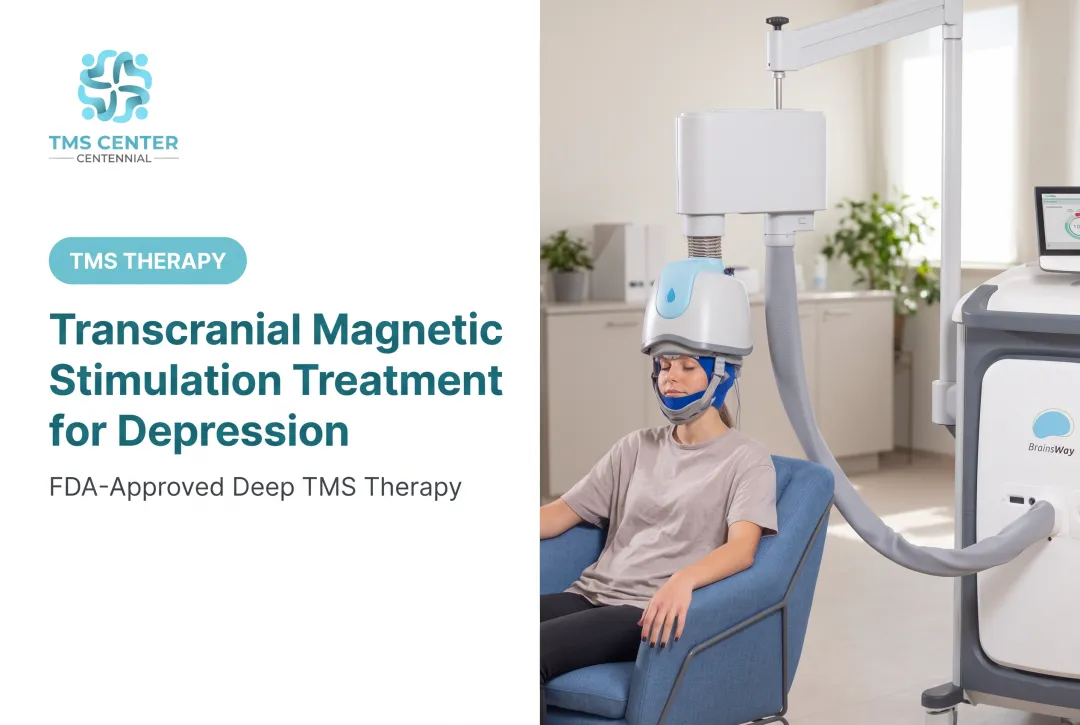
TMS (Transcranial Magnetic Stimulation) uses magnetic pulses to stimulate the dorsolateral prefrontal cortex — the brain region tied to mood regulation that's often underactive in depression. Sessions require no sedation and involve no systemic drug exposure.
That last point matters especially for nursing mothers. TMS doesn't pass through breast milk, because it isn't a medication at all — it's a localized magnetic stimulation delivered to the scalp. That makes it an appealing option for mothers who want to avoid the guesswork of medication safety during lactation.
What a session actually looks like:
- Outpatient visit, roughly 20-30 minutes per session
- No anesthesia or sedation required
- Patients can drive themselves home immediately after
- A standard course runs five days a week for about four to six weeks

What Research Shows
A 2021 systematic review of postpartum TMS studies (including work by Garcia and Myczkowski) found meaningful remission outcomes, with one case series reporting 14 of 19 patients achieving remission, according to research published in PMC. The studies are still small, yet the results are encouraging for a group long underrepresented in depression treatment research.
For mothers considering this option locally, delivery details matter as much as the research.
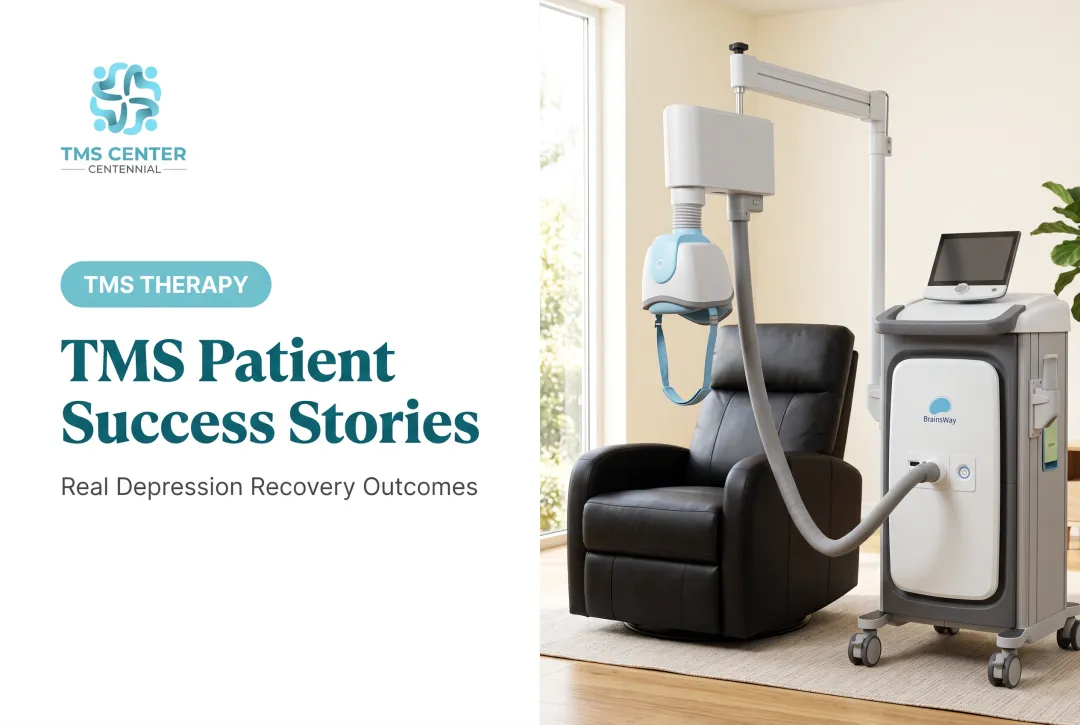
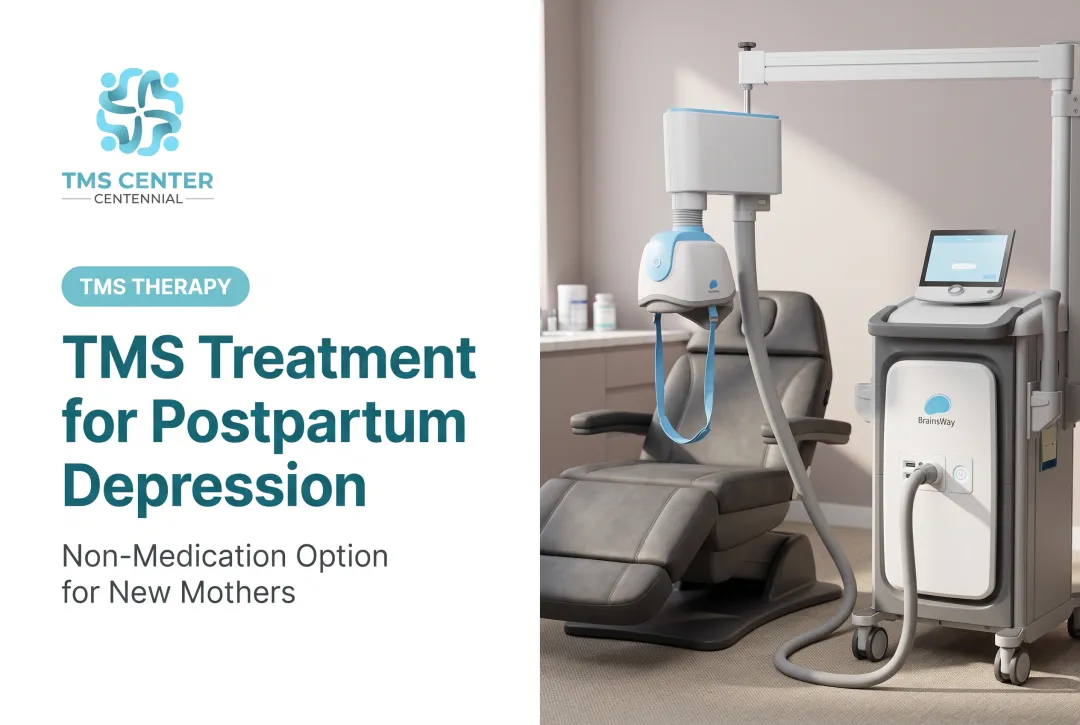
TMS Center Centennial uses BrainsWay Deep TMS™, an FDA-cleared technology, delivered by certified BrainsWay technicians. The clinic also offers Swift Deep TMS™, an accelerated protocol. Some patients finish the intensive phase in as little as six days, then move to a shorter taper. Separately, researchers are studying accelerated protocols like SAINT in postpartum groups, though PPD-specific published outcomes are not yet available.
What to Expect: Treatment Timeline and Measuring Progress
Most patients notice initial shifts in mood within two to three weeks of starting treatment. A full course typically looks like this:
- Four to six weeks of treatment
- Five sessions per week
- Around 30 sessions total
Clinicians track progress using standardized tools. ACOG specifically names the Edinburgh Postnatal Depression Scale (EPDS) and PHQ-9 for perinatal mental health screening, and many providers also use the Beck Depression Inventory (BDI) to monitor change over time.
In general adult populations, one Deep TMS trial reported 32.6% remission at five weeks, compared to 14.6% for sham treatment, per research in PMC. Postpartum-specific pilot data suggests comparable, sometimes higher, remission rates, though larger trials are still needed.

Throughout treatment, patients check in regularly with a psychiatrist who can adjust the plan as needed. At TMS Center Centennial, this psychiatric oversight is paired with collaborative counseling, so emotional support runs alongside the physical treatment.
Does TMS Help with Emotional Regulation, and Is It Safe?
Because TMS targets the prefrontal cortex, its benefits often extend past mood alone. Patients frequently report better emotional regulation, sharper focus, and improved sleep. Those gains matter when you're caring for a newborn on little rest.
Common side effects are mild and temporary, typically scalp discomfort during sessions and a brief headache afterward.
That safety profile compares favorably with the sedation risk of IV medications like brexanolone, or the memory effects sometimes associated with ECT (which TMS Center Centennial does not offer).
Serious risks such as seizure are rare, cited in peer-reviewed literature at under 1%. A psychiatrist evaluates every patient's candidacy before treatment begins and screens for factors that would make TMS inappropriate.
Comparing PPD Treatment Options: Where TMS Fits In
Standard PPD treatment usually includes:
- Psychotherapy — talk-based support, often the first line for mild-to-moderate cases
- Antidepressant medication — SSRIs/SNRIs, per ACOG guidance
- Newer neurosteroids — brexanolone (IV, approved 2019) and zuranolone (oral, approved 2023), both FDA-approved specifically for PPD

TMS enters the picture when medication isn't tolerated, hasn't worked, or conflicts with a mother's breastfeeding goals. Patients already on an antidepressant don't need to stop. TMS Center Centennial's protocol allows patients to stay on current medications during treatment, with any changes coordinated through the prescribing clinician afterward.
Coverage can make that option realistic. TMS Center Centennial accepts most major insurance plans, including Cigna, Anthem BCBS, Aetna, United Healthcare, and TRICARE.
Why Choose TMS Center Centennial for Postpartum Depression Care
The clinic's team brings genuine breadth to depression treatment:
- Dr. Cheryl Dasler, double board-certified in General Psychiatry and Child and Adolescent Psychiatry, oversees evaluations and treatment planning
- Carolyn Riviere and Barbra Ori, both LMFTs, provide collaborative counseling alongside TMS
- Certified BrainsWay technicians run each session with hands-on protocol expertise
Care pairs TMS with NeurOptimal® neurofeedback and ongoing therapy, so biological and emotional recovery move together. In the clinic's depression treatment data, 89% of patients see significant symptom reduction and 69% reach complete remission (BrainsWay clinical figures the practice reports).
The setting is built for patients who are already stretched thin:
- On-site therapy dogs during sessions
- Flexible scheduling around feeding and family demands
- A small team that knows patients by name
To discuss candidacy, call (720) 642-6555 or email info@tmscentercentennial.com.
Frequently Asked Questions
How many TMS therapy sessions are needed to feel better?
Most patients notice initial improvement within two to three weeks. A full course typically runs four to six weeks, with sessions five days a week, around 30 total sessions.
What are the potential side effects of TMS therapy for postpartum depression?
The most common effects are mild scalp discomfort and brief headache during or after sessions. Serious risks like seizures are rare, and a psychiatrist evaluates candidacy beforehand.
Does TMS therapy help with emotional regulation in postpartum depression?
Yes. By stimulating the prefrontal cortex, TMS often improves focus, sleep, and emotional control alongside reducing depressive symptoms.
What are the treatment options for postpartum depression?
Standard options include psychotherapy, antidepressant medication, and newer neurosteroids like zuranolone. TMS offers a medication-free alternative that doesn't pass through breast milk.
Does postpartum depression go away?
Mild symptoms can ease with time and support, but clinical PPD usually requires active treatment. Left untreated, it can persist or worsen for both mother and baby.