
Many people try medication, talk therapy, or both, and still struggle. That's because trauma physically alters the brain circuits governing fear and mood regulation, which helps explain why standard treatments sometimes fall short, particularly in treatment-resistant cases.
This guide covers how TMS works for PTSD, what current research shows about its effectiveness, how it compares to EMDR, and what patients can realistically expect from evaluation through their first month of treatment.
Key Takeaways
- FDA-cleared for depression and OCD; PTSD use is off-label but backed by growing clinical evidence.
- A 2025 VA cohort study found PTSD response rates as high as 78% with Deep TMS among veterans.
- A typical course runs about 30 to 45 minutes in the office per day, depending on the protocol, five days a week, for 4-6 weeks, with no anesthesia required.
- Combining TMS with EMDR often works better than either approach alone.
- Tricare and most major insurers are accepted at TMS Center Centennial, a practical factor for veterans.
Understanding PTSD and How Trauma Changes the Brain
PTSD develops after experiencing or witnessing a traumatic event, and it doesn't just live in someone's memory. It shows up in the body and behavior, often for years afterward.
Core symptoms typically include:
- Intrusive thoughts and flashbacks that replay the trauma without warning
- Nightmares that disrupt sleep night after night
- Hypervigilance, or constantly scanning for danger
- Avoidance of people, places, or situations tied to the trauma
- Emotional numbness, a shutdown that makes connection difficult
Combat veterans, first responders, and survivors of assault or disaster face particularly high risk. Among the 5.8 million veterans who received VA care recently, 14% of men and 24% of women had a PTSD diagnosis, according to the Department of Veterans Affairs.
What Trauma Does to the Brain
PTSD isn't a character flaw or a failure to "move on." It reflects measurable changes in brain function:
- Amygdala fires off exaggerated fear signals and stays on high alert
- Prefrontal cortex, which normally calms the amygdala down, becomes underactive — the brain's brake pedal weakens
- Hippocampus shrinks and struggles to file memories with proper context, making it harder to tell a car backfiring from actual danger

That's why willpower alone rarely resolves PTSD. The circuitry itself has shifted, which is part of why researchers started looking at direct brain stimulation as a treatment option.
How TMS Therapy Targets PTSD Symptoms
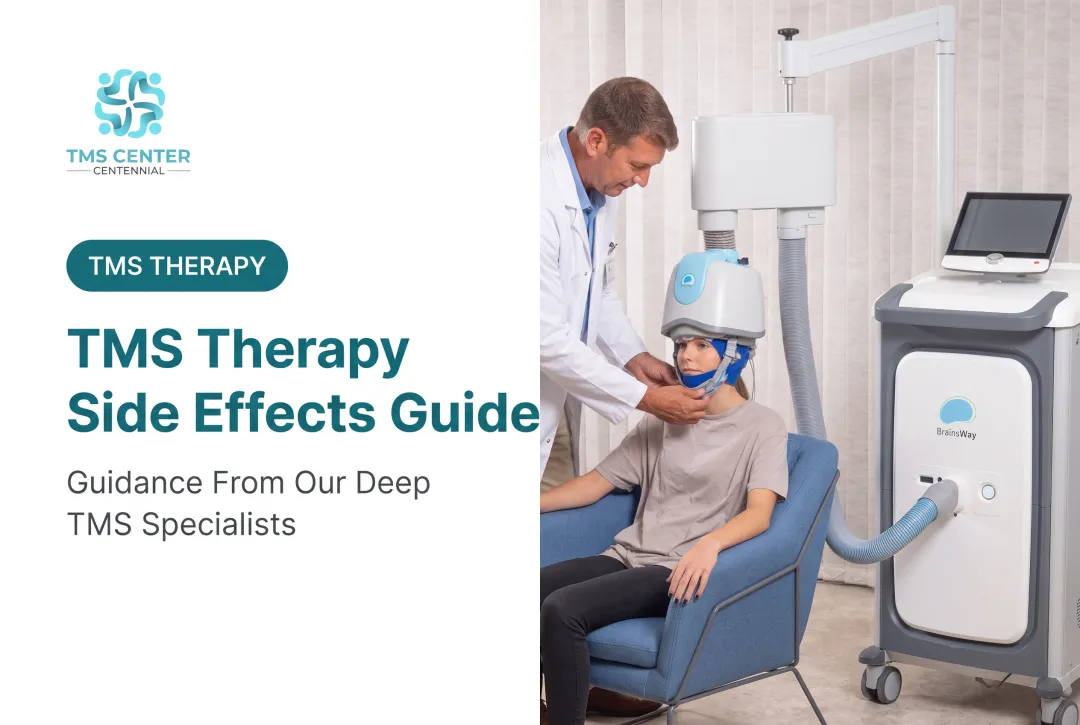
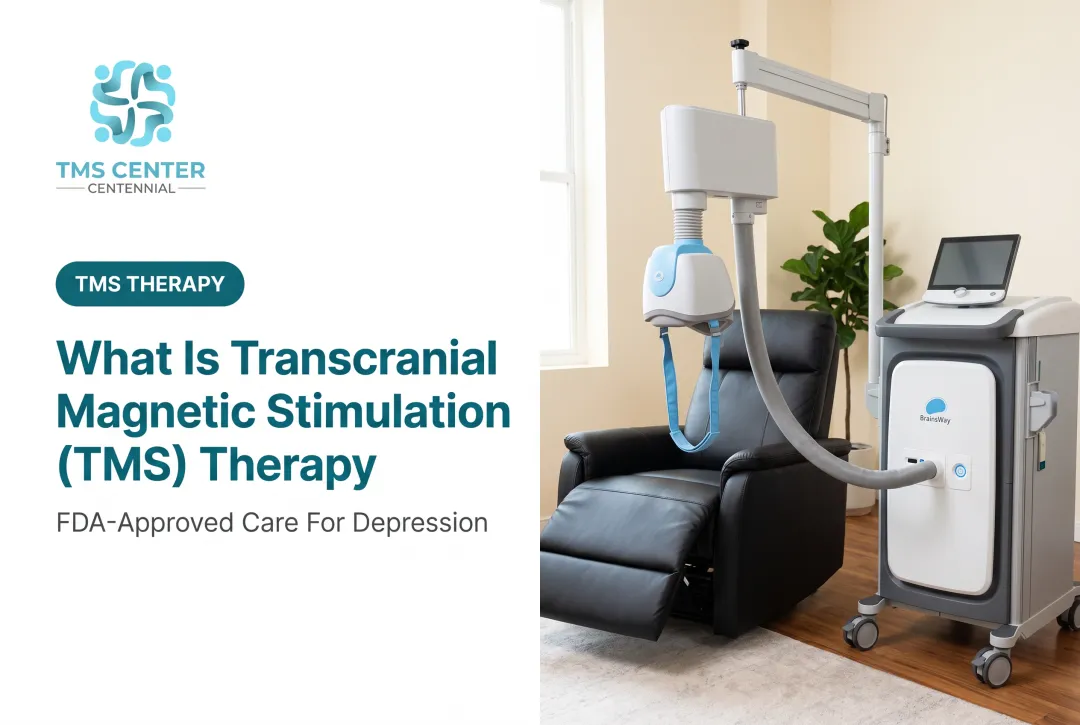
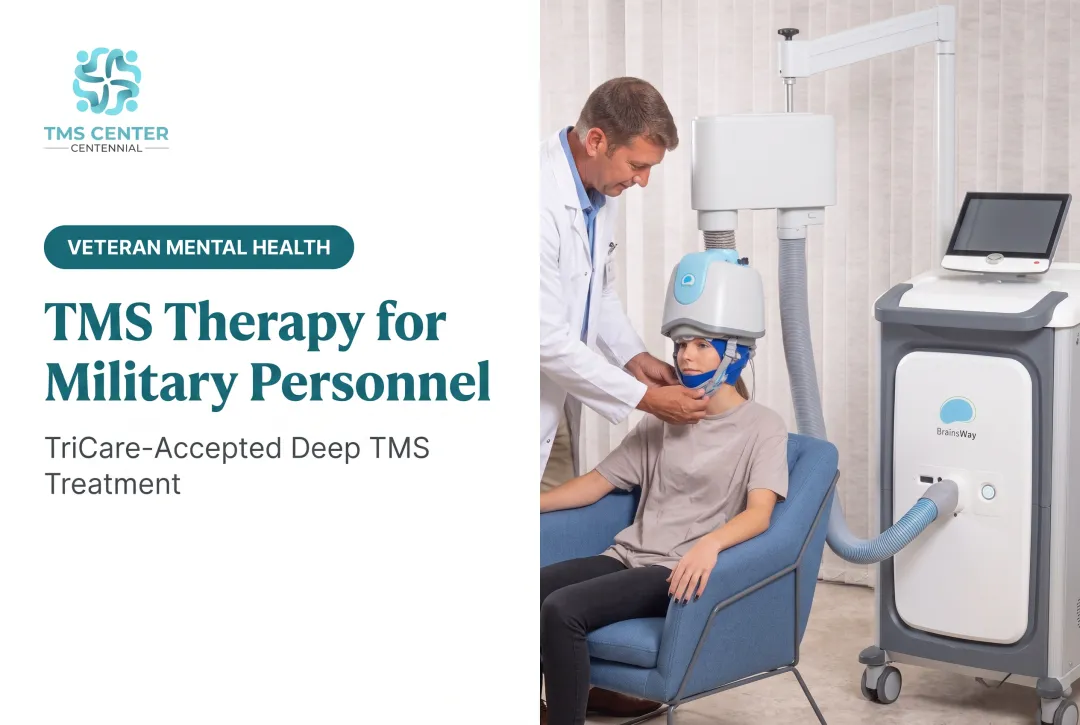
TMS, or transcranial magnetic stimulation, is a non-invasive, drug-free procedure. Magnetic pulses stimulate targeted brain regions while the patient sits awake in a chair: no anesthesia, no sedation, no downtime.
The primary target is the dorsolateral prefrontal cortex (DLPFC) and the fear circuitry it connects to. The goal is to rebalance activity between an overactive amygdala and an underactive prefrontal cortex, retraining the brain's threat-response system.
Standard rTMS vs. Deep TMS
Not all TMS devices work the same way:
- Standard rTMS uses a figure-8 coil that delivers a focal but shallow field, reaching roughly 1.5 cm into the cortex
- Deep TMS (dTMS), delivered through H-coil technology like BrainsWay, reaches approximately four times deeper than traditional rTMS and stimulates a broader area of neural pathways, engaging more of the network involved in emotional regulation and fear processing
TMS Center Centennial uses BrainsWay Deep TMS to reach more of the circuits tied to PTSD symptoms such as hypervigilance and intrusive memories.
FDA Clearance vs. Off-Label Use
Here's where patients need clear expectations. The FDA cleared TMS for major depression in 2008, and BrainsWay's Deep TMS system has since gained clearance for OCD, smoking cessation, and anxious depression. PTSD is not currently an FDA-cleared indication.
That means PTSD treatment with TMS is offered off-label, based on a growing (but still emerging) body of clinical research rather than a formal FDA approval for this specific condition. Reputable clinics should be upfront about this distinction.
Neuroplasticity and Complementary Support
High-frequency TMS generally increases cortical excitability in the stimulated region. That boost in neuroplasticity is one reason clinicians often combine TMS with psychotherapy: the brain may be more open to new learning during and after a course of treatment. Research on exact biomarkers is still emerging, but many patients use both approaches together.
Some clinics also add neurofeedback, a non-medication option that trains self-regulation and can support sleep and emotional stability. TMS Center Centennial offers NeurOptimal neurofeedback (33-minute sessions with real-time brainwave monitoring) as a complement to TMS.
Is TMS Effective for PTSD? What the Research Shows
The most substantial PTSD-specific data to date comes from a 2025 retrospective study of veterans treated within the VA system.
What a Major VA Study Found
Researchers examined 756 veterans with co-occurring PTSD and depression, comparing three TMS protocols. The results, published in a multisite VA cohort study, showed:
- 10-Hz rTMS: 63% response rate, 47% remission
- iTBS: 65% response rate, 48% remission
- H1-coil Deep TMS: 78% response rate, 49% remission

One caveat: this was an observational, real-world study, not a randomized controlled trial, and it focused on veterans with both PTSD and depression. Treat the numbers as a strong benchmark, not a guarantee.
Response vs. Remission — and Realistic Timing
Response generally means a meaningful drop in symptom severity, such as a 10-point or greater reduction on the PCL-5 scale. Remission means the patient no longer meets full diagnostic criteria for PTSD.
In the VA cohort above, roughly half of patients reached remission by the end of treatment.
On timing, many patients notice initial improvement within 2-3 weeks, with full benefits typically emerging after a complete 4-6 week course of daily sessions. PTSD research is still catching up to TMS's FDA-approved depression indication, so treat these timelines as a range rather than a guarantee.
Better Together: TMS Plus Therapy
Combining TMS with psychotherapy tends to outperform either treatment alone. In a 2018 trial of 103 combat veterans, low-frequency rTMS delivered before Cognitive Processing Therapy sessions produced significantly greater symptom reduction than sham stimulation plus therapy, with benefits sustained through six months.
This is part of why TMS Center Centennial pairs Deep TMS with collaborative, trauma-informed counseling rather than treating it as a standalone fix.
TMS vs. EMDR: Which Approach Is Right for Trauma?
EMDR (Eye Movement Desensitization and Reprocessing) is an established trauma-focused psychotherapy. It uses guided eye movements while patients actively recall and process traumatic memories.
TMS works differently. It's passive: patients don't need to verbally relive the trauma during treatment. That makes it appealing for people who find exposure-based work overwhelming or who've struggled to complete talk therapy.
| Factor | EMDR | TMS |
|---|---|---|
| Format | Guided psychotherapy | Device-based brain stimulation |
| Requires discussing trauma | Yes, directly | No |
| Typical schedule | Weekly sessions | Daily sessions, 4-6 weeks |
| Evidence base | Established, VA/APA-recognized | Emerging, off-label for PTSD |
TMS and EMDR aren't mutually exclusive, and many patients see the strongest results from combining the two. The right fit depends on trauma history, comfort with exposure-based work, and how someone has responded to prior treatment.
What to Expect: The TMS Journey at TMS Center Centennial
The Evaluation
Treatment starts with a comprehensive psychiatric assessment led by the clinical team, including Dr. Cheryl Dasler, Psychiatrist. This includes a full medical and trauma history review, screening for contraindications, and a discussion of prior treatment attempts to confirm candidacy for Deep TMS. A history of psychotherapy is generally required as part of that evaluation - you'll just need to tell us who you saw for therapy and roughly when.
A Typical Session
TMS Center Centennial uses BrainsWay Deep TMS technology, administered by certified technicians. Several people on the team have sat in the chair as patients first.
Rodney Placzek, a retired Army Sergeant Major and the clinic's co-founder, went through TMS during his own recovery before becoming a certified trainer and technician. Christine Cook, the lead TMS Coordinator, became a patient after a period of significant loss before joining the team.
A typical visit looks like this:
- You settle into a comfortable chair
- A technician positions the magnetic coil against your scalp
- The device delivers targeted magnetic pulses while you stay awake
- After about 30 to 45 minutes in the office, depending on the protocol, you return to normal activities - no sedation required

The full course runs five days a week for 4–6 weeks.
Many patients bring along Finn or Fergus, the clinic's resident West Highland Terriers, who sit with patients (sometimes right in their lap) during sessions to ease the apprehension of a first visit.
Support Beyond the Chair
Beyond Deep TMS, the clinic offers NeurOptimal neurofeedback and collaborative trauma-informed counseling with Carolyn Riviere, LMFT, for patients who want a more holistic approach to recovery.
Most major insurance plans are accepted, including Cigna, Anthem Blue Cross Blue Shield, United Healthcare, Aetna, Tricare, and most Medicare plans, which matters for veterans and active-duty service members. The clinic manages benefits verification and paperwork directly, providing a personalized cost breakdown before treatment begins.
If you're weighing whether TMS is the right next step, a consultation is the fastest way to find out — call (720) 642-6555 or email info@tmscentercentennial.com.
Who Is a Good Candidate & What to Consider
Not everyone with PTSD is a fit for TMS, but the general criteria are straightforward:
- Age 18 or older
- Symptoms that haven't fully responded to therapy, medication, or both (or cases where medication isn't viable)
Things we need to know about metal (keep removable and implanted categories separate so they are not confused):
- Removable (earrings, necklaces, hearing aids, hairpins, and similar items around the head and neck): taken off before the session and not a disqualifier
- Implanted or permanent (need a clinical evaluation): cochlear implants, deep-brain stimulators, vagus-nerve stimulators, aneurysm clips, stents, metal within about 30 centimeters of the treatment area, retained bullet fragments or other ferrous metal fragments, and tattoos containing inks formulated with metals
A personal seizure history isn't an automatic disqualifier, but clinicians review it carefully during screening. Overall seizure risk from TMS is estimated at roughly 0.01% under professional supervision. Please raise anything you are unsure about during your evaluation.
Insurance coverage is well-established for depression, but PTSD coverage varies by plan and by what the insurer needs on file. Confirm specifics with your provider, or ask the clinic to run a benefits check, before you start.
Safety profile at a glance:
- Most side effects are mild: headache or scalp discomfort, usually in the first week
- Symptoms typically resolve on their own or with over-the-counter pain relief
- Serious risks, including seizure, are rare
Frequently Asked Questions
Is TMS therapy effective for trauma?
Research shows promising symptom reduction for PTSD, including a 2025 VA study reporting response rates up to 78%. Results vary by individual, and outcomes tend to be strongest for those who haven't responded to medication or talk therapy.
Which is better for trauma: TMS therapy or EMDR?
Neither is universally "better." TMS avoids reliving the trauma narrative, while EMDR uses guided reprocessing of the memory itself. Many patients get the best results by combining both approaches.
How long do the effects of TMS therapy for trauma last?
Many patients experience symptom relief lasting several months to years after completing treatment. Some benefit from occasional maintenance sessions if symptoms begin to resurface.
Does TMS therapy hurt or require anesthesia?
No. TMS is non-invasive and requires no sedation or anesthesia. Most patients feel a mild tapping sensation or brief scalp discomfort, especially during the first week. That said, yes, patients can continue their current medications during the TMS protocol - the procedure itself does not require stopping prescriptions. Most people remain on their prescribed medications throughout treatment and should stay stable on them. Keeping medications stable helps limit variables during treatment, so the clinical team can tell what is actually working. Any medication changes should be made under medical supervision, and preferably after finishing the TMS protocol rather than during it, always guided by the prescribing clinician.
How many TMS sessions are typically needed for PTSD?
The standard course is usually five sessions per week for 4-6 weeks, similar to depression protocols. Your exact plan will be individualized based on symptoms and progress.
Is TMS therapy for PTSD covered by insurance?
Most major insurers cover TMS for depression-related diagnoses, but PTSD-specific coverage varies by plan. Confirm with your insurer, or ask the clinic to run a benefits check—many accept major plans, including TriCare.