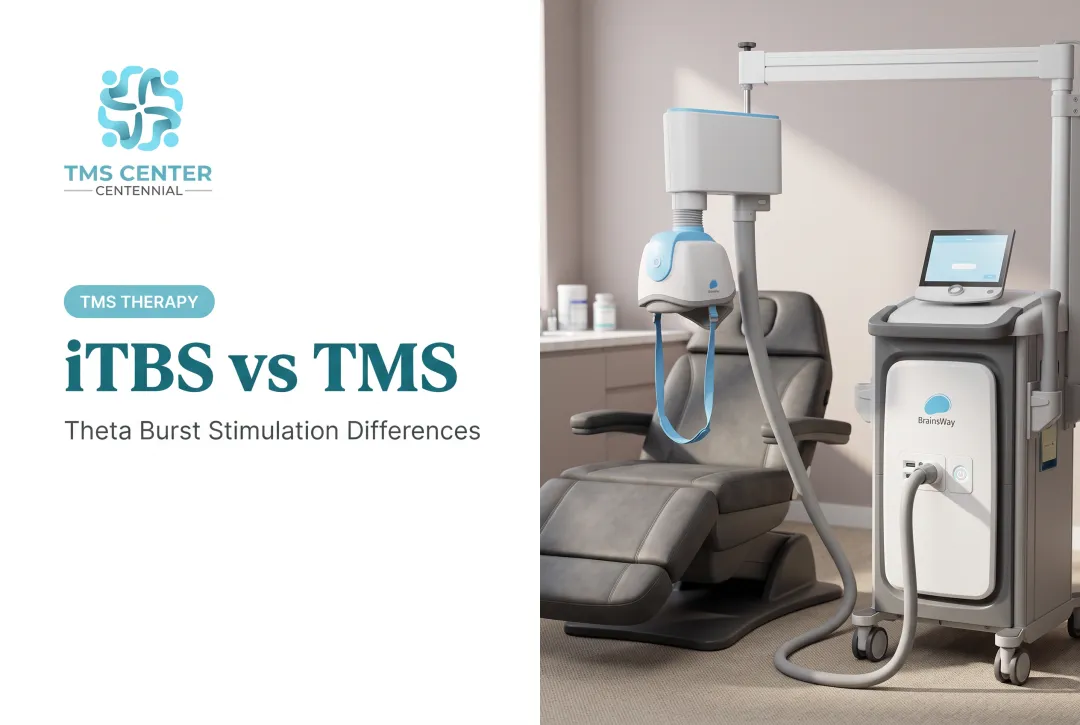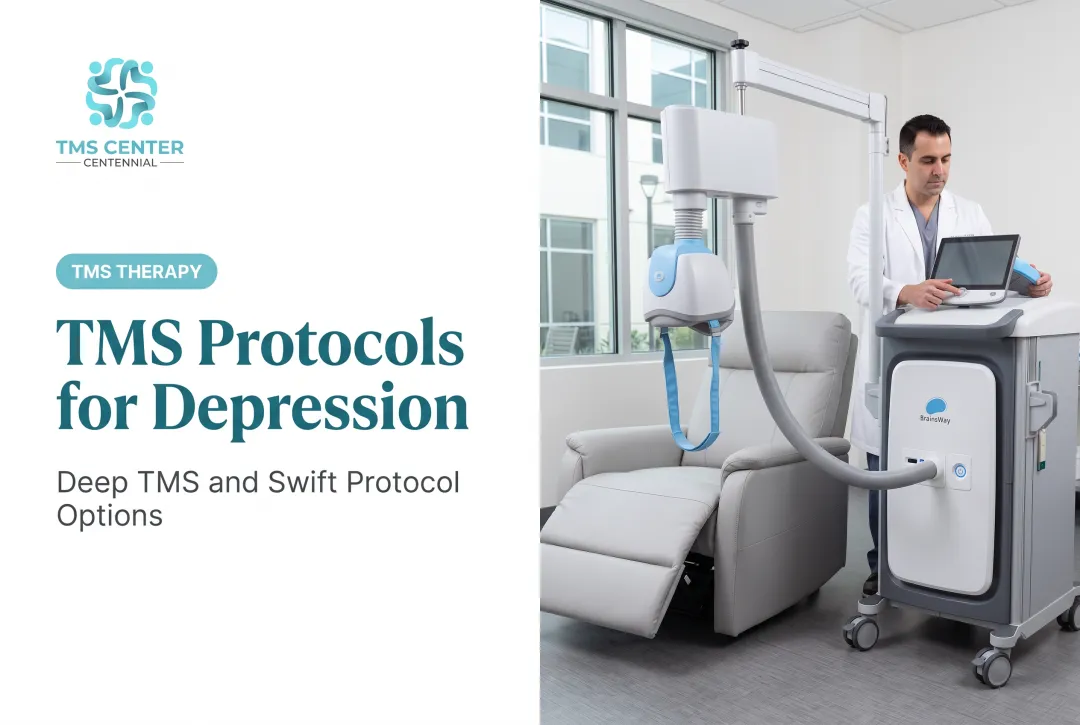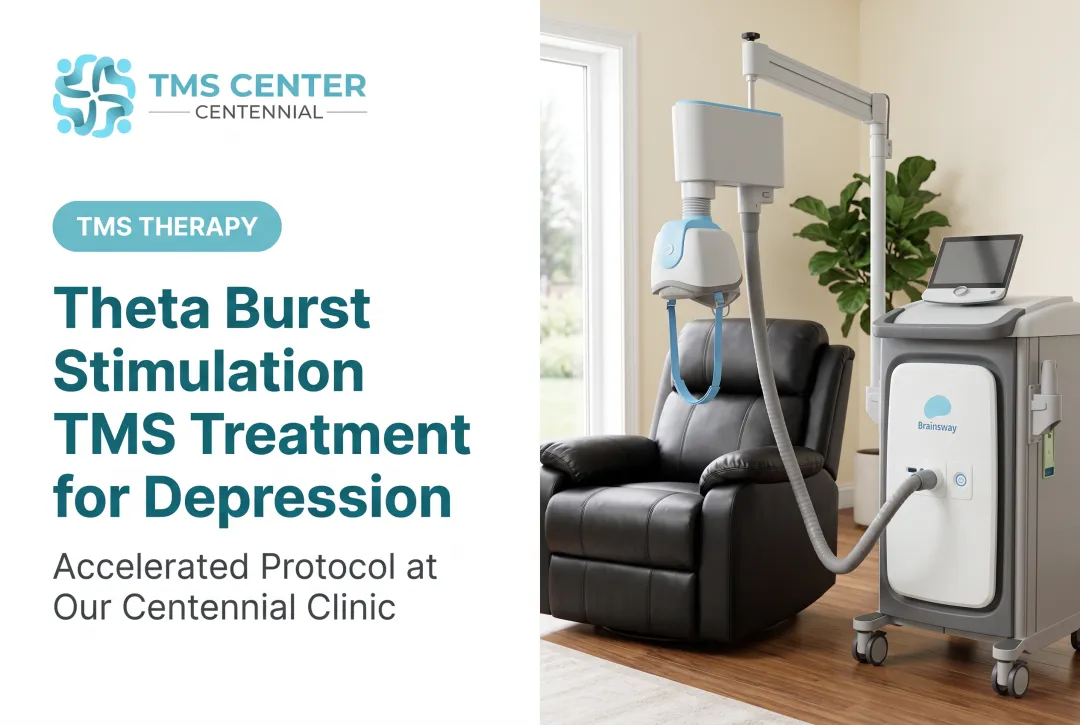

Intermittent Theta Burst Stimulation is an FDA-cleared, faster form of repetitive TMS that's been available since 2018. This article covers how it works, how safe it is, and how it stacks up against standard TMS. At TMS Center Centennial, our certified BrainsWay-trained technicians work with patients to figure out which protocol makes sense for their schedule, symptoms, and comfort preferences.
Key Takeaways
- iTBS delivers a theta-wave pulse pattern and has been FDA-cleared for depression since 2018
- Sessions take about 3 minutes versus 19–40 minutes for standard rTMS, with comparable effectiveness
- Safety matches standard TMS: mild side effects and a very low seizure risk
- Insurance coverage for iTBS typically tracks standard TMS benefits
- Choose a protocol based on schedule fit, tolerability, and your clinician’s recommendation
What Is Intermittent Theta Burst Stimulation (iTBS)?
iTBS is a specific pulse pattern within repetitive TMS (rTMS). Instead of delivering pulses at a steady, single frequency, iTBS fires triplets of pulses at 50Hz, grouped into bursts at 5Hz — mimicking the brain's natural theta rhythm. That patterned delivery is what separates it from conventional TMS.
Like standard TMS, iTBS targets the left dorsolateral prefrontal cortex (DLPFC), a region tied to mood regulation. A typical protocol delivers around 600 pulses in roughly 3 minutes, compared to about 3,000 pulses over 20+ minutes for standard 10Hz rTMS.
iTBS received FDA clearance in 2018 after the THREE-D trial, a randomized non-inferiority study published in The Lancet, found iTBS performed comparably to standard rTMS in treatment-resistant depression.
Why Theta Bursts Work Faster
Research suggests theta-frequency bursts trigger long-term potentiation (LTP) more efficiently than steady single-frequency pulses.
- LTP strengthens the synaptic connections involved in mood regulation
- Motor-cortex studies show lasting neuroplastic effects after seconds to a few minutes of theta burst stimulation
That efficiency is why a full iTBS session can deliver comparable therapeutic benefit in a fraction of the time.

Is iTBS a Form of TMS, and How Do They Differ?
Yes. iTBS is a subtype of rTMS, not a separate technology. The magnetic coil, the target brain region, and the overall goal are the same. What differs:
- Pulse pattern (bursts vs. steady pulses)
- Frequency of delivery
- Total session length
Think of it like interval training versus a steady jog: both are cardio, but the pacing changes the experience.
Safety Profile: Is iTBS Safe?
iTBS carries the same overall safety classification as standard TMS. It's non-invasive, requires no anesthesia, and doesn't come with the systemic side effects associated with medication.
Side effects are typically mild:
- Scalp discomfort at the treatment site
- Headache (usually manageable and short-lived)
- Temporary dizziness or sound sensitivity during treatment (uncommon)
Seizure risk is the primary safety concern people ask about with any form of TMS. According to 2021 international safety guidelines published in Clinical Neurophysiology, seizure risk with standard TMS parameters (including iTBS) is very low. TMS Center Centennial reports a seizure risk of roughly 0.01% with its TMS treatments.
Who might not be a candidate?
- Patients with non-removable metal implants near the head (cochlear implants, aneurysm clips, deep-brain or vagus-nerve stimulators)
- Certain seizure histories
- Specific neurological conditions requiring individualized review
A thorough intake evaluation matters here. At TMS Center Centennial, screening is physician-led: board-certified psychiatric and medical staff review medical history before treatment begins. A certified TMS technician then handles mapping for helmet placement.

How iTBS Differs From Standard TMS (rTMS)
iTBS and standard rTMS differ in session length, pulse pattern, and how the stimulation feels—not only in how fast a visit goes.
| Factor | iTBS | Standard rTMS |
|---|---|---|
| Session length | ~3 minutes | 19-40 minutes |
| Pulse delivery | Rapid burst pattern | Steady, evenly spaced pulses |
| Treatment course | 4-6 weeks, daily visits | 4-6 weeks, daily visits |
| Sensation | More intense, in short bursts | Evenly spaced, more predictable |
Session length is the biggest practical difference. A shorter visit means less time away from work or family responsibilities, even though the full course still typically runs 4 to 6 weeks either way.
Comfort varies by person. Some patients find iTBS's rapid bursts feel more intense in the moment, while others prefer that it's over quickly. Standard rTMS pulses feel more evenly spaced, which some people find easier to tolerate over a longer session.

Insurance coverage is often similar for both. Medicare coverage decisions for TMS in major depressive disorder usually do not hinge on which approved protocol you receive, and insurers like Aetna explicitly include iTBS when it is delivered on an FDA-cleared device within labeled use.
TMS Center Centennial accepts Cigna, Anthem Blue Cross Blue Shield, TRICARE, United Healthcare, and Aetna. Exact coverage still depends on your specific plan.
Is iTBS More Effective Than Standard TMS?
The THREE-D trial found iTBS non-inferior to standard 10 Hz rTMS in reducing depressive symptoms: not superior, not worse, but comparable.
Across TMS treatment broadly, published response rates hover around 50%, with remission rates near 33%, according to patient guidance from the American Psychiatric Association. Those numbers vary by protocol, patient history, and clinic.
"More effective" isn't quite the right framing. Efficacy is comparable between the two protocols; efficiency (session time) is iTBS's real advantage. If you're choosing based on results alone, either protocol is a reasonable starting point. If your schedule is the deciding factor, iTBS's 3-minute session time is hard to beat.
Is Accelerated TMS More Effective Than Regular TMS?
Accelerated TMS means multiple iTBS sessions delivered in a single day, condensed into days rather than weeks. Research programs like Stanford's SAINT protocol have delivered 10 sessions per day over 5 days, with roughly 50-minute gaps between sessions to let neuroplastic changes take hold.
Compared with standard once-daily TMS, accelerated protocols mainly change the timeline, not the stimulation method itself. Early research points to similar—and for some patients, stronger—early response, with the clearest advantage being faster symptom relief.
How accelerated and regular TMS typically differ:
- Multiple sessions per day instead of one
- Full course compressed into about a week rather than 4–6 weeks
- Built-in rest intervals (~50 minutes) so the brain can consolidate changes
- Still evolving research; not offered at every clinic
Spacing matters as much as dose. Sessions packed too tightly do not give the brain time to lock in changes.

TMS Center Centennial offers Swift Deep TMS™, an accelerated protocol on the same FDA-cleared BrainsWay technology used for conventional Deep TMS. A clinical evaluation decides whether a shortened timeline fits the patient. NeurOptimal® neurofeedback is available as a complementary option when it supports the overall plan.
Frequently Asked Questions
Is intermittent theta burst stimulation (iTBS) a form of transcranial magnetic stimulation (TMS), and how do they differ?
Yes, iTBS is a pulse-pattern subtype of rTMS, not a separate treatment category. It differs mainly in pulse speed, frequency, and how quickly a session is completed.
What does intermittent theta burst stimulation (iTBS) do?
It stimulates the left dorsolateral prefrontal cortex (DLPFC) with brief, theta-like bursts to support mood-regulation networks tied to depressive symptoms.
Is intermittent theta burst stimulation (iTBS) more effective than standard TMS?
Clinical trials, including the THREE-D trial, show iTBS is non-inferior to standard rTMS—outcomes are comparable, not clearly superior.
Is accelerated TMS more effective than regular TMS?
Accelerated TMS can produce faster relief for some patients, but overall long-term outcomes are generally similar to standard-paced protocols.
How long does an iTBS treatment course take?
Individual sessions run about 3 minutes, but most patients still complete a full 4-6 week course of daily sessions to see lasting results.
Does insurance cover iTBS treatment?
Coverage varies by insurer and plan. TMS Center Centennial accepts most major insurance plans and helps verify your specific benefits before treatment begins.