
The honest answer: it depends. TMS pricing swings based on the protocol you choose, your insurance plan, the provider you pick, and where you live. There's no single sticker price that applies to everyone.
This guide breaks down real cost ranges, the factors that push prices up or down, how insurance changes the math, and how to budget for treatment if you're in the Denver or Centennial, Colorado area.
Key Takeaways
- Full-course standard TMS costs about $6,000–$12,000 without insurance (peer-reviewed consensus review)
- With insurance, most patients pay a copay per visit instead of the full self-pay rate
- Total cost varies by protocol type, session count, and provider
- Most major insurers, including Medicare, cover TMS for treatment-resistant depression
- Verifying benefits with an insurance-friendly clinic can sharply lower your out-of-pocket cost
How Much Does TMS Therapy Cost? (Pricing Overview)
TMS doesn't come with one universal price tag. What you pay depends on how many sessions you need, which protocol your provider uses, and whether insurance is covering part of the bill.
A few common misconceptions trip patients up early:
- Assuming the "sticker price" quoted online applies to their specific situation
- Not checking insurance benefits before scheduling a consultation
- Forgetting that the initial evaluation is sometimes billed separately from the treatment course
Typical Cost Ranges
Without insurance: A 2018 consensus review from the Clinical TMS Society put a full 20-30 session acute course at $6,000 to $12,000, though the review notes real-world pricing varies by practice.
Many clinics quote up to $15,000 depending on location and protocol. Individual sessions commonly run $300 to $500 each when paid out of pocket.
With insurance: Once a copay or coinsurance applies, most patients pay a small fraction of the self-pay rate per visit. Your exact number depends on your deductible, plan design, and whether your provider is in-network, so verify benefits before treatment starts.
Advanced or accelerated protocols: Options like Deep TMS or intensive/accelerated schedules can carry a higher per-course price. Specialized coil technology and condensed treatment timelines both add cost, even though they may shorten your calendar time to relief.

What's Actually Included
Typical pricing covers:
- Treatment sessions themselves
- Initial consultation and brain mapping
- Technician time during each visit
- Physician oversight of your treatment plan
It usually excludes add-on therapies, such as neurofeedback or counseling, and any follow-up booster sessions down the road.
At TMS Center Centennial, pricing reflects a full-service model: BrainsWay Deep TMS™ delivered by certified technicians, with a medical director and board-certified psychiatrists overseeing care.
Key Factors That Affect the Cost of TMS Therapy
TMS pricing isn't arbitrary. Clinical decisions, logistics, and insurance rules shape what you pay, so rates vary from clinic to clinic.
Type of TMS Protocol
Standard rTMS, Deep TMS (BrainsWay), and accelerated protocols each carry different cost profiles:
- Standard rTMS uses longer individual sessions, often 30-40 minutes, across 20-30 visits
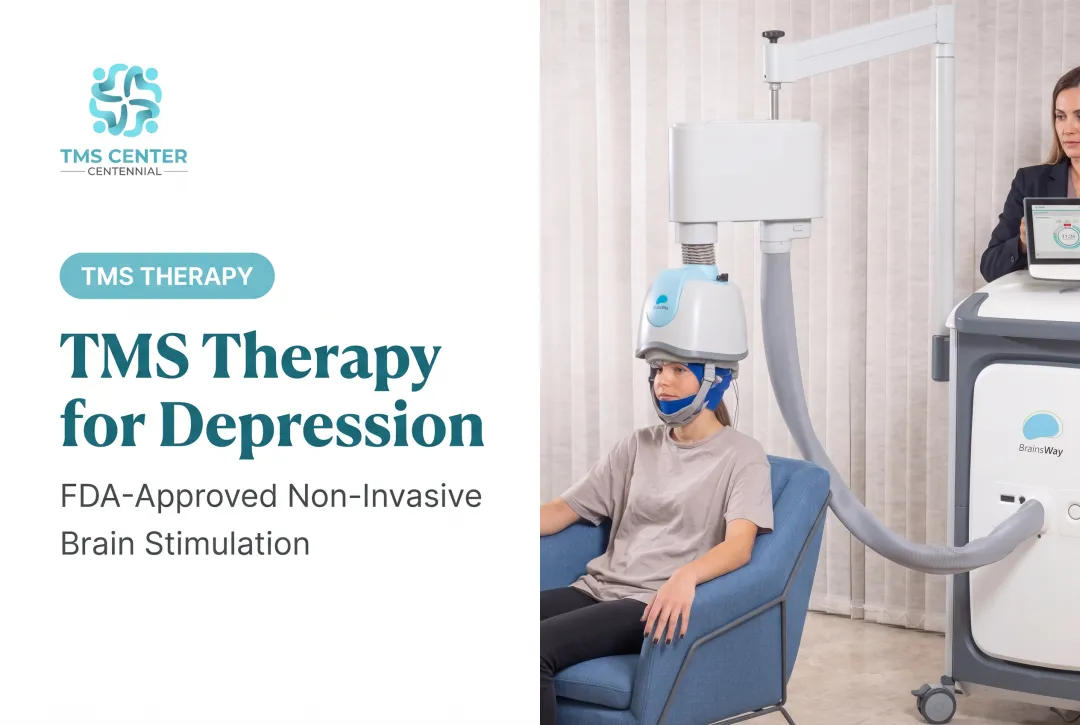
- Deep TMS uses a specialized helmet-style coil that reaches a broader area of the brain, sometimes at a modestly higher per-course price
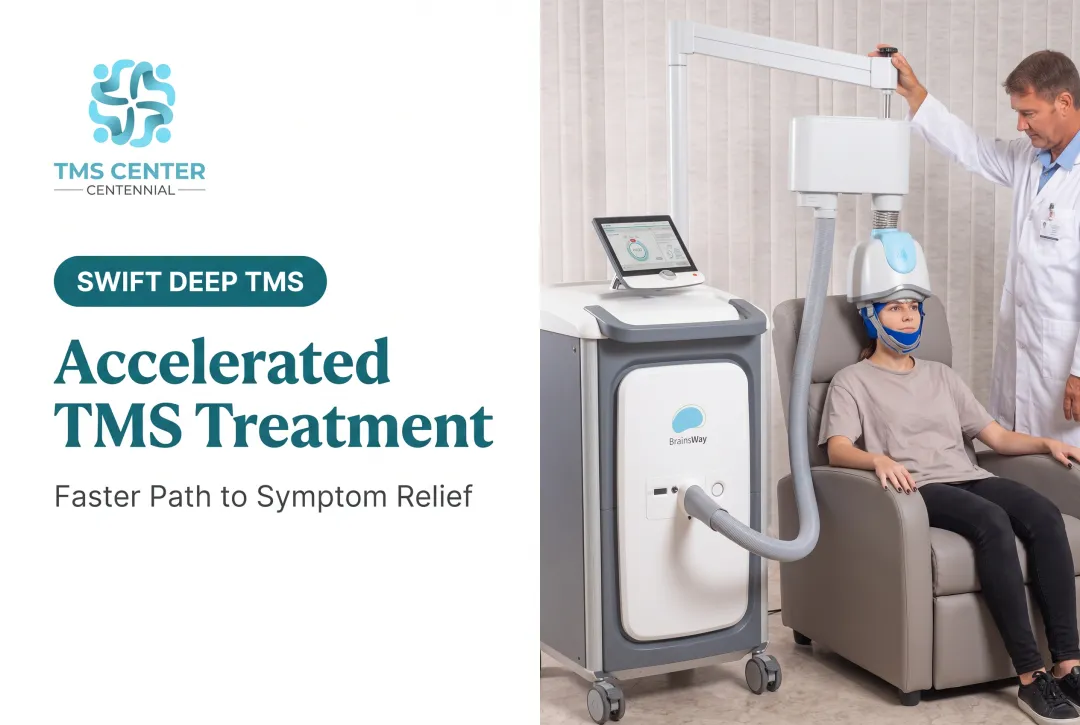
- Accelerated protocols, like Swift Deep TMS™, compress treatment into fewer days with sessions as short as 3 minutes, which can raise the course price
TMS Center Centennial includes theta burst stimulation at no additional charge when it's added to a standard depression protocol. That's worth asking about at any provider you're considering.
Insurance Coverage and Provider Network
Whether a clinic is in-network with your specific plan is the single biggest cost lever. Coverage rules differ by insurer:
- Cigna typically requires documented failure of two antidepressants from two different classes
- Aetna looks for a similar medication-failure history plus augmentation trials
- TRICARE and most major commercial plans require preauthorization
If your provider works with your carrier, such as Cigna, Anthem BCBS, TRICARE, United Healthcare, or Aetna, your out-of-pocket costs drop quickly.
Number of Sessions Needed
Most patients need 20 to 36 sessions over 4 to 6 weeks. Since cost scales directly with session count, your total price is personalized to how your symptoms respond, not a fixed number set in advance.
Facility Type and Location
Hospitals and academic medical centers often carry higher overhead than dedicated outpatient TMS clinics, and that difference can show up in your bill. Urban markets, including parts of metro Denver, tend to run higher than smaller communities due to real estate and staffing costs.
Additional Therapies or Services
Pairing TMS with counseling, neurofeedback, or a full psychiatric evaluation adds to your total spend, but it can also improve outcomes. TMS Center Centennial offers NeurOptimal® neurofeedback and collaborative counseling alongside TMS. That gives patients a combined-care option under one roof instead of juggling separate providers.

Cost Breakdown & How to Make TMS More Affordable
The total cost of TMS is more than a per-session number. It includes your initial evaluation, the treatment course itself, and potential follow-up care.
| Cost Component | Timing | What It Covers |
|---|---|---|
| Initial psychiatric evaluation | One-time | Maps your treatment plan; sometimes billed separately, sometimes bundled |
| Core treatment sessions | One-time (per course) | Most of your cost, based on session count and protocol type |
| Session copays / coinsurance | Recurring, per visit | Your share per session after benefits are applied |
| Follow-up / maintenance sessions | Periodic | Occasional booster sessions if symptoms return months later |
Insurance Verification Matters Most
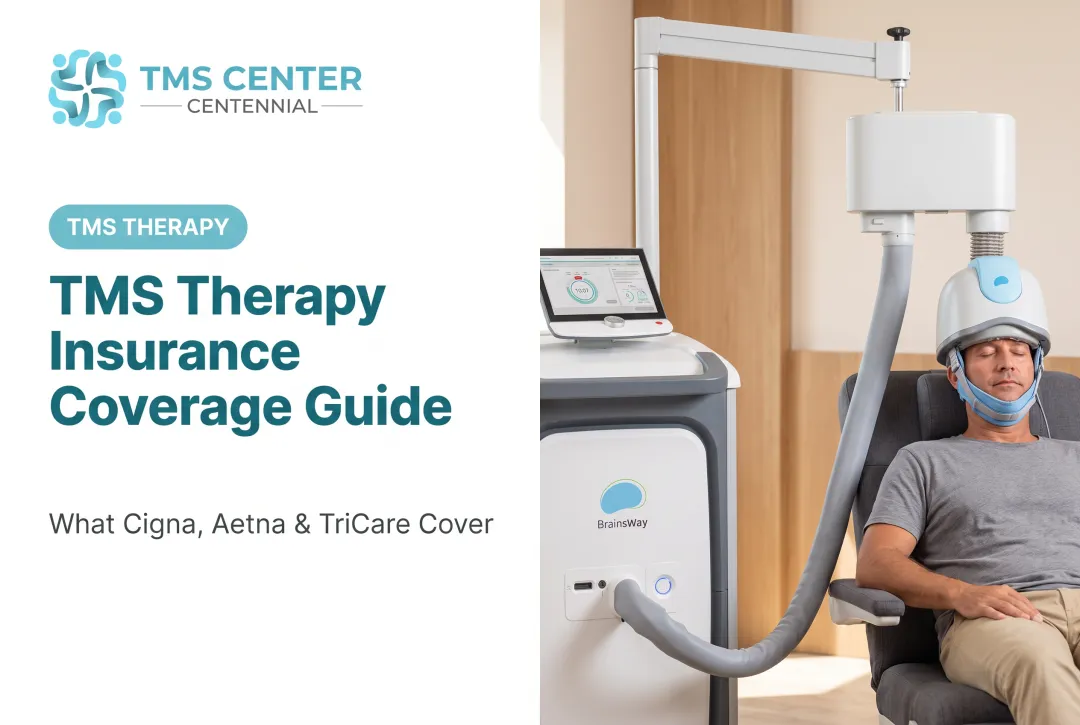
Most major insurers, including most Medicare plans, now cover TMS for treatment-resistant depression. TMS Center Centennial works directly with patients' insurance, including Cigna, Anthem BCBS, TRICARE, United Healthcare, and Aetna, to verify benefits and confirm expected costs before treatment begins.
Making Treatment Affordable
A few ways patients reduce out-of-pocket spending:
- Confirm benefits first. A free verification call can reveal your real copay before you commit.
- Use HSA/FSA funds. TMS is generally reimbursable as a qualified medical expense when physician-prescribed. Confirm specifics with your plan administrator.
- Ask about payment options. TMS Center Centennial accepts cash, check, and major cards, and can discuss self-pay arrangements.
- Factor in booster sessions. If you need a follow-up course later, budgeting for it in advance avoids surprises.
What Most People Miss About TMS Cost — and Is It Worth It?
Patients often make cost decisions based on incomplete information. Here's what gets overlooked most often.
- Sticker price only. Many people see a $6,000–$12,000 range online and assume that's what they'll pay—without calling their insurer or the clinic to check actual coverage.
- Assuming anxiety, PTSD, and OCD aren't covered. Coverage still centers mostly on treatment-resistant depression, but that's expanding. The FDA cleared Deep TMS for OCD in 2018, and some insurers, including Cigna, now cover it for qualifying patients. Confirm with your plan rather than assuming you're excluded.
- Underestimating the cost of staying untreated. Depression left untreated isn't free. Privately insured patients with treatment-resistant depression face average annual healthcare costs of $22,541, versus $17,450 for non-resistant depression, according to a 2020 analysis published in PMC, plus roughly double the lost work time.
- Skipping response rates when comparing price. A lower price means little if the treatment doesn't work. Meta-analyses show TMS outperforms sham treatment for response and remission, and long-term follow-up shows many patients keep those gains well past the initial course.
Set next to years of higher medical bills and lost work, a single TMS course is often the smaller cost. Clinic outcomes matter in that math too: TMS Center Centennial reports 89% of patients see significant symptom reduction and 69% reach complete remission. For patients who qualify and verify coverage, those results are usually what make the spend worth it.

Conclusion
TMS costs vary a lot. Protocol, insurance, and provider all drive the final price, but most patients end up paying far less than the full out-of-pocket price once insurance and payment options are factored in.
The best choice balances real cost with proven results and experienced clinical oversight.
If you're in the Denver metro area, TMS Center Centennial offers a free insurance verification and consultation so you can get an exact estimate before you commit. Call (720) 642-6555 or email info@tmscentercentennial.com to get started.
Frequently Asked Questions
How expensive is TMS with insurance?
With insurance, most patients pay only a copay or coinsurance per visit, far less than the full self-pay price. Your clinic's billing team can verify exact costs before treatment starts.
Is TMS a permanent fix?
TMS isn't guaranteed to be permanent. One 12-month follow-up study found 62.5% of acute responders maintained improvement for a full year, though some needed booster sessions. During the course itself, yes - patients can continue their current medications. Most people remain on their prescribed medications throughout treatment. Staying stable on medications during the protocol is encouraged - keeping medications stable helps limit variables during treatment, so the clinical team can tell what is actually working. If medication changes become necessary, they should be made under medical supervision, and preferably after finishing the TMS protocol rather than during it. Any changes should always be guided by the prescribing clinician.
How much does a single TMS session cost?
Individual sessions typically run $300 to $500 without insurance. That drops significantly, often to just a copay, once insurance is billed per visit.
Does insurance cover TMS for anxiety, PTSD, or OCD, not just depression?
Most coverage still centers on treatment-resistant depression, but an increasing number of plans now extend to OCD and anxious depression. Confirm coverage specifics with your insurer directly.
How many TMS sessions will I need, and does that affect total cost?
Most treatment courses involve 20-36 sessions over 4-6 weeks. Total cost scales directly with session count and the protocol your provider recommends.
What's the cost difference between Deep TMS and traditional TMS?
Deep TMS uses more advanced coil technology and may carry a modestly higher per-course price than standard rTMS. Many patients choose it for the broader stimulation field - Deep TMS reaches roughly four times deeper into the brain than standard rTMS.