
That statistic represents real people cycling through side effects, waiting months to see if a new pill helps, and losing time they can't get back. Transcranial Magnetic Stimulation (TMS) offers a different path. It's FDA-cleared, non-invasive, and safe for the vast majority of properly screened patients. Here's what the safety data actually shows.
Key Takeaways
- TMS is FDA-cleared and requires no anesthesia, sedation, or systemic drug exposure
- Most side effects are mild — headache and scalp discomfort — and fade within one to two weeks
- Seizure risk is extremely rare, estimated between 0.003% and 0.087% of sessions
- Screening for metal implants, seizure history, and bipolar disorder is essential before treatment
- Certified BrainsWay™ technicians and psychiatrists at TMS Center Centennial guide every step of care
What Makes TMS Therapy Safe for Depression
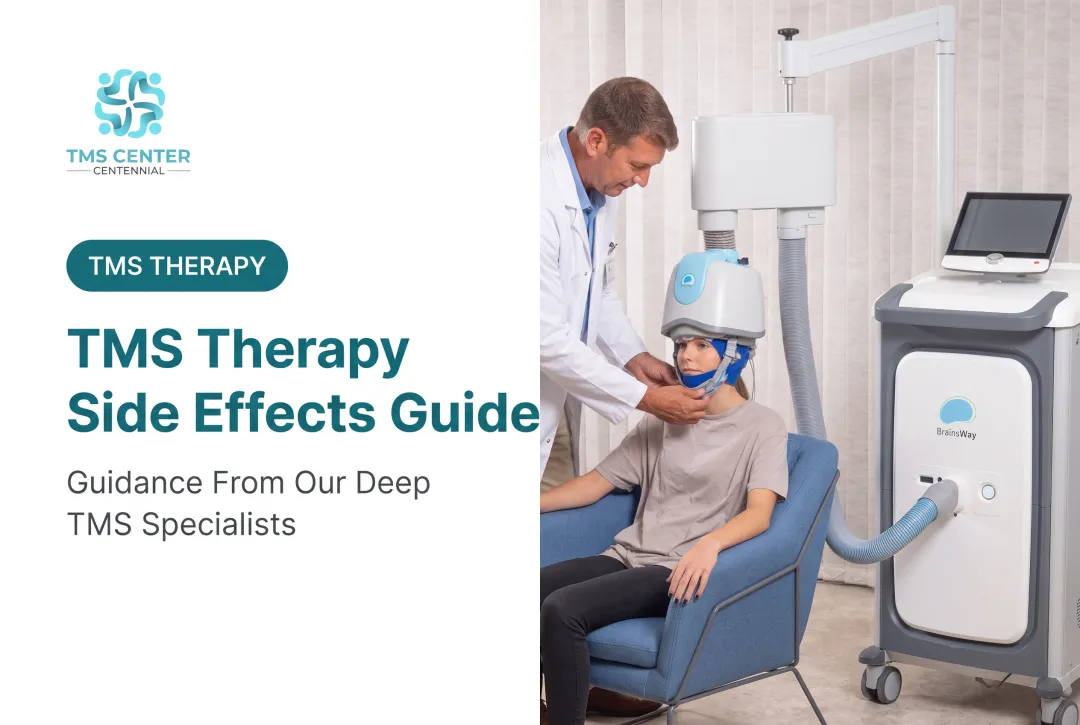
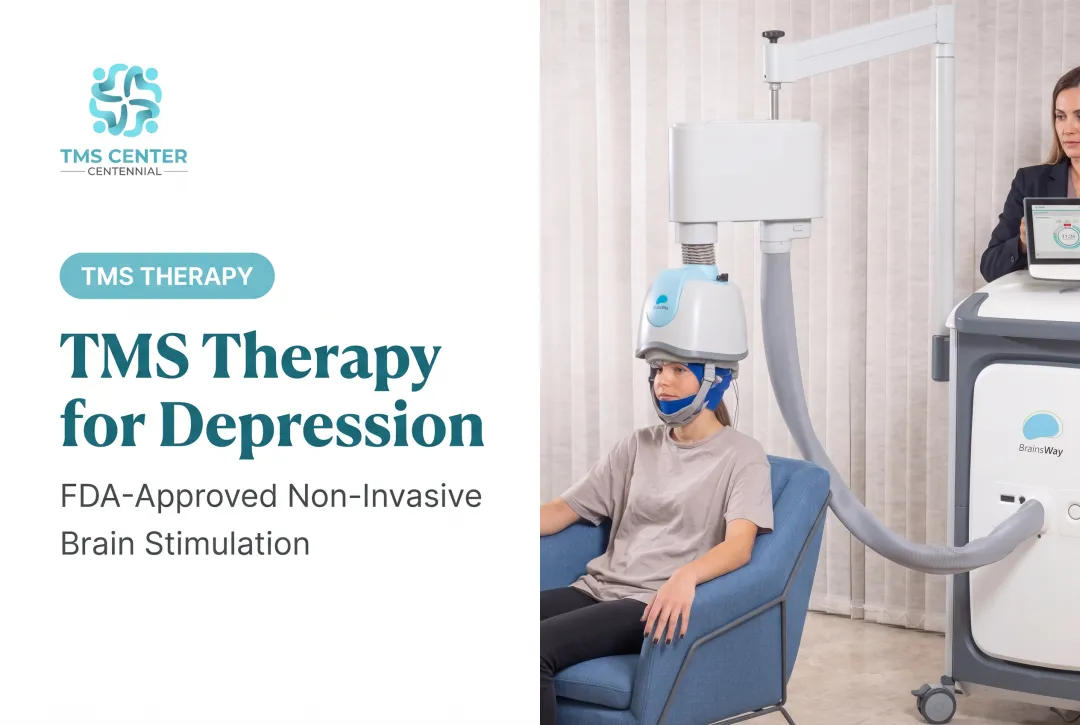
TMS uses magnetic pulses to stimulate the dorsolateral prefrontal cortex, the brain region tied to mood regulation. The field strength runs around 2 Tesla, comparable to an MRI machine, and requires no anesthesia or sedation (Pawar et al.; Mayo Clinic).
But the device is only part of the safety equation. Real safety comes from three things working together:
- Proper patient screening before the first session
- Technician training on the specific system being used
- Adherence to established clinical protocols throughout treatment
A Track Record Nearly Two Decades Long
rTMS has been FDA-cleared for depression since 2008, with BrainsWay's Deep TMS™ specifically cleared in 2013 (American Psychiatric Association). Clinicians have used it with thousands of patients for nearly 20 years. That history only holds when clinics apply the same screening and protocol standards every day.
At TMS Center Centennial, treatment is delivered using BrainsWay™ Deep TMS by certified technicians, including Rodney Placzek and Christine Cook. Before any session begins, the clinical team reviews medical history and treatment records to determine whether Deep TMS™ or Swift Deep TMS™ is the right fit.
Safety is checked before the first pulse and monitored across the full course, which typically runs five days a week for four to six weeks.

Common, Mild Side Effects Patients Experience
The most frequently reported side effects are mild and localized:
- Scalp discomfort or tenderness at the treatment site
- Mild headache
- A tapping or clicking sensation during pulses
- Facial muscle twitching near the coil
These effects typically appear during the first week of treatment and fade as patients get used to the sensation. Over-the-counter pain relievers usually handle any discomfort. That mild profile shows up in the data: fewer than 5.5% of patients discontinued treatment due to adverse events (NIMH/Lisanby, 2020).
In practice at TMS Center Centennial, discomfort stays limited to the treatment site and clears on its own across a typical five-week course.
Rare But Serious Risks to Be Aware Of
Seizure Risk
This is the risk patients ask about most, and the data is reassuring. Large surveillance studies put the seizure rate between 0.003% and 0.087% of sessions, comparable to many common psychotropic medications (PMC review, 2020).
One large study found just 24 seizures across 318,560 sessions. Proper screening for seizure history and risk factors drives this number down even further.

Fainting and Mood Changes
Syncope (fainting) is uncommon and closely monitored during sessions. Hypomania shows up in a small number of case reports, mostly in patients with pre-existing bipolar disorder (Gupta et al., 2018).
Neither is common, but clinical staff watch for both throughout the treatment course.
Who Should Avoid TMS or Needs Extra Caution
TMS isn't right for everyone. FDA labeling identifies specific contraindications involving implanted devices and conductive or ferromagnetic metal near the head (FDA rTMS Guidance, 2011):
- Cochlear implants
- Deep brain stimulators or vagus nerve stimulators
- Aneurysm clips or coils
- Pacemakers and implantable cardioverter defibrillators
- Bullet fragments or other metal near the treatment coil
Conditions requiring extra evaluation before treatment:
- History of seizures or epilepsy
- Bipolar disorder (small risk of triggering hypomania)
- Active substance use
- Severe traumatic brain injury
Dental fillings and braces are generally safe and don't disqualify anyone. A thorough psychiatric and medical history review, which TMS Center Centennial builds into its intake process, catches most red flags before treatment starts.
How TMS Safety Compares to Antidepressants and ECT
TMS skips the systemic side effects that make many patients quit their antidepressants. 73% of SSRI-treated patients report sexual side effects, compared to just 14% on bupropion, showing the issue is medication-class specific rather than depression itself (Higgins et al., 2010).
Weight gain and sedation are also common antidepressant complaints that simply don't apply to TMS.
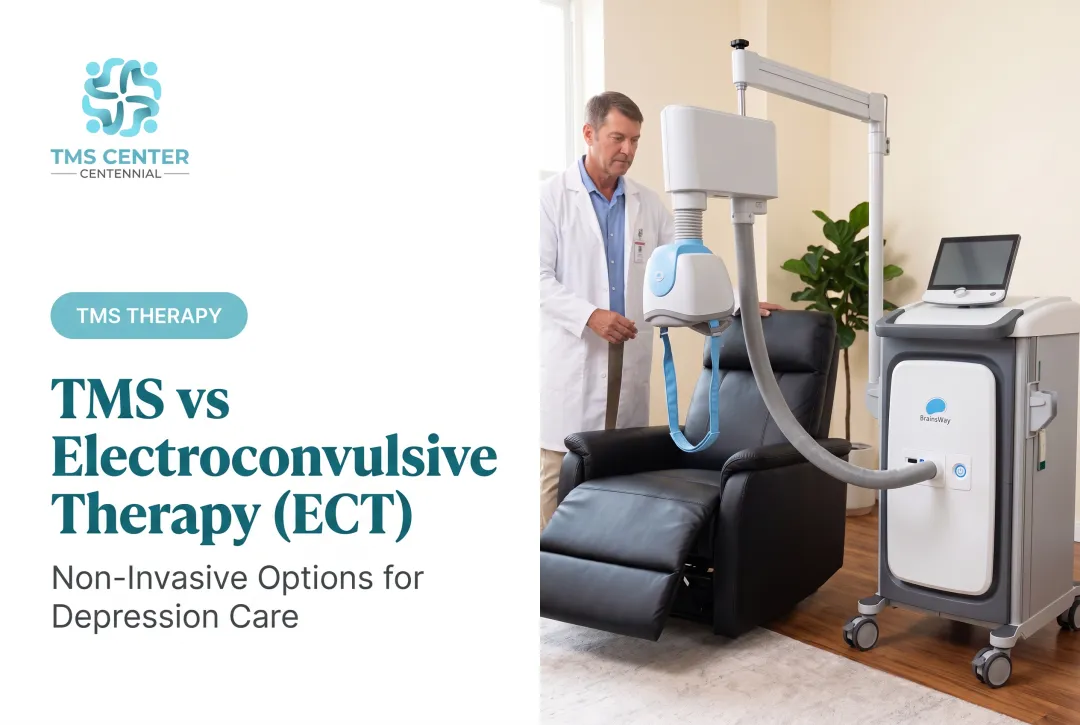
The comparison to ECT (electroconvulsive therapy) is even starker, and it's a common point of confusion:
| Feature | TMS | ECT |
|---|---|---|
| Anesthesia required | No | Yes |
| Induced seizure | No | Yes (intentional) |
| Can drive home after | Yes | No |
| Memory effects | None documented | Documented deficits possible |

TMS is typically recommended after medication hasn't provided sufficient relief. It fits into the treatment-resistant depression pathway rather than replacing first-line care.
How TMS Center Centennial Prioritizes Patient Safety
Safety at TMS Center Centennial starts with a multidisciplinary team: board-certified psychiatrist Dr. Cheryl Dasler works alongside certified BrainsWay™ technicians to evaluate every patient before treatment begins.
Founder Rodney Placzek grounds this work in lived experience. As a retired Army Sergeant Major, he went through TMS during his own mental health recovery. That experience still shapes the center's empathetic, patient-first approach.
Before treatment begins, every evaluation covers:
- Review of medical and psychiatric history
- Screening for implants and seizure risk factors
- Evaluation of current medications and potential interactions

The center also includes therapy dogs on-site and collaborative counseling with licensed therapists, so patients have support through the full course of care.
Common Misconceptions About TMS Safety
Most TMS safety worries trace back to a few persistent myths. Here's how each one holds up against the evidence.
"TMS is the same as ECT." It isn't. TMS doesn't require anesthesia, doesn't induce a seizure, and patients stay awake and alert enough to drive themselves home after each session (Mayo Clinic).
"TMS causes brain damage or memory loss." No evidence supports this. Studies show no change in neuropsychological functioning after treatment and no link to long-term cognitive decline.
"TMS is still experimental." It's been FDA-cleared since 2008 — nearly two decades of clinical use with a documented safety record.
Frequently Asked Questions
Who should not do TMS therapy?
People with non-removable metal implants near the head (pacemakers, cochlear implants, aneurysm clips) generally shouldn't receive TMS. Those with seizure history or bipolar disorder need extra evaluation before starting.
What are the risks of TMS therapy?
Most patients experience mild headache or scalp discomfort that fades within a week or two. Serious risks like seizure or fainting are extremely rare and closely monitored.
Can TMS worsen depression symptoms?
Some patients report a temporary "TMS dip", a brief worsening of symptoms early in treatment. This typically resolves on its own as the treatment course continues.
What happens to the brain after TMS?
No structural brain damage occurs from TMS. Research suggests neural pathways involved in mood regulation may actually improve with a full treatment course.
Is TMS safer than antidepressant medication?
TMS avoids systemic side effects common with antidepressants, like sexual dysfunction, weight gain, and sedation. Its main downsides are mild and localized, making its overall side-effect profile lighter for most patients.
How long do TMS benefits typically last?
Many patients maintain benefits well past a year after a full course. Clinical trials report response rates around 38% and remission near 33%, though duration varies by patient and protocol.
Conclusion
TMS safety comes down to three things:
- Proper screening before treatment begins
- Administration by certified technicians
- Monitoring across the full treatment course, not just the first session
For most adults with treatment-resistant depression, TMS offers a well-studied, FDA-cleared option without the systemic side effects that make medications hard to stick with.
If you're wondering whether TMS is right for you, the team at TMS Center Centennial can walk through your history and determine candidacy during a consultation. Reach out to schedule a visit and get personalized guidance on your next step.