
At TMS Center Centennial in Centennial, Colorado, the answer is often yes. The clinic reports an 89% patient improvement rate and roughly 69% complete remission rate among depression patients treated with Deep TMS™.
This article shares representative patient journeys, the science behind these results, and what starting treatment actually looks like.
Key Takeaways
- TMS is FDA-approved and non-invasive, helping patients when medication and therapy alone fall short
- Patients see an 89% symptom improvement rate and 69% remission rate for depression at TMS Center Centennial
- Staff—including the founder—have completed TMS themselves, so care is grounded in lived experience
- Most major insurance plans, including Tricare, cover treatment for qualifying patients
Real Patient Success Stories at TMS Center Centennial
The stories below reflect composite, representative patient journeys common at the clinic. They're illustrative narratives, not individual case files, and respect patient privacy while showing what recovery can look like.
A Veteran's Journey Back from PTSD and Depression
A retired service member, years out of uniform, still can't sleep through the night. Anger flares without warning. Medications helped a little, then stopped helping at all. He puts off care because asking for help never felt like part of the job.
That hesitation is familiar to founder Rodney Placzek, a retired Army Sergeant Major with 27 years of service. After leaving the military, personal loss and the shift to civilian life pushed him into his own mental health crisis. TMS and neurofeedback gave him relief—and led him to co-found the clinic in 2017.
For veteran patients, that background shapes care:
- Rodney understands military culture and why many veterans delay treatment
- Staff who've sat in the treatment chair themselves build trust faster
- Tricare acceptance removes a major financial barrier for veterans and active-duty families
In a typical composite path, Deep TMS™ for depression and PTSD-related symptoms runs alongside steady check-ins. By the final weeks, sleep stabilizes, flashbacks ease, and daily life feels manageable again—without adding another medication trial.
Overcoming Treatment-Resistant Depression When Medication Failed
Another common path: a patient cycles through two, three, sometimes four antidepressants over several years. Each one works briefly, then stalls—or brings side effects that outweigh the benefit. Work slips. Family life shrinks to the bare minimum.
Before Deep TMS™, Dr. Cheryl Dasler, Psychiatrist runs a full evaluation. Their process typically includes:
- Confirming depressive symptoms have persisted beyond two weeks
- Reviewing prior antidepressant and psychotherapy trials with the care team
- Screening for TMS suitability, including things we need to know about metal: removable items (earrings, necklaces, hearing aids, hairpins) are taken off before the session and are not a disqualifier; implanted or permanent metal needing clinical evaluation includes aneurysm clips, cochlear implants, stents, metal within about 30 centimeters of the treatment area, retained bullet fragments or other ferrous metal fragments, and tattoos containing inks formulated with metals
- Building a personalized plan once TMS is appropriate
For patients stuck after multiple medication trials, that intake often feels like the first time the full history is on the table. After a standard course of sessions, many in this composite group report a clear lift in mood and energy. Some reach full remission; others regain enough function to return to work and relationships they had pulled away from.
Finding Calm Through Neurofeedback and Collaborative Counseling
Not every path runs through TMS alone. Some patients pair NeurOptimal® neurofeedback with TMS or collaborative counseling when sleep, focus, or emotional regulation still lag.
Sessions last 33 minutes. Sensors monitor brainwave activity while the patient listens to music and watches visual patterns; the system recalibrates in real time. Over a series of visits, patients often describe falling asleep faster, snapping less, and holding focus through a normal workday.

One detail comes up constantly: Finn and Fergus, the clinic's resident West Highland Terriers. They sit beside patients or curl into a lap during treatment, which turns a clinical hour into something calmer and easier to finish—especially for anyone nervous on day one.
The Science Behind TMS's High Success Rates
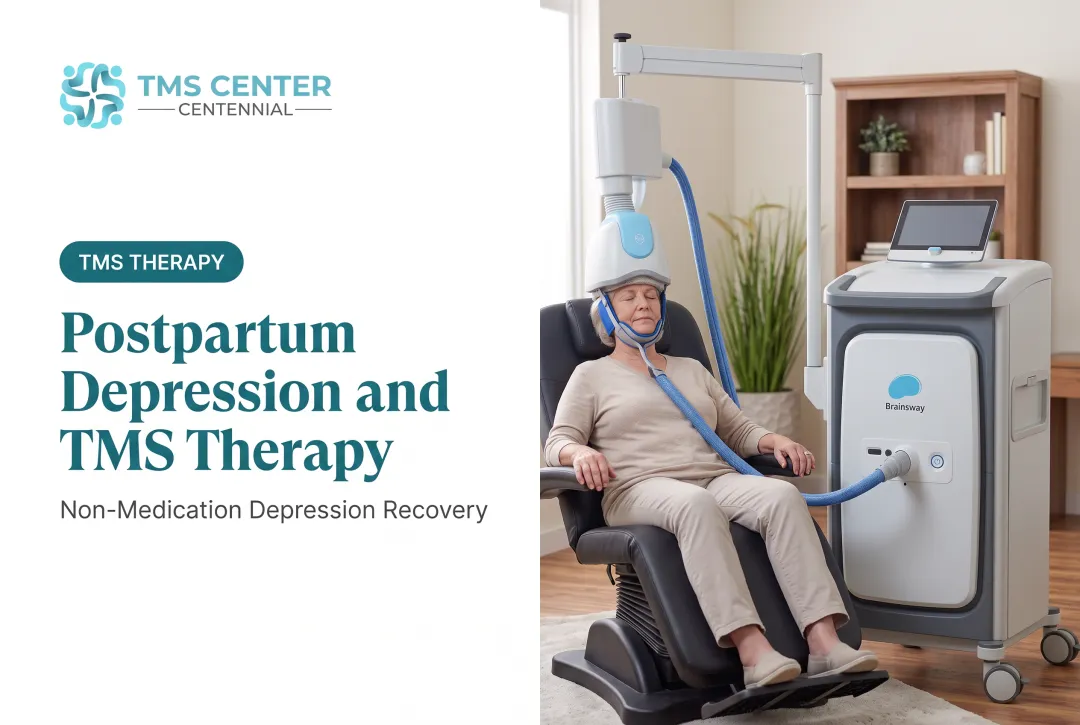
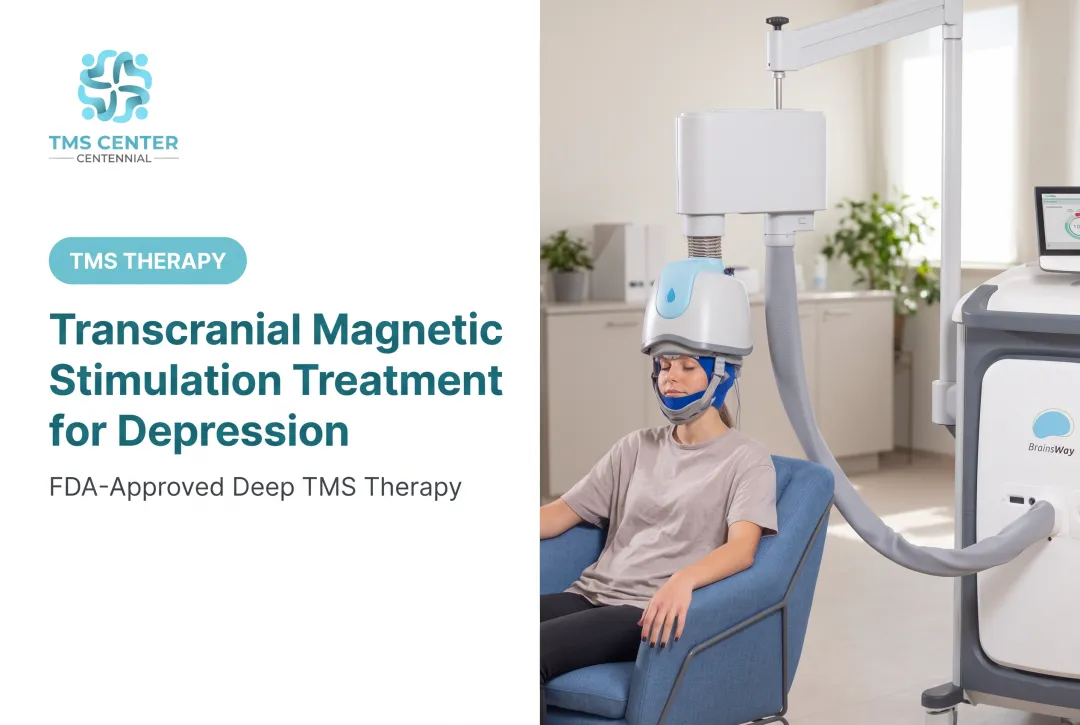
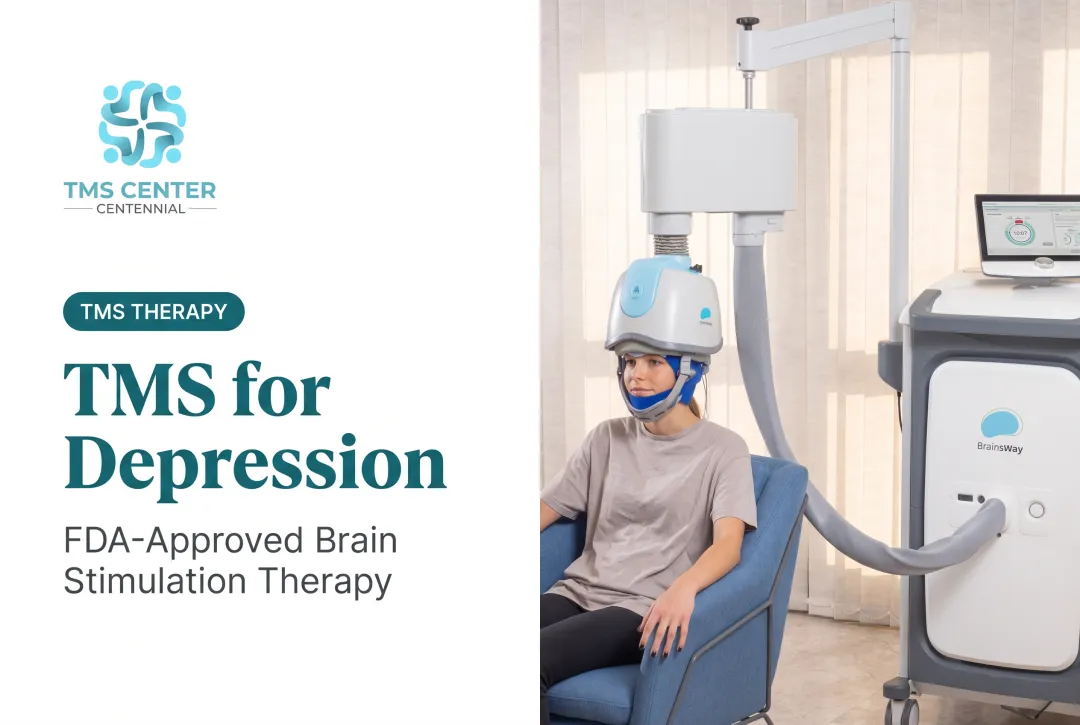
Deep TMS™ uses magnetic pulses to stimulate mood-regulating brain regions. There is no surgery, no anesthesia, and no systemic side effects. The treatment has been FDA-cleared for depression since 2008 and for adult OCD since 2018, according to the FDA's official announcement.
Why Deep TMS™ Coils Go Further
Standard rTMS figure-8 coils reach roughly 1.5 cm into the brain. BrainsWay's H-coil technology, used in Deep TMS™, models supra-threshold fields reaching 4-5 cm, according to research summarized by BrainsWay. Broader coverage means the pulses reach more of the brain's mood-regulating circuitry.
No randomized trial has directly compared antidepressant outcomes between figure-8 and H-coil designs head-to-head. The depth advantage is well documented; universal clinical superiority isn't proven for every patient.

What the Broader Research Shows
Industry-wide, a consensus review of 29 randomized controlled trials found rTMS response rates with a pooled odds ratio of 3.3 versus sham treatment—and a number-needed-to-treat of just 6 patients for response. That research base is the backdrop for TMS Center Centennial's tracked 89% improvement rate in real clinic outcomes.

Tolerability and Team Structure
Most patients tolerate Deep TMS™ well. The most common side effects, per a multicenter safety analysis in Brain Stimulation, are:
- Headache (roughly 35% of patients)
- Treatment-site discomfort (roughly 30%)
- Muscle spasm or jaw pain (under 6% each)
Every patient's plan is shaped by a multidisciplinary team that personalizes protocols and monitors progress throughout the course:
- Medical director
- Board-certified psychiatrists
- Certified TMS coordinators
What to Expect During Your TMS Journey
Getting started is more straightforward than most patients expect.
- Request an appointment by phone, email, or the online form
- Complete intake paperwork ahead of your first visit to maximize consultation time
- Attend a clinical evaluation where the care team reviews history and confirms TMS is appropriate. A history of psychotherapy is generally required as part of that evaluation - you'll just need to tell us who you saw for therapy and roughly when
- Review insurance benefits, including personalized copay and deductible details
- Begin your personalized treatment plan once you're cleared to start
After clearance, a standard course runs sessions of about 30 to 45 minutes in the office, depending on the protocol, five days a week, for four to six weeks (roughly 30 total sessions). Certified coordinators guide every session for comfort and consistency.

Most patients start noticing changes around the four-to-six-week mark, though some report earlier improvements in sleep or focus.
Who Can Benefit from TMS Therapy
TMS is often a strong option for people who haven't found lasting relief from medication or talk therapy alone. Core conditions treated at TMS Center Centennial include:
- Treatment-resistant depression
- Anxiety disorders
- PTSD
- OCD
Veterans and active-duty service members are a key population served here. Roughly 8% of U.S. veterans experience PTSD in their lifetime, according to a national veterans health study. With TRICARE accepted and Clinical Director Rodney Placzek’s own military background, the clinic has built real credibility with that community.
Why Patients Choose TMS Center Centennial
Patients often choose TMS Center Centennial for coordinated care, real insurance access, and a team that understands the treatment firsthand:
- Psychiatry, TMS technicians, and licensed therapists work together on-site instead of referring you out
- Major plans accepted, including Cigna, Anthem Blue Cross Blue Shield, Tricare, United Healthcare, and Aetna
- Therapy dogs on-site, plus staff like Rodney Placzek and Christine Cook who completed TMS themselves
- Top-rated mental health clinic reputation across the Denver metro area
If medication and therapy have not brought lasting relief, a consultation can show whether Deep TMS™ fits your situation.
Frequently Asked Questions
How long does it take to see results from TMS?
Many patients notice initial changes within 2-4 weeks of daily sessions, though full benefits typically build over the complete 4-6 week course.
What is the success rate for TMS therapy?
TMS Center Centennial reports an 89% improvement rate and 69% complete remission rate among depression patients, reflecting real outcomes tracked at the clinic.
Is TMS painful or does it have side effects?
TMS is generally well-tolerated. The most common side effects are mild scalp discomfort or headache, both of which usually fade shortly after each session.
Will my insurance cover TMS treatment?
Most major insurers, including Tricare, Aetna, Cigna, Anthem Blue Cross Blue Shield, and United Healthcare, typically cover TMS for qualifying patients.
How is Deep TMS™ different from traditional TMS?
Deep TMS™ uses a specialized H-coil that reaches roughly four times deeper than standard figure-8 rTMS coils, stimulating neural pathways more broadly and engaging more of the brain's mood-regulating circuitry.
Can I continue taking my medications during TMS?
Patients can generally continue their current medications during the TMS protocol. Patients should stay stable on their medications during treatment so the course stays as consistent as possible. Keeping medications stable helps limit variables during treatment, so the clinical team can tell what is actually working. Any medication changes should be made under medical supervision, and preferably after finishing the TMS protocol rather than during it, and any adjustment should always be guided by the prescribing clinician.
Can TMS be combined with other treatments like neurofeedback or therapy?
Yes. Many patients pair TMS with NeurOptimal® neurofeedback or collaborative counseling for a more complete approach to recovery.