
Introduction
You pictured joy. Instead, you're staring at your newborn feeling numb, anxious, or strangely disconnected, and the guilt of not feeling "how you're supposed to feel" makes everything worse. You're not alone in this.
The CDC reports that about 1 in 8 women with a recent live birth experience symptoms of postpartum depression.
For many new mothers, the idea of starting an antidepressant while pregnant or breastfeeding brings a fresh wave of worry: Will it pass into breast milk? Will I feel like a zombie? Will it even work in time?
Transcranial Magnetic Stimulation, or TMS, is an FDA-cleared, drug-free option increasingly used for postpartum depression when other treatments haven't helped. Here's how it works, what to expect, and what the research shows.
Key Takeaways
- Non-invasive, FDA-cleared TMS is increasingly used off-label for postpartum depression
- Magnetic pulses stay out of the bloodstream, with no known pathway into breast milk
- Early studies show promising remission rates in postpartum women within weeks
- BrainsWay Deep TMS™ is available at TMS Center Centennial in Denver and covered by most major insurers
Understanding Postpartum Depression: More Than the "Baby Blues"
Baby blues are common. Roughly 70-80% of new mothers experience mild mood swings, tearfulness, or irritability in the first two weeks after delivery, and these feelings typically fade on their own.
Postpartum depression is different. It's a major depressive episode that can begin during pregnancy or anytime in the first year after delivery, and unlike the baby blues, it doesn't resolve without intervention.
Common PPD symptoms include:
- Persistent sadness, hopelessness, or crying spells lasting beyond two weeks
- Overwhelming guilt or feelings of being a "bad mother"
- Difficulty bonding with the baby
- Intrusive, frightening thoughts about harm to yourself or your baby
- Significant changes in sleep or appetite, beyond typical newborn exhaustion

Risk factors that raise the odds of developing PPD:
- Limited social or partner support
- Complications during pregnancy or delivery
- Preterm birth, which is linked to elevated risk in multiple studies
- A personal or family history of depression or anxiety
Early intervention matters for both mother and baby. Untreated PPD can disrupt bonding and early childhood development, so acting once symptoms persist—rather than waiting them out—protects the whole family.
What Is TMS Therapy and How Does It Work?
TMS uses a magnetic coil placed against the scalp to deliver targeted pulses to the prefrontal cortex, the brain region tied to mood regulation. Repeated over multiple sessions, this stimulation, called repetitive TMS or rTMS, helps recalibrate the neural circuits involved in depression.
FDA Clearance and Off-Label Use
TMS was first cleared by the FDA for major depressive disorder in 2008, with BrainsWay's Deep TMS system receiving its own clearance for adult MDD in 2013. Neither clearance specifically names postpartum depression.
That means using TMS for PPD is considered off-label, though a growing body of small clinical studies supports it. A thorough psychiatric evaluation before starting is essential.
What a Session Actually Involves
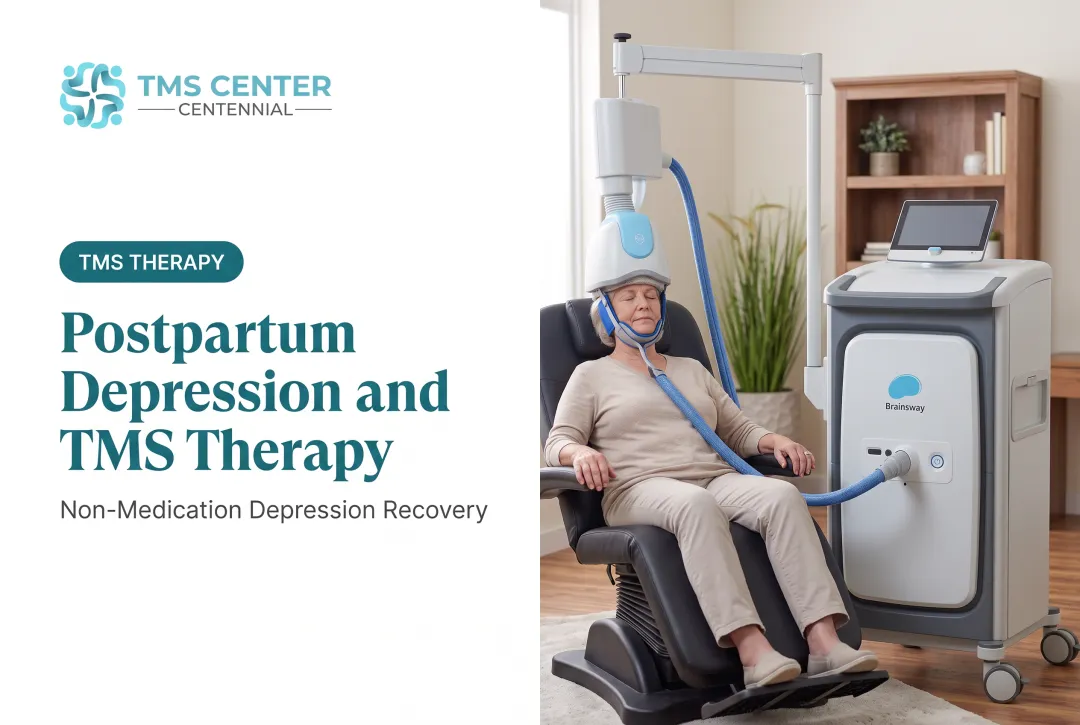
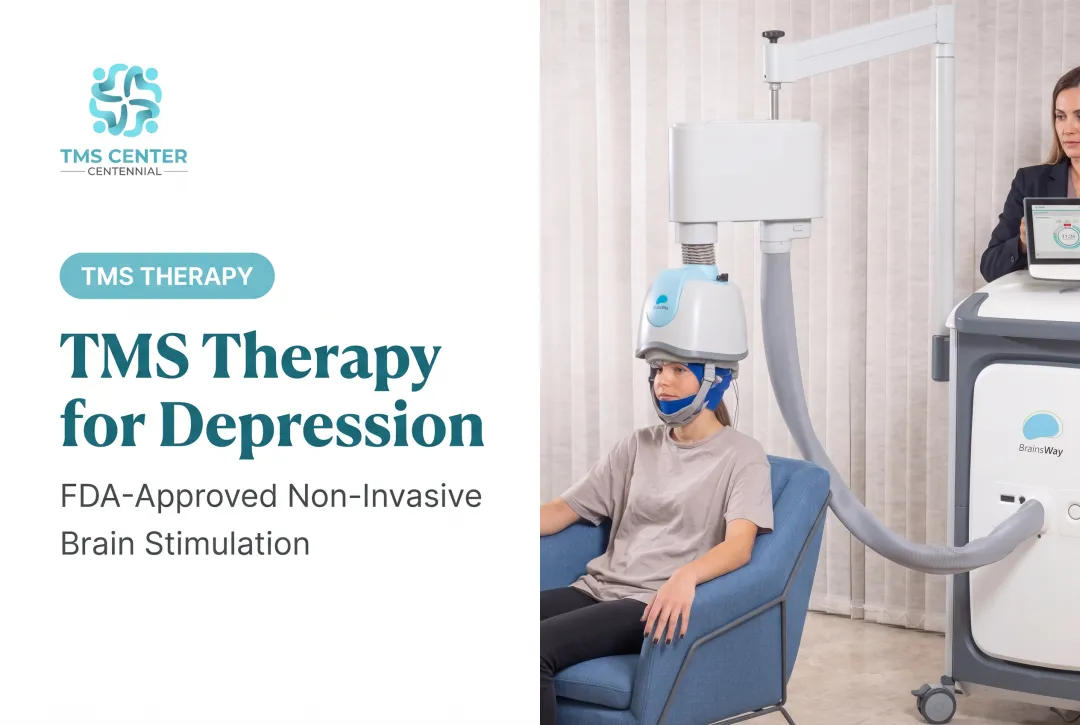
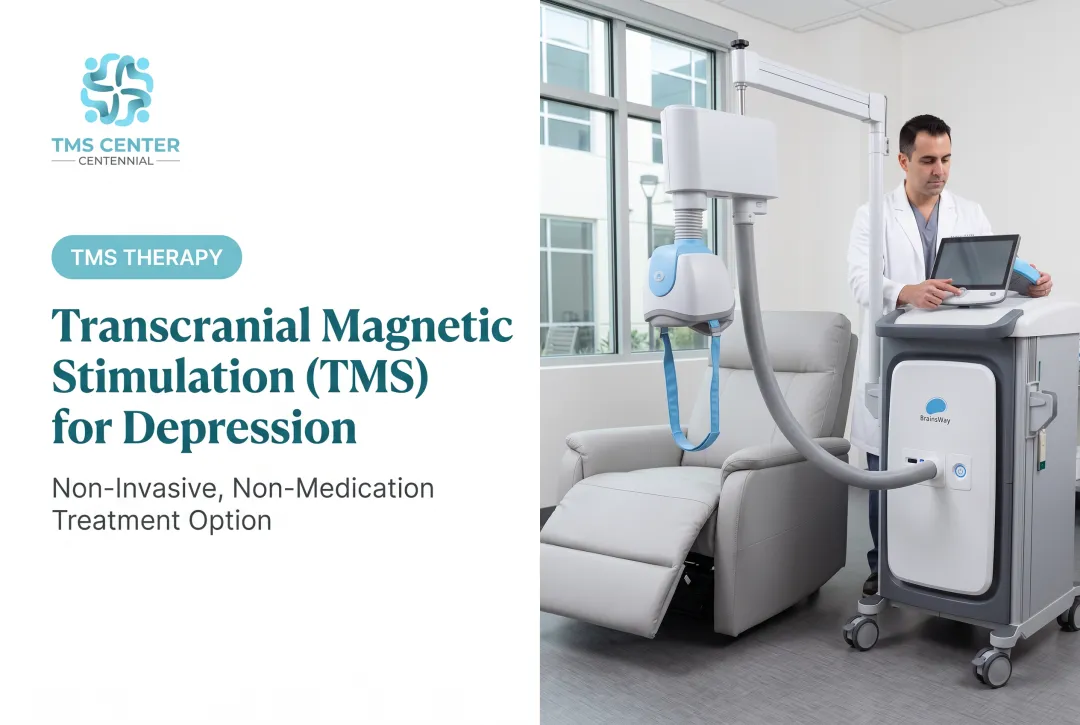
There's no anesthesia or sedation, and no recovery time afterward. You sit in a chair, awake and alert, while the coil delivers pulses for the duration of the session. Then you drive yourself home and go about your day, including caring for your baby.
At TMS Center Centennial, a depression session takes about 30 minutes in the office, five days a week, over roughly four to six weeks, totaling around 30 treatments. The center uses BrainsWay Deep TMS™ technology, which reaches broader and deeper cortical regions than earlier coil designs.
Common, mild side effects include:
- Scalp discomfort during the session
- Brief tension headache afterward
- Jaw discomfort in some patients
Seizure risk sits around 1 in 10,000, far lower than electroconvulsive therapy (ECT), which requires sedation and induced seizures. TMS Center Centennial does not offer ECT.

Why TMS Is a Compelling, Medication-Free Option for New Mothers
For a nursing mother, the calculation around antidepressants is complicated. TMS sidesteps much of that complication entirely.
No Medication Exposure Through Breast Milk
Because TMS works through localized magnetic pulses rather than a substance that enters your bloodstream, it involves no medication exposure at all. A 2025 clinical review confirmed TMS has no known effect on postpartum lactation, and a small study of breastfeeding mothers found no disruption to nursing during treatment.
For a mother who's spent weeks worrying about what might pass to her baby, that removes a major source of stress.
Fewer Systemic Side Effects, Faster Relief for Some
SSRIs like Zoloft remain effective for many women, but they carry a real side-effect profile: sexual dysfunction, sedation, and emotional blunting are commonly reported. Antidepressants also typically take four to eight weeks to reach full effect.
Some small TMS studies have detected symptom improvement within the first two weeks, though this remains an early signal rather than a guarantee. And because there's no sedation or downtime, mothers can:
- Continue nursing and feeding schedules without disruption
- Drive themselves to and from appointments
- Maintain full caregiving responsibilities throughout the treatment course
That kind of flexibility only works if the clinic is built around it. At TMS Center Centennial, care happens one patient at a time in a quiet, unhurried setting. Certified BrainsWay technicians like Christine Cook, who came to this work after her own experience as a TMS patient, oversee sessions personally.
The clinic's two resident therapy dogs, Finn and Fergus, can sit with patients who want extra comfort. Carolyn Riviere, a licensed marriage and family therapist on staff, provides collaborative counseling alongside TMS when it's helpful.
What to Expect During TMS Treatment for Postpartum Depression
TMS treatment starts with a consultation before any stimulation begins.
- Initial screening. A physician reviews your mental health history, current symptoms, and medications. This step also covers things we need to know about, such as a seizure history and metal near the head. Removable items (earrings, necklaces, hearing aids, hairpins) are taken off before the session and are not a disqualifier. Implanted or permanent metal needs a clinical evaluation, including aneurysm clips, cochlear implants, stents, metal within about 30 centimeters of the treatment area, retained bullet fragments or other ferrous metal fragments, and tattoos containing inks formulated with metals. Please raise anything you are unsure about during your evaluation.
- Personalized mapping. A certified technician determines the correct coil placement and pulse intensity for your brain.
- Daily treatment. A depression session takes about 30 minutes in the office and runs five days a week for several weeks. Many patients notice early improvement within two to three weeks.
- Ongoing support. TMS is often paired with therapy and practical lifestyle support that address sleep, stress, and bonding challenges together.

This combined approach addresses mood, sleep, stress, and bonding in one plan. At TMS Center Centennial, TMS sessions can run alongside counseling from the clinical team when patients want that support.
How Effective Is TMS for Postpartum Depression? What the Research Shows
The research on TMS for PPD specifically is still small in scale, but the early signals are encouraging.
| Study | Sample | Result |
|---|---|---|
| Cox et al., 2020 | 6 patients, 20 sessions | 4 of 6 remitted on the Edinburgh Postnatal Depression Scale (EPDS) |
| Garcia et al., 2010 | 9 patients, 20 sessions | 8 of 9 remitted; improvement noted as early as week 2 |
| Myczkowski et al., 2012 | 14 patients, active vs. sham | Active group showed 39.4% symptom reduction vs. 6.2% for sham |
Cox and colleagues' 2020 study also found that improvements held steady at both three- and six-month follow-ups, suggesting the benefits aren't just short-lived. Garcia's data told a similar story: most remitters stayed well at six months without needing further psychiatric intervention.
Clinicians typically track progress using standardized tools:
- EPDS — a 10-item perinatal screener
- BDI-II — a broader 21-item depression inventory
- PHQ-9 — a general depression measure also validated for perinatal use
These small studies come with real limits. None used large sample sizes, and the Myczkowski trial's between-group difference lost statistical significance after correction for multiple comparisons. A 2025 clinical review specifically called for larger, sham-controlled trials before postpartum-specific efficacy can be firmly established.
Until those larger PPD trials arrive, clinic-level depression outcomes still help set expectations. TMS Center Centennial reports that 89% of its depression patients experience a significant reduction in symptoms, with roughly 69% achieving complete remission.
Those figures reflect general Deep TMS depression results, not a postpartum-only dataset. They still show what treatment can do for depression more broadly—and why a full psychiatric evaluation matters before starting care.
Frequently Asked Questions
Does TMS work for postpartum depression?
Small clinical studies show TMS can reduce PPD symptoms and lead to remission for many women, especially when other treatments haven't helped. Discuss it with a qualified psychiatric provider first.
How long do the benefits of TMS for postpartum depression last?
Available research shows symptom improvement often holds at three- and six-month follow-ups. Some women may need occasional maintenance sessions or continued therapy to sustain results.
Is Zoloft effective in treating postpartum depression?
Yes, sertraline (Zoloft) is a commonly prescribed and effective option for many women. Some mothers prefer TMS due to breastfeeding concerns or side effects. When TMS is part of the plan, yes, patients can continue their current medications during the TMS protocol. Most people remain on their prescribed medications throughout treatment and should stay stable on them. Keeping medications stable helps limit variables during treatment, so the clinical team can tell what is actually working. Any medication changes should be made under medical supervision, and preferably after finishing the TMS protocol rather than during it. Those decisions should always be guided by the prescribing clinician.
Is it normal to feel worse after TMS for postpartum depression?
Mild, temporary effects like fatigue or headache can occur early in treatment. An actual worsening of depressive symptoms is uncommon and should be reported to your treating clinician right away.
Is TMS safe while breastfeeding?
TMS pulses don't enter the bloodstream, so there's no known pathway for exposure through breast milk. Always confirm suitability with your provider first.
Is TMS covered by insurance for postpartum depression treatment?
Most major insurers cover TMS for major depressive disorder, though postpartum-specific coverage varies by plan. TMS Center Centennial works with Cigna, Anthem BCBS, Aetna, TRICARE, and United Healthcare to help navigate benefits.