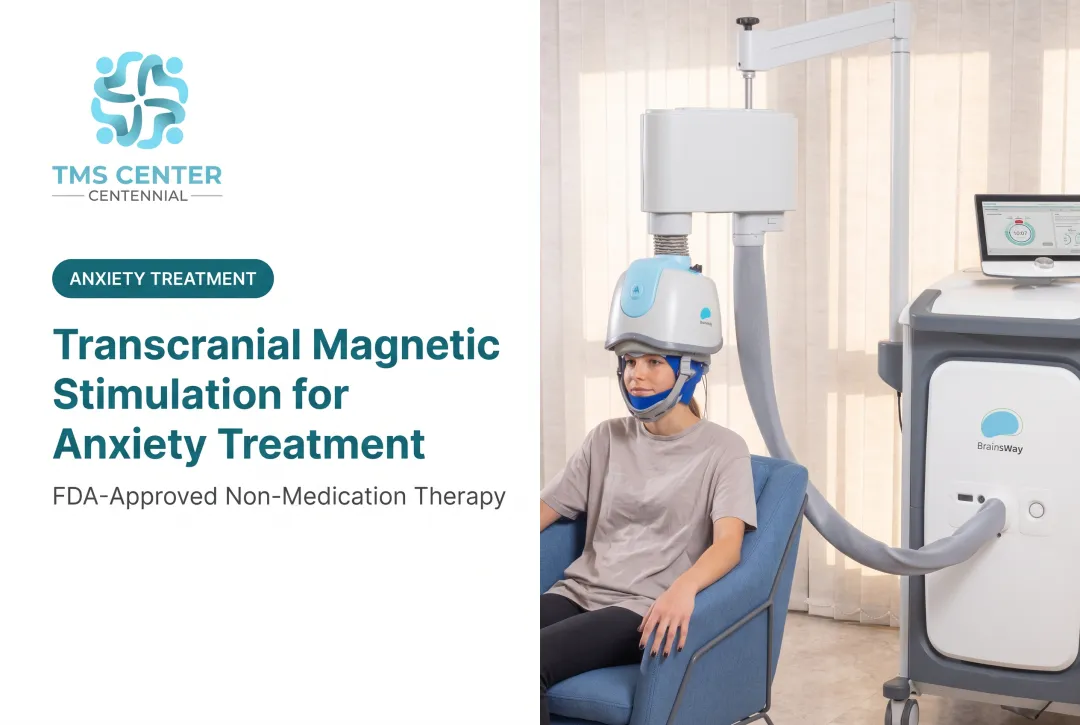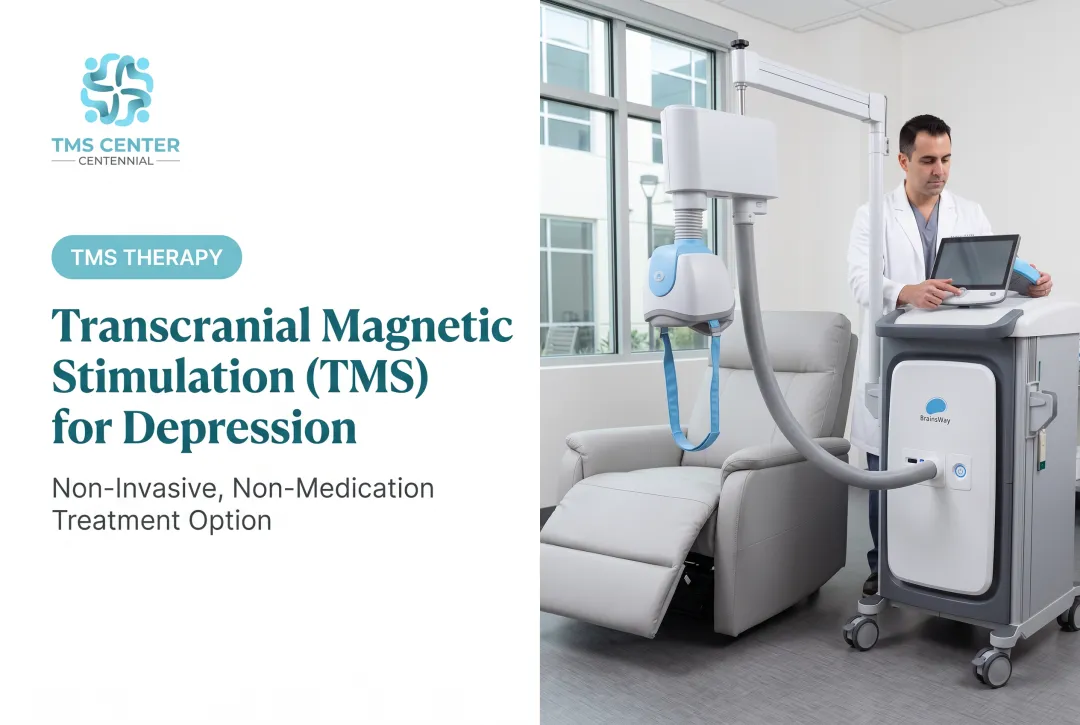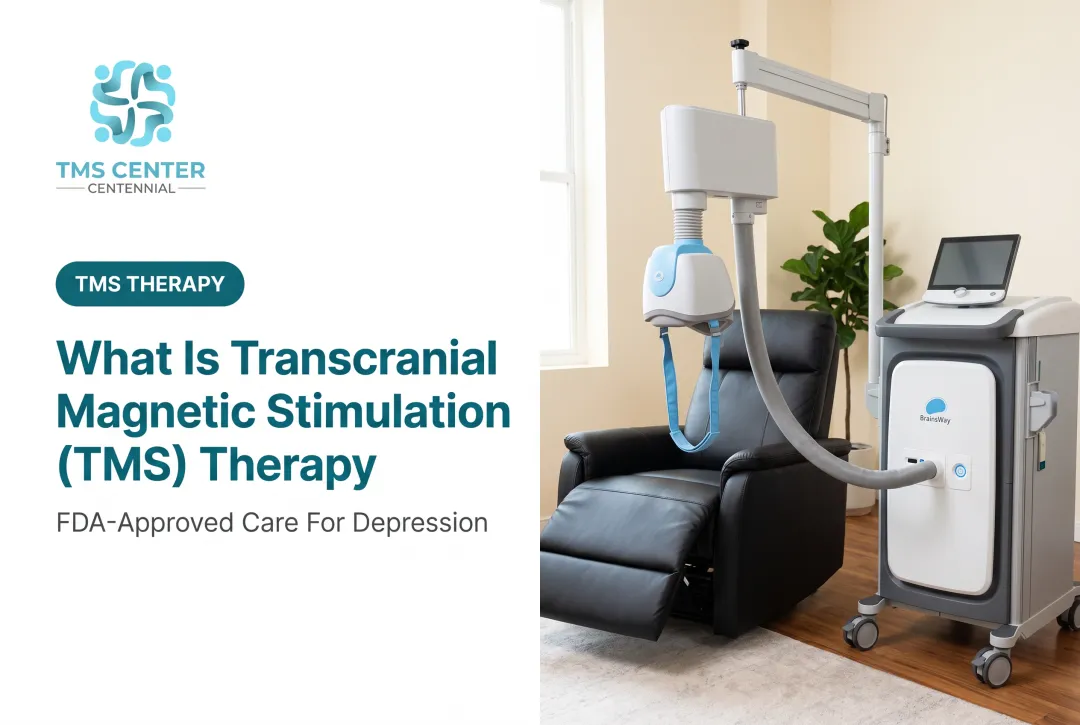

The good news is that most patients don't have to choose between medication and TMS. About one in two patients respond to TMS, and roughly one in three achieve full remission, often while continuing their existing prescriptions, according to the American Psychiatric Association.
At TMS Center Centennial in Centennial, Colorado, a multidisciplinary team of psychiatrists, certified BrainsWay™ technicians, and therapists coordinates medication and TMS care together. This article covers safety, effectiveness, when medication adjustments make sense, and what to avoid during treatment.
Key Takeaways
- Most patients safely continue antidepressants throughout TMS treatment
- Medication plus TMS can improve remission rates versus medication alone
- Benzodiazepines and certain antipsychotics may require closer monitoring due to seizure risk
- TMS Center Centennial coordinates care with psychiatric providers during Deep TMS™
Can You Take Medication While Doing TMS Therapy?
Yes, in most cases. TMS isn't designed to replace your antidepressant. It's designed to work alongside it.
Medication and TMS take different paths to the same goal:
- Medication adjusts neurotransmitter levels across the whole brain chemistry system
- TMS delivers focused magnetic pulses to mood-regulation circuits, primarily the dorsolateral prefrontal cortex (DLPFC)
Because the mechanisms differ, combining them often works better than either alone. A 2024 study in the American Journal of Psychiatry found that after patients failed two or more medication trials, rTMS was significantly more likely to achieve remission than trying yet another medication.

Why Stability Matters Before Starting
Clinical guidance generally recommends patients be stable on their current medication before beginning TMS. If medication and TMS both start at once and a new symptom appears, it is hard to tell whether it came from the drug or the stimulation.
At TMS Center Centennial, doctors conduct a thorough evaluation and provide individualized preparation instructions, including any medication adjustments, before the first session. There's no universal waiting period documented, since every patient's situation differs.
Don't Stop Antidepressants Abruptly
That same need for a clear baseline is why you should not quit an antidepressant suddenly before TMS. Abrupt discontinuation can trigger symptoms such as:
- Dizziness
- Irritability
- Insomnia
- Flu-like sensations
Those symptoms can muddy the picture of how TMS is affecting you.
Any medication change should happen gradually and only under supervision. Dr. Cheryl Dasler, the center's double board-certified psychiatrist, manages those adjustments as part of each patient's plan.
What Medications Interfere With TMS Therapy?
Some medications lower your seizure threshold, which matters because TMS uses magnetic pulses to stimulate brain activity. Your provider needs a complete medication list to plan monitoring and keep treatment safe.
Medications requiring closer attention include:
- Benzodiazepines
- Tricyclic antidepressants
- Certain antipsychotics (such as clozapine)
- Bupropion at higher doses
- Tramadol
Being on one of these isn't an automatic disqualifier. It simply means your psychiatrist may monitor more closely or discuss dosage timing with your prescribing doctor.

Generally considered safe to continue:
- Stimulant medications (commonly used for ADHD)
- Most SSRIs and SNRIs
- Other commonly prescribed psychiatric medications outside the caution list above
Tell your TMS provider about every medication, supplement, and dosage before you start. TMS Center Centennial's evaluation process reviews medical and treatment history specifically so nothing gets missed.
What Disqualifies You From TMS Therapy?
A common misconception is that taking psychiatric medication rules you out of TMS. It doesn't. Medication use is not, by itself, a disqualifying factor.
Actual exclusion criteria are narrower and mostly physical:
- History of seizures or epilepsy
- Non-removable metal implants or stimulators near the head (cochlear implants, deep brain stimulators, vagus nerve stimulators)
- Certain neurological conditions
- Aneurysm clips, coils, or stents near the treatment area
The FDA's clearance materials list these implant-related contraindications specifically because of the magnetic field involved.
Candidacy comes down to a case-by-case evaluation. TMS Center Centennial's psychiatric team reviews medical history, current prescriptions, and psychiatric history before recommending treatment.
What to Avoid During TMS Therapy
A few practical habits protect your progress once treatment begins.
- Don't change medications without guidance. Starting or stopping a prescription mid-course makes it harder to know what's driving any change in symptoms. Adjustments should happen under medical supervision, ideally after finishing the TMS protocol.
- Limit alcohol and recreational substance use. Both can affect seizure threshold and interact with the treatment's effects on the brain.
- Don't skip sessions. TMS works cumulatively. A typical course runs five days a week for four to six weeks, and consistency drives results.
- Report new symptoms immediately. Anything unusual, whether it's a mood shift or a physical symptom, should go straight to your care team rather than waiting for the next appointment.

Keeping your regimen stable gives your psychiatrist and technician a clear signal of what's actually working.
Does TMS Help Anxiety or Just Depression?
TMS is FDA-approved primarily for major depression and OCD, not anxiety disorders on their own. But that doesn't mean anxiety symptoms go untouched.
Anxiety and depression frequently overlap. Roughly half of people diagnosed with depression also have an anxiety disorder. The two conditions often share symptoms such as:
- Poor sleep
- Racing thoughts
- Difficulty concentrating
Because TMS targets mood-regulation circuits tied to both conditions, many patients report anxiety improvement as a side benefit of depression treatment.
That overlap is also why combined care matters. TMS Center Centennial pairs TMS with collaborative counseling through licensed therapists, so the neurological work runs alongside support for the emotional and relational side of anxiety. When depression and anxiety show up together, they are often treated in the same plan rather than as separate problems.
Building a Personalized, Collaborative Treatment Plan
No two patients arrive with the same medication history, symptoms, or goals. That's why decisions about combining or adjusting medication during TMS should never happen in isolation.
At TMS Center Centennial, care is built as a coordinated team process:
- Psychiatrists (including Dr. Cheryl Dasler) lead medication decisions and review treatment history with the patient's existing doctor
- Certified BrainsWay™ technicians map coil placement and deliver consistent sessions, typically 20–30 minutes, five days a week
- Therapists provide counseling that reinforces the emotional work happening alongside the stimulation

The patient stays part of the conversation throughout, contributing information about symptoms, preferences, and how their current medication feels.
If you're weighing whether combining your medication with Deep TMS™ makes sense, a consultation is the right place to start. There, clinicians review your history, current prescriptions, and goals before recommending next steps.
Frequently Asked Questions
Can you be on medication while doing TMS therapy?
Yes. Most patients continue their current antidepressants during TMS, with the prescribing doctor and TMS provider coordinating care throughout treatment.
What medications interfere with TMS therapy?
Benzodiazepines, tricyclic antidepressants, and certain antipsychotics may increase seizure risk and require closer monitoring, though they don't automatically disqualify a patient.
What disqualifies you from TMS therapy?
Key exclusion factors include a history of seizures, non-removable metal implants near the head, and certain neurological conditions. Medication use alone is not disqualifying.
What should you avoid during TMS therapy?
Avoid changing medications without medical guidance, skipping sessions, and heavy alcohol or substance use, since these can affect both progress and seizure threshold.
Does TMS help anxiety or just depression?
TMS is FDA-approved for depression and OCD, but many patients with anxiety-related depression report improvement in anxiety symptoms as well, since the two conditions often share underlying mood circuits.