
That distinction matters more than most patients realize. Session length can range from 3 minutes to nearly 40. Some protocols reach deeper into the brain than others. And not every type is cleared for the same conditions.
This guide breaks down each type of TMS, explains how they differ, and helps you figure out which one actually fits your diagnosis, schedule, and treatment history.
Key Takeaways
- rTMS, Deep TMS, TBS, and accelerated TMS differ in coil design, session length, and FDA clearance
- Deep TMS uses an H-coil to reach deeper brain networks than rTMS and is cleared for more conditions, including OCD
- Match the protocol to your diagnosis, treatment history, and schedule, not which option sounds newest
- TMS Center Centennial in Centennial, CO delivers BrainsWay Deep TMS™ for depression, anxiety, PTSD, and OCD
What Is TMS and Why Does It Matter in Mental Health Care?
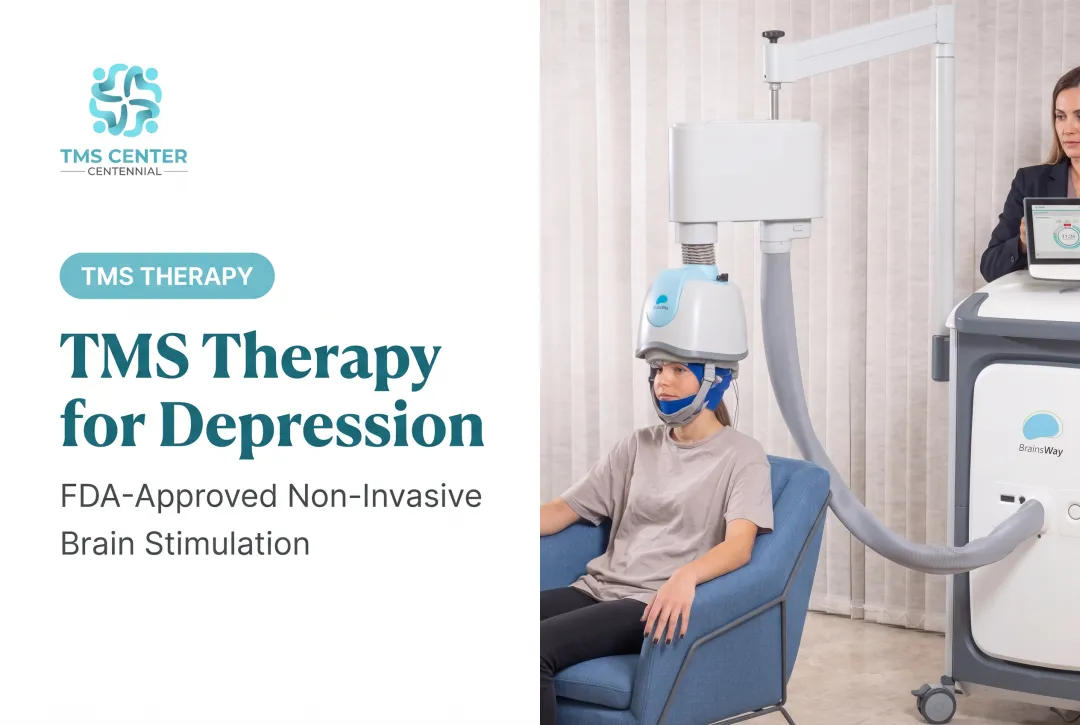
TMS is a non-invasive treatment that uses magnetic pulses delivered through a coil placed on the scalp. Those pulses stimulate underactive nerve cells in the brain regions tied to mood regulation.
Treatment happens in a clinical setting, spread across multiple sessions, with no anesthesia and no sedation. Patients typically walk in, sit through a session, and drive themselves home afterward. It's generally considered for people who haven't found sufficient relief from medication or talk therapy alone.
Treatment-resistant depression is far more common than most people assume. A 2023 peer-reviewed review found that at least 30% of people with depression meet criteria for treatment resistance. That means an inadequate response to two or more antidepressants despite proper dosing and duration.
For many in that group, TMS becomes the next reasonable option.
Not every TMS type is right for every diagnosis. Matching the wrong type to the wrong patient can mean:
- A longer treatment course than necessary
- Lower odds of reaching remission
- Missing an FDA-cleared option better suited to a co-occurring condition, like OCD
That's why understanding the differences upfront saves time — and often, disappointment.
Types of TMS: How the Main Options Differ
TMS isn't one-size-fits-all. The type used depends on coil design, pulse pattern, and how deep or broad the stimulation reaches into brain tissue.
Those differences directly affect three things patients care about most: how long each session takes, how many conditions the protocol is cleared to treat, and how quickly results might show up.
Repetitive TMS (rTMS)
rTMS is the original, most widely used form of TMS. It delivers steady magnetic pulses to the dorsolateral prefrontal cortex through a figure-eight coil positioned against the scalp. This was the first TMS protocol to earn FDA clearance for depression, back in 2008.
How it differs: rTMS uses a narrower, more superficial coil compared to the deeper-reaching designs used in other TMS types.
Best suited for: Patients who want the most researched, insurance-friendly option and can commit to a standard multi-week course.
- Strengths: Longest track record of any TMS protocol, broadest insurance acceptance, well-established safety data
- Limitations: A standard course still runs 6-8 weeks of daily sessions, and stimulation doesn't reach deeper brain structures
Deep TMS (dTMS)
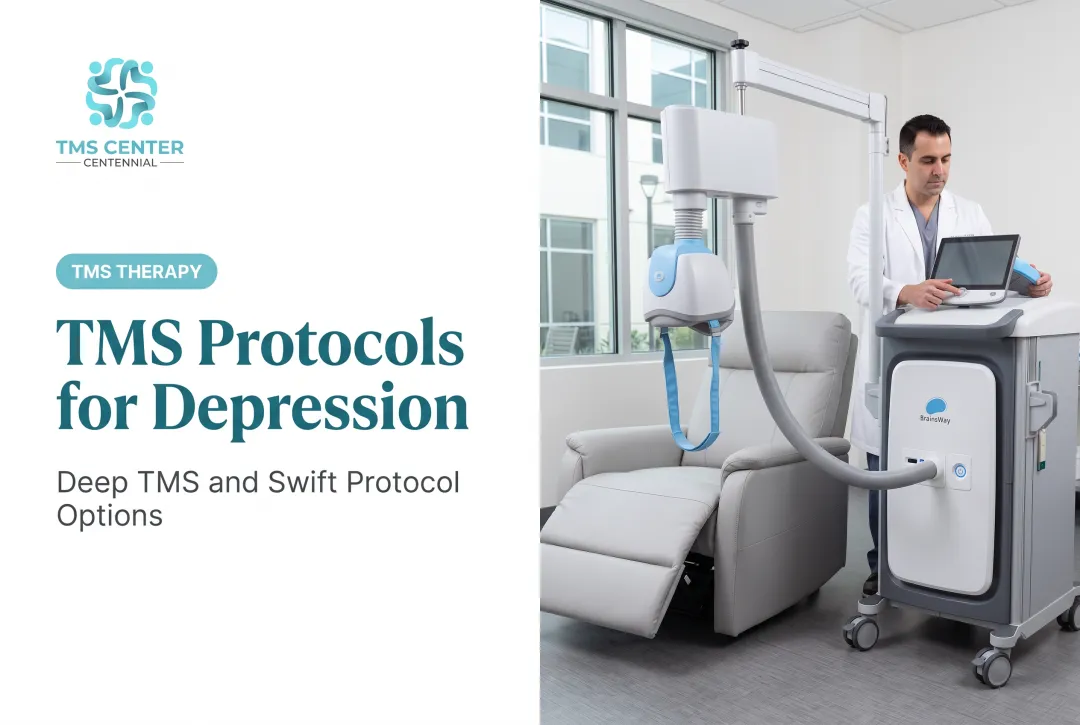
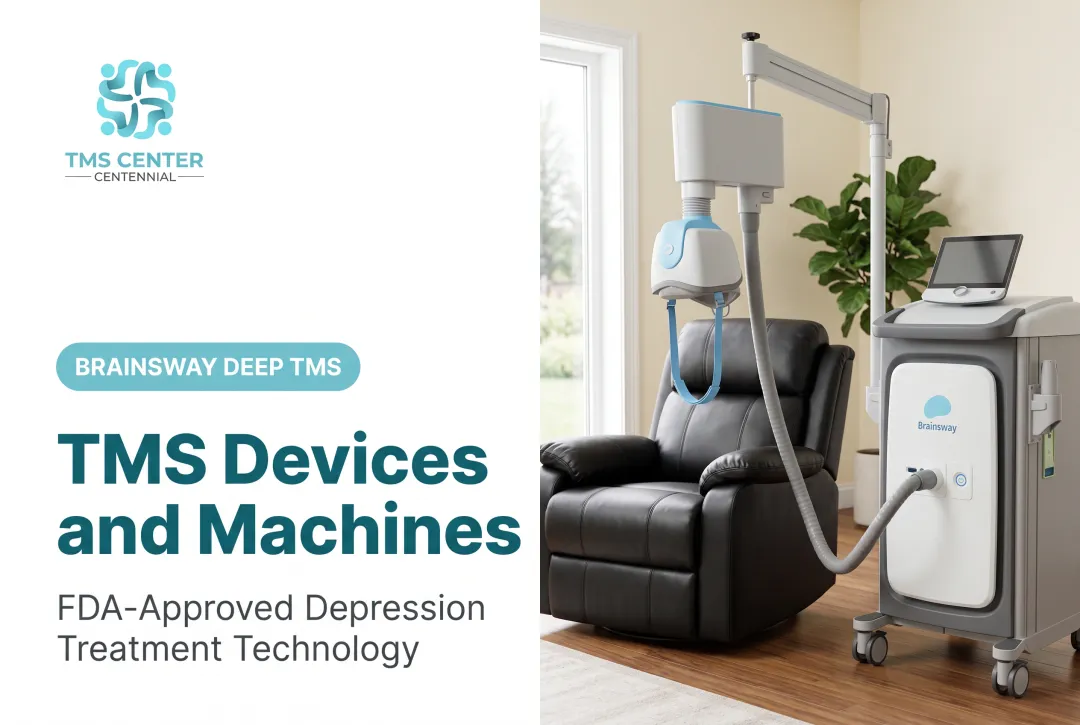
Deep TMS uses a helmet-mounted H-coil (the technology behind the BrainsWay™ system) that reaches deeper and broader brain networks than standard rTMS. That broader reach is exactly why Deep TMS holds FDA clearance for conditions beyond depression, including OCD.
How it differs: The H-coil covers a larger volume of brain tissue at greater depth than the narrower figure-eight coil used in rTMS.
Best suited for: Patients with treatment-resistant depression, OCD, or depression with co-occurring anxiety who need broader neural coverage.
Deep TMS carries FDA clearance for OCD treatment, granted through a De Novo marketing authorization in August 2018 — one reason it's considered the more versatile option for patients with overlapping diagnoses.
At TMS Center Centennial, Deep TMS sessions are delivered by certified BrainsWay™ technicians, including lead TMS Coordinator Christine Cook and Clinical Director Rodney Placzek, both trained specifically on this coil system.
- Strengths: FDA clearance across multiple conditions: MDD, OCD, smoking cessation, and comorbid anxiety in MDD
- Limitations: Equipment and setup differ from standard rTMS, and not every clinic offers this specific coil technology
Theta Burst Stimulation (TBS)
TBS is a newer protocol that delivers short, high-frequency bursts of pulses designed to mimic the brain's natural theta rhythm. It uses the same figure-eight coil as rTMS, just with a different pulse pattern.
How it differs: Sessions run dramatically shorter — as little as 3 minutes, compared to 19-40 minutes for standard rTMS.
That's not a minor detail. In the 2018 THREE-D trial published in The Lancet, researchers compared 205 patients on standard 10-Hz rTMS against 209 on intermittent TBS. TBS sessions took 3 minutes versus 37.5 minutes for standard rTMS, and outcomes were non-inferior.
Best suited for: Patients with limited time for daily long sessions who still want a well-studied, FDA-cleared option.
TMS Center Centennial offers TBS within its depression and anxiety protocols when a shorter daily session better fits the patient's schedule.
- Strengths: Comparable results to standard rTMS in a fraction of the time; lets clinics treat more patients per day
- Limitations: Still requires a multi-week course, and not every clinic offers it
Accelerated TMS
Accelerated TMS compresses the treatment timeline. Instead of one session a day over 6 weeks, patients receive multiple short sessions per day over about a week. The FDA-cleared SAINT protocol, cleared in 2022, is the best-known example — it uses theta-burst pulses combined with imaging-guided targeting.
How it differs: Accelerated TMS changes the total timeline, not just coil depth. Some protocols use brain imaging to pinpoint the exact stimulation target.
TMS Center Centennial's accelerated option is Swift Deep TMS™, which pairs BrainsWay technology with theta burst pulses. The typical schedule runs 10 treatments a day for six days in week one, then two treatment days a week for two more weeks.
Internal outcomes data cites a median time to remission of 21 days for Swift versus 28 days for standard Deep TMS.
Best suited for: Patients with severe, treatment-resistant depression who need faster relief or can't commit to weeks of daily visits.
- Strengths: A full course can wrap up in about a week; some protocols use personalized targeting
- Limitations: Newer and less widely available; some insurers (including Aetna) still classify protocols like SAINT as experimental—confirm coverage before starting

How to Choose the Right Type of TMS for You
The best type of TMS depends on your diagnosis, treatment history, and personal circumstances. It has nothing to do with which technology launched most recently.
A few factors worth weighing:
- Diagnosis and severity: Standard depression may respond well to rTMS, while OCD or anxious depression often calls for Deep TMS's broader coverage.
- Treatment history: If you haven't responded to standard rTMS, you may be a better candidate for Deep TMS or an accelerated protocol.
- Schedule and lifestyle: Theta burst or accelerated TMS suits people who can't commit to long daily sessions for six-plus weeks.
- Insurance coverage: Verify which protocols and providers your plan covers before committing; coverage can vary by type and payer.
- Clinic capability: Confirm which coil technology a given clinic actually offers, since not every provider has Deep TMS or accelerated protocols on hand.
At TMS Center Centennial, Dr. Cheryl Dasler, Psychiatrist, and the clinical team review diagnosis and treatment history during an initial evaluation before recommending a specific protocol. A history of psychotherapy is generally required as part of that evaluation - you'll just need to tell us who you saw for therapy and roughly when.
Three things to avoid when finalizing your choice:
- Picking a protocol based on marketing or novelty rather than actual clinical fit for your diagnosis
- Overlooking the medication history that most insurers review before approving any TMS type
- Overlooking staff experience: ask whether the provider's technicians and medical director have direct, hands-on experience with the specific technology being recommended
TMS Treatment at TMS Center Centennial
TMS Center Centennial has provided BrainsWay Deep TMS™, Swift Deep TMS™, Theta Burst Stimulation (TBS), and NeurOptimal® neurofeedback to the Denver area since 2017. The clinic treats depression, anxiety, PTSD, and OCD with non-medication, non-invasive options.
A multidisciplinary team oversees treatment:
- Dr. Cheryl Dasler, Psychiatrist, treats depression, anxiety, PTSD, and OCD, and supports TMS treatment for patients with resistant major depression
- Rodney Placzek, Clinical Director and Certified TMS Trainer, leads care delivery with certified BrainsWay™ technicians including Christine Cook
The clinic reports that 89% of patients experience a significant reduction in symptoms, with roughly 69% reaching full remission. The clinic accepts most major insurance plans, including Cigna, Anthem BCBS, TRICARE, United Healthcare, Aetna, and most Medicare plans.

Patients throughout Centennial, Denver, Greenwood Village, and the surrounding Colorado communities can schedule a consultation to determine which TMS approach fits their diagnosis and lifestyle.
Frequently Asked Questions
What are the different types of TMS systems?
The main types are rTMS, Deep TMS, Theta Burst Stimulation, and accelerated TMS. They differ mainly in coil design, session length, and which conditions they're FDA-cleared to treat.
Which is better, TMS or EMDR?
Neither is universally better. They treat different needs. TMS is a neuromodulation therapy primarily for depression and OCD, while EMDR is a trauma-focused psychotherapy mainly used for PTSD. The right choice depends on diagnosis, and the two can sometimes be used together.
What is the difference between rTMS and Deep TMS?
rTMS uses a figure-eight coil for more surface-level stimulation. Deep TMS uses an H-coil that reaches deeper, broader brain networks - stimulating a broader area of neural pathways at about four times the depth of conventional rTMS - and holds FDA clearance for more conditions, including OCD.
How long does a full course of TMS treatment take?
Standard rTMS and Deep TMS courses typically run about 6 weeks of daily sessions. Accelerated protocols, like Swift Deep TMS™, can compress that into about a week.
Does insurance cover TMS therapy regardless of the type?
Most insurers cover TMS for major depression after documented failed medication trials, but coverage details vary by protocol and payer. Accelerated protocols in particular may face more restrictions than standard TMS.
How do I know which type of TMS is right for me?
Schedule a consultation with a psychiatrist or TMS provider, such as TMS Center Centennial. They'll review your diagnosis, treatment history, and schedule before recommending a protocol that fits your needs. Regardless of which protocol you start, yes, patients can continue their current medications during the TMS protocol. Most people remain on their prescribed medications throughout treatment and should stay stable on them. Keeping medications stable helps limit variables during treatment, so the clinical team can tell what is actually working. Any medication changes should be made under medical supervision, and preferably after finishing the TMS protocol rather than during it, always guided by the prescribing clinician.