
Many people try cognitive behavioral therapy for insomnia (CBT-I) or sleep medications first. But these don't work for everyone. Some patients keep struggling despite months of behavioral changes. Others don't want to risk dependency on sedative-hypnotics.
That's where Transcranial Magnetic Stimulation (TMS) enters the conversation. This FDA-cleared brain stimulation treatment is gaining attention as a drug-free option for stubborn insomnia, especially when it's tangled up with depression, anxiety, or PTSD.
Key Takeaways
- Magnetic pulses target sleep- and mood-regulating regions such as the dorsolateral prefrontal cortex
- Research links rTMS to better sleep quality, including deeper sleep and stronger REM signals
- Results look strongest when insomnia coexists with depression, anxiety, or PTSD
- Treatment is non-invasive and drug-free, usually delivered across several weeks of sessions
- TMS Center Centennial pairs Deep TMS™ with NeurOptimal® neurofeedback for integrated care
What Is Insomnia and Why Standard Treatments Sometimes Fall Short
Insomnia means persistent trouble falling asleep, staying asleep, or waking too early despite having the opportunity to rest. Clinicians separate it into two types:
- Primary insomnia - occurs independently, without another underlying condition
- Secondary insomnia - develops alongside conditions like depression, anxiety, or chronic pain
According to the American Academy of Sleep Medicine (AASM), daytime symptoms often include fatigue, irritability, poor concentration, and mood swings. Insomnia frequently travels with depression, anxiety, and PTSD — which means treating only the sleep symptom often misses the root cause.
Standard Treatment Limitations
Cognitive Behavioral Therapy for Insomnia (CBT-I) remains the first-line treatment for chronic insomnia. It combines stimulus control (only using the bed for sleep) with sleep restriction (limiting time in bed to build sleep pressure). It's effective for many people, but not everyone responds.
Prescription sleep aids come with trade-offs:
- Benzodiazepines and Z-drugs (like zolpidem) can cause dependency with long-term use
- Zolpidem has documented reports of complex sleep behaviors, including sleep-driving, after the drug reached the market
- Long-term benzodiazepine use shows mixed but concerning evidence around cognitive risk
For patients who've tried CBT-I without success, or who prefer not to rely on sedatives, a real treatment gap remains. TMS is one option clinicians are using to help fill it.
How TMS Therapy Works for Insomnia
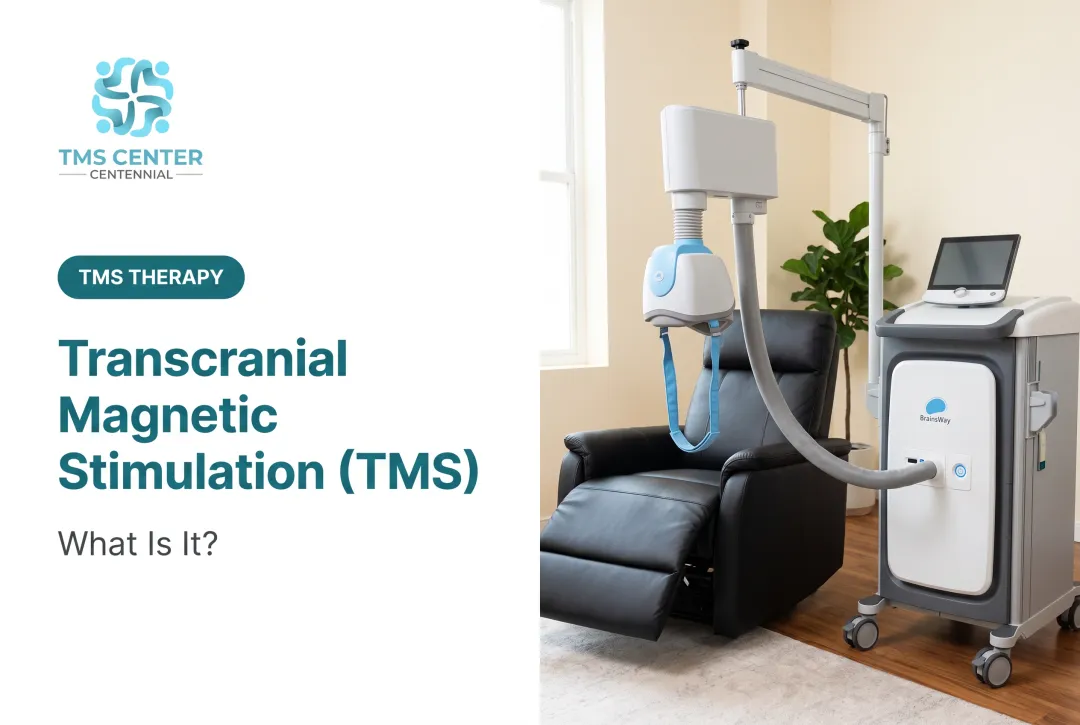
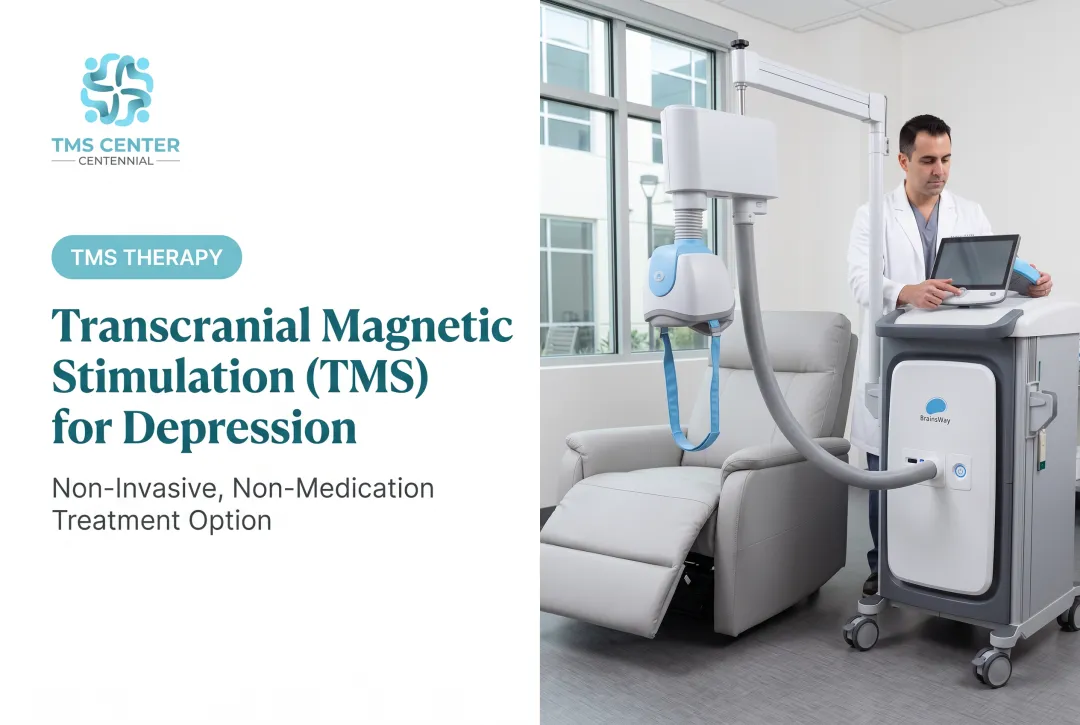
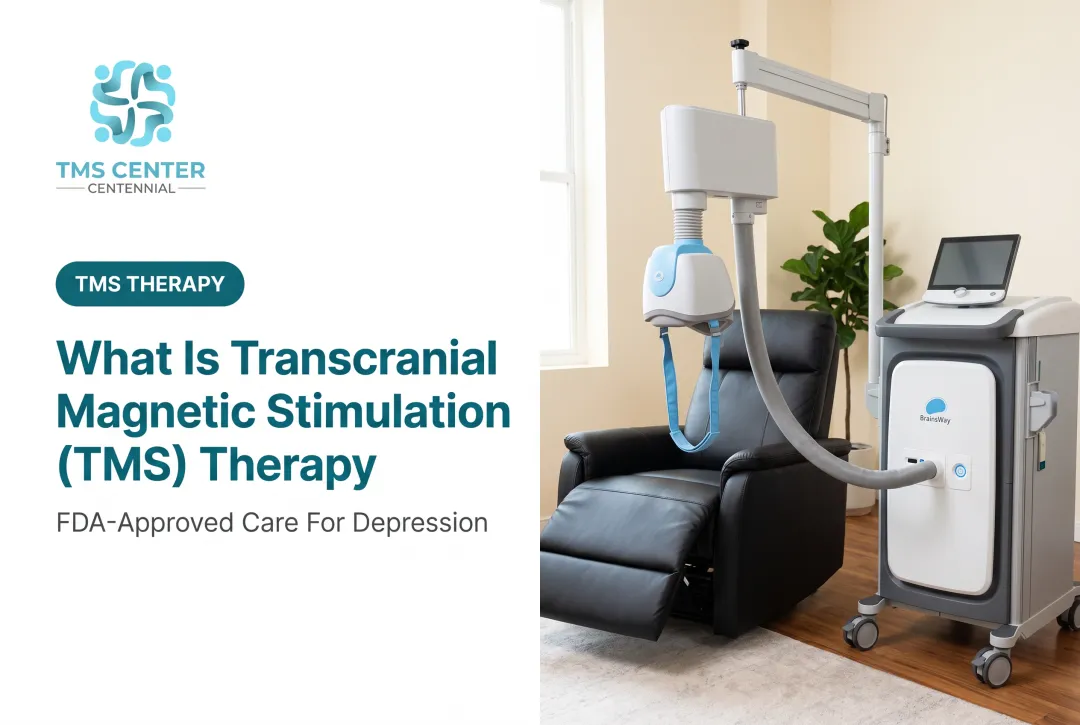
TMS delivers magnetic pulses through the scalp to stimulate nerve cells in specific brain regions. For insomnia, the primary target is often the dorsolateral prefrontal cortex (DLPFC), a region tied to both sleep regulation and mood. Insomnia is closely linked to cortical hyperarousal: an overactive brain that won't power down at night. TMS appears to calm activity in the default mode network, the brain circuit responsible for those racing, repetitive thoughts that keep people staring at the ceiling.
What a Treatment Session Looks Like
A typical TMS session involves:
- Coil placement on the scalp over the targeted brain region
- Stimulation for about 20–40 minutes while you remain seated
- Session wrap-up, then you leave and resume normal activity No sedation is required, and there is no recovery period afterward.
A full course usually spans several weeks of repeated sessions. At TMS Center Centennial, standard treatment protocols run 20-30 minutes per session, five days a week, for four to six weeks. Timing and frequency can flex based on individual patient needs.

Deep TMS™ Technology
TMS Center Centennial uses BrainsWay Deep TMS™, an advanced form of stimulation that reaches deeper and broader areas of the brain compared to traditional rTMS coils. Deep TMS™ at the center is documented for depression, OCD, and PTSD rather than as a dedicated insomnia protocol. Still, patients dealing with insomnia tied to these conditions may see sleep benefits as a byproduct of treating the underlying issue. Results build gradually. Most patients notice changes after 2–3 weeks of consistent sessions, not overnight.
How Effective Is TMS Therapy for Insomnia?
The clinical evidence is encouraging, if still developing. A 2021 systematic review and meta-analysis of 28 studies covering 36 trials and 2,357 patients found that rTMS significantly improved insomnia severity scores compared to sham treatment, with no severe adverse events reported across the pooled data.
A more targeted 2025 randomized trial using neuronavigated rTMS aimed at the right DLPFC found:
- 54.6% of treated patients responded to therapy, versus 9.1% on the waitlist
- 68.2% achieved remission, compared to just 13.6% in the control group
- Brain connectivity changes appeared to mediate the improvement

Sleep Architecture Matters
Pooled research suggests rTMS may increase slow-wave (deep) sleep and REM sleep, the stages that drive physical restoration and memory processing. The evidence is still early, but it suggests TMS may improve sleep quality rather than only shorten time to fall asleep.
The Dual-Benefit Angle
Insomnia rarely shows up alone. When it overlaps with depression, anxiety, or PTSD, treating the mood disorder with TMS can improve sleep at the same time.
That overlap is especially common in veterans with PTSD. One study found 44% struggled with sleep onset and 91% with sleep maintenance, which is one reason military-focused TMS research keeps expanding.
At TMS Center Centennial, outcome data shows 89% of patients experience a significant positive treatment response, and about 69% achieve full remission. Those figures track overall symptom improvement rather than insomnia alone, though patients often report better focus, concentration, and sleep.

Potential Side Effects and Safety Considerations
TMS has a favorable safety profile compared to sedative medications. Common side effects are mild and temporary:
- Scalp discomfort at the treatment site
- Headache during or shortly after sessions
- Lightheadedness (uncommon, usually brief)
Expert consensus guidelines place the risk of TMS-induced seizure at under 0.03%, making it extremely rare when proper screening protocols are followed.
Who should avoid TMS:
- Individuals with metal implants near the head, including cochlear implants
- Patients with pacemakers or other implanted electronic devices
A history of seizures is not an automatic exclusion, but it does require careful clinical evaluation before treatment begins.
Unlike sleep medications, TMS carries no dependency risk and doesn't circulate through the body. That means no systemic side effects like next-day grogginess or tolerance buildup.
Treatment Options for Chronic or Severe Insomnia
If you're dealing with insomnia that hasn't responded to first-line approaches, here's how the main options stack up:
| Treatment | Best For | Consideration |
|---|---|---|
| CBT-I | First-line, mild to moderate cases | Requires consistency, doesn't work for everyone |
| Sleep medications | Short-term relief | Dependency and side effect risks |
| Lifestyle/sleep hygiene | Supportive, all patients | Rarely sufficient alone for chronic cases |
| TMS | Treatment-resistant or mood-linked insomnia | Non-invasive, gradual results |

TMS tends to be most worth considering when insomnia is treatment-resistant or clearly connected to depression, anxiety, or PTSD.
TMS Center Centennial pairs Deep TMS™ with NeurOptimal® neurofeedback (a 33-minute brain training session using cortical sensors) plus collaborative counseling. The center has not published a formal insomnia-specific combined protocol, but the model still targets brain activity, behavior, and emotional factors together.
Is TMS Right for You? What to Expect at TMS Center Centennial
Start with a consultation. A psychiatrist or TMS coordinator reviews your medical history, current symptoms, and treatment history to determine candidacy.
If you're currently on sleep medication, you can typically continue taking it during TMS treatment. The clinical team prefers to keep your regimen stable so they can accurately track what's driving improvement. Any tapering decisions should go through your prescribing clinician, ideally after treatment completes.
Insurance coverage: TMS Center Centennial accepts major plans including Cigna, Anthem, Tricare, United Healthcare, and Aetna for TMS treatment. Coverage details vary by plan, so the center provides a personalized benefits check before you start.
Beyond the clinical side, the center emphasizes a compassionate patient experience:
- On-site therapy dogs for comfort during visits
- A multidisciplinary team including psychiatrists, licensed therapists, and certified TMS technicians
- Personalized helmet mapping before your first session
- Flexible scheduling, including early morning and evening appointments
Frequently Asked Questions
How effective is TMS therapy for insomnia?
Clinical research shows meaningful improvement in sleep quality for many patients, including one trial reporting a 68.2% remission rate versus 13.6% in controls. Individual results vary depending on underlying causes and consistency of treatment.
What are the potential side effects of TMS therapy for insomnia?
Most patients experience mild, temporary effects like scalp discomfort or headache during or after sessions. Unlike sleep medications, TMS carries no risk of dependency or systemic side effects.
What are the treatment options for chronic or severe insomnia?
Options include CBT-I (cognitive behavioral therapy for insomnia), prescription medications, lifestyle changes, and TMS. TMS is typically considered for treatment-resistant cases or when insomnia coexists with depression, anxiety, or PTSD.
How long does it take to see results from TMS for insomnia?
Most patients notice gradual improvement after 2-3 weeks of consistent treatment sessions. Results build over the full course rather than appearing immediately.
Is TMS covered by insurance?
TMS Center Centennial accepts most major insurance providers, including Cigna, Anthem, Tricare, United Healthcare, and Aetna, when treatment is medically indicated. Contact the center directly to verify your specific coverage.
Can TMS treat insomnia caused by anxiety, depression, or PTSD?
Yes. TMS offers a dual benefit by targeting brain regions tied to mood regulation and sleep hyperarousal simultaneously. Treating the underlying condition often brings sleep improvements alongside it.