
Transcranial magnetic stimulation (TMS), long established for depression, anxiety, and PTSD, is now being explored as a non-medication option for ADHD symptoms. The research is still young, but the interest is real.
This guide walks through how TMS works for ADHD, what the science actually shows (including the parts that aren't settled), what a treatment course looks like, and how to know if it's worth discussing with a provider.
Key Takeaways
- Magnetic pulses stimulate the prefrontal cortex, the brain region tied to attention and impulse control
- Research on TMS for ADHD is promising in some studies and inconclusive in others; use remains off-label
- Side effects are typically mild: scalp discomfort, headache, or short-lived fatigue
- TMS Center Centennial pairs FDA-approved BrainsWay Deep TMS™ with neurofeedback and counseling
What Is ADHD and Why Standard Treatments Don't Always Work
ADHD isn't a willpower problem. It's a neurodevelopmental condition rooted in prefrontal cortex underactivity and dysregulated dopamine and norepinephrine signaling: the chemicals your brain uses to prioritize tasks and filter distractions.
Clinically, ADHD shows up in three patterns:
- Inattentive type — trouble sustaining focus, forgetfulness, losing track of tasks
- Hyperactive-impulsive type — restlessness, interrupting, acting before thinking
- Combined type — a mix of both
Stimulant medications remain the standard first-line treatment, and they work for many adults. But they don't work for everyone.
A 2022 stimulant tolerance review found rates from 2.7% to 24.7% across studies, a gap that shows how widely individual response varies. Side effects like anxiety, sleep disruption, and appetite loss also push some patients to look elsewhere.

Many adults also go undiagnosed for years, often because their ADHD hides behind anxiety, depression, or PTSD. Research shows up to 50% of adults with ADHD have a comorbid anxiety disorder, and depression co-occurs in 18.6% to 53.3% of cases, depending on the study population.
How TMS Therapy Works for ADHD
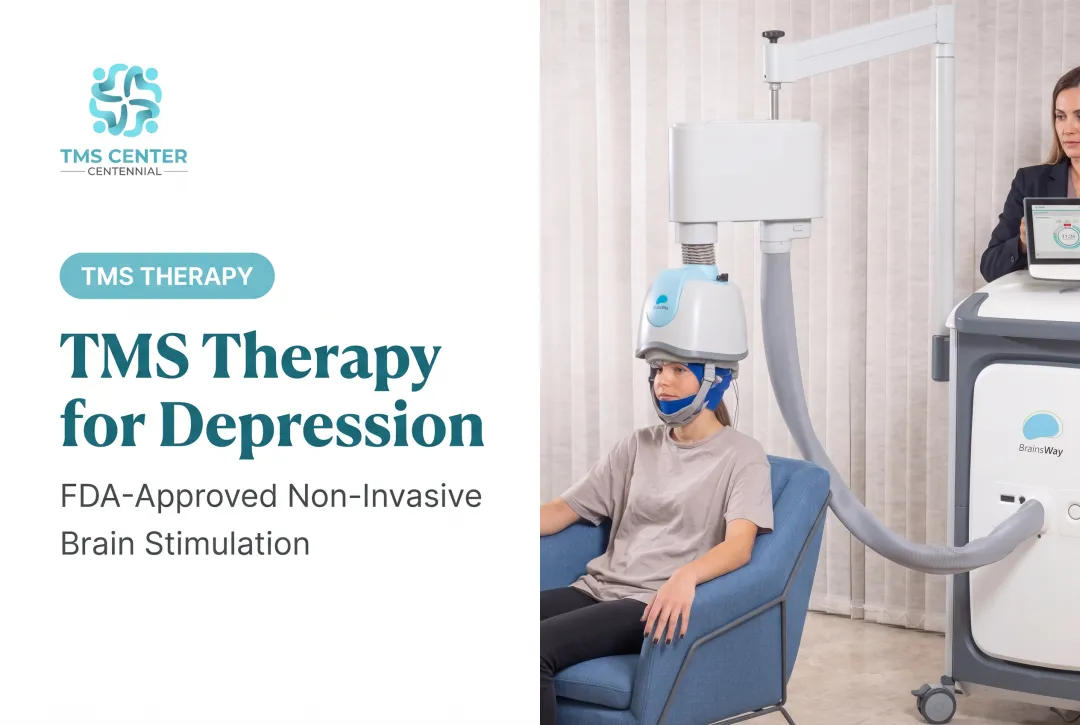
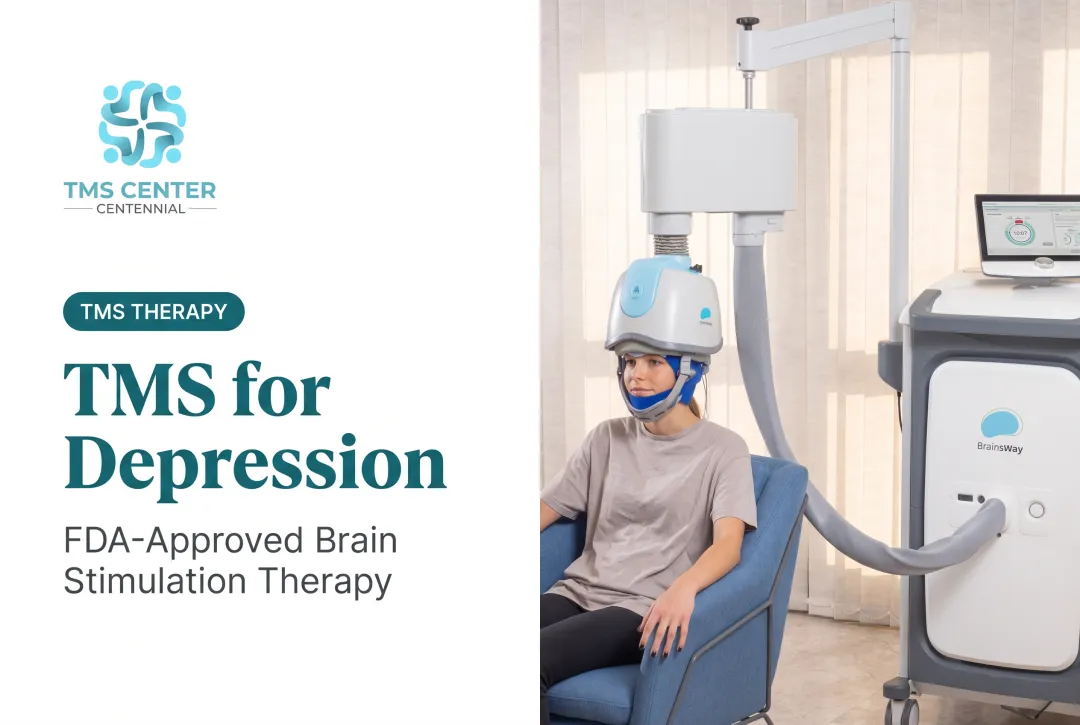
TMS delivers magnetic pulses through a coil positioned near the scalp. Those pulses stimulate underactive neurons in the prefrontal cortex, the brain's control center for planning, focus, and impulse regulation.
Rebalancing Brain Networks
ADHD brains often struggle to quiet the default mode network (the mind-wandering system) while activating the task-positive network (the focused-work system).
Research on methylphenidate shows it can reverse this imbalance. Reaction-time gains track with reduced connectivity in that wandering network. TMS is thought to act on a similar target through electromagnetic stimulation rather than medication.
Encouraging Neuroplasticity
TMS also appears to stimulate BDNF (brain-derived neurotrophic factor) production, a protein tied to neuron growth and synaptic plasticity. Research links BDNF dysfunction to ADHD and common comorbidities. Modulating this pathway may support both attention and mood over time.
Stimulants change neurotransmitter levels throughout the body. TMS works locally on a specific circuit and never circulates through the bloodstream.
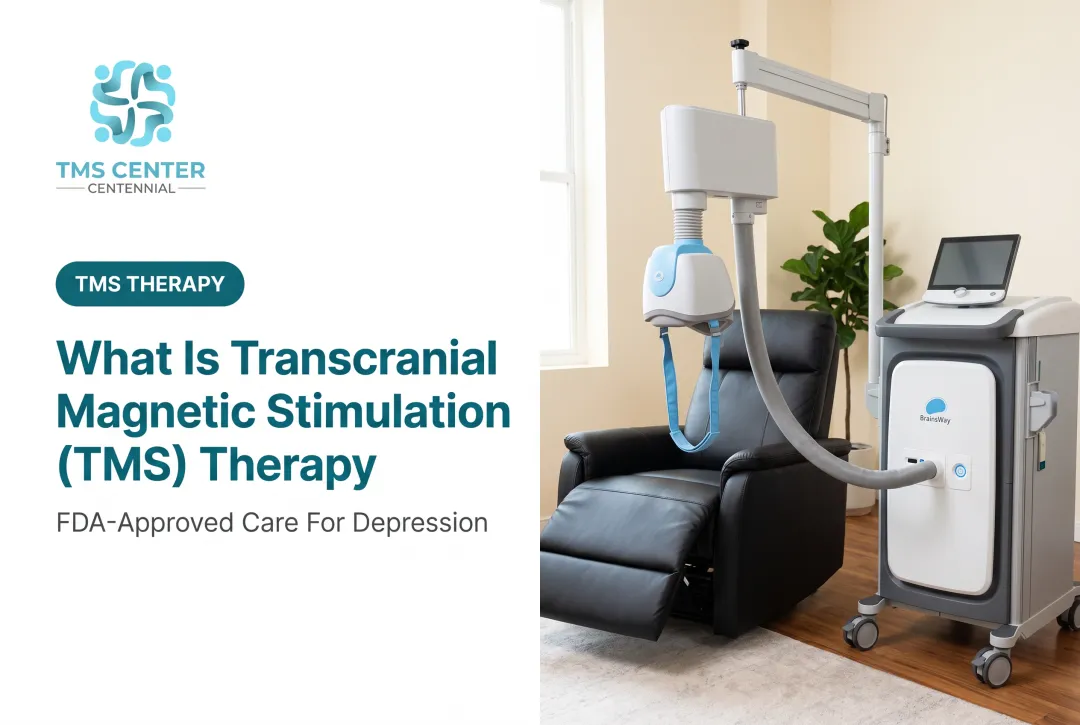
That local focus is why coil design matters. TMS Center Centennial uses BrainsWay Deep TMS™, an FDA-approved technology (cleared since 2007) with a patented H-Coil that reaches deeper, broader neural pathways. Certified technicians administer each session.

What Does the Research Say About TMS and ADHD?
Here's the honest picture: TMS is FDA-cleared for depression, OCD, smoking cessation, and anxious depression. There is currently no FDA-cleared indication for ADHD. Treatment for ADHD is considered off-label.
The evidence itself is mixed:
| Study | Findings |
|---|---|
| 2025 meta-analysis (8 RCTs) | Found a large improvement in inattention symptoms (SMD = -0.94) |
| 2025 Frontiers meta-analysis | Found rTMS significantly improved ADHD symptoms vs. control |
| 2024 pooled analysis (421 participants) | Found no significant efficacy over controls |
| BrainsWay's own sham-controlled trial | Failed to meet its primary endpoint |

That's a real split in the literature. Some trials show meaningful symptom reduction in inattention after several weeks of treatment; others show no significant advantage over placebo. Researchers on both sides call for larger, more standardized trials.
The ADHD-Dopamine-Depression Connection
Dopamine dysregulation underlies both ADHD and depression, and the two conditions frequently overlap. That comorbidity changes how clinicians weigh TMS.
Because TMS already has FDA clearance for depression and anxious depression, a patient with ADHD and comorbid depression may get documented, on-label benefit for the mood component, with possible off-label spillover for attention symptoms. That is a different clinical case than using TMS to treat ADHD symptoms alone.
What to Expect During TMS Treatment
Treatment typically starts with a psychiatric evaluation to understand your history, current medications, and symptom pattern. From there, a technician maps the treatment coil to your specific head shape and target brain region.
Standard TMS protocols generally follow this pattern:
- Evaluation — review of symptoms, medication history, and goals
- Mapping — personalized coil positioning for accuracy
- Daily sessions — typically 20-30 minutes, five days a week
- Course length — often four to six weeks, adjusted by condition and response

During a session, you'll feel a tapping or clicking sensation on your scalp. No anesthesia. No sedation. No downtime. You can drive yourself home and return to work immediately after.
That same visit structure is how TMS Center Centennial runs care day to day. The team pairs psychiatric evaluation, certified technicians, and collaborative counseling so support covers more than the stimulation session alone.
Many patients also use neurofeedback alongside TMS. Exact sequencing depends on individual treatment planning with your provider.
Most patients on standard protocols notice initial changes within the first few weeks. ADHD-specific timelines are less established because the research base is still limited. TMS works best when paired with therapy, coaching, or lifestyle strategies rather than used alone.
Is TMS Safe? Addressing Common Concerns
TMS has a strong safety record. It's non-invasive, requires no anesthesia, and (unlike ECT) doesn't cause memory loss.
Common, mild side effects:
- Scalp discomfort at the treatment site
- Headache
- Temporary fatigue
Rare, serious risks:
- Seizure (occurring in well under 1% of patients across studies)
- Mania or hypomania, primarily in patients with undiagnosed bipolar disorder
In pivotal trials, fewer than 5% of patients discontinued treatment due to side effects, and reported seizure rates ranged from under 0.1% to roughly 0.43% depending on the coil type used.
Some patients do report feeling a little off-balance before feeling better. Mild fatigue or emotional sensitivity in the first week or two is common and typically resolves as your brain adjusts to the stimulation. That response is usually just the adjustment period, not a sign something is wrong.
Is TMS Right for You?
TMS tends to make the most sense for adults who:
- Haven't responded well to stimulant medication, or can't tolerate the side effects
- Want a non-medication option to complement existing therapy
- Have comorbid depression, anxiety, or PTSD alongside ADHD symptoms
- Are looking for an evidence-based alternative, understanding the ADHD research is still developing
Before starting, a comprehensive evaluation matters. ADHD symptoms can overlap significantly with anxiety, depression, and trauma responses, and getting the diagnosis right shapes the whole treatment plan.
If you're currently on ADHD medication, most centers allow you to continue your prescription during TMS treatment. Any changes are handled by your prescribing physician, typically after the TMS course wraps up, so your care team can clearly see what's driving improvement.
TMS Center Centennial accepts most major insurance plans, including Cigna, Anthem BCBS, TriCare, United Healthcare, and Aetna, making this a realistic option to explore rather than an out-of-pocket luxury.
Frequently Asked Questions
How effective is TMS therapy for ADHD?
Research shows mixed results. Some studies report meaningful improvement in inattention, while others find no significant benefit over placebo. TMS remains a promising, off-label option for ADHD.
Is TMS therapy safe?
Yes. It's FDA-cleared for related conditions like depression and OCD, non-invasive, and carries mostly mild, temporary side effects like scalp discomfort or headache.
What are the pros and cons of TMS therapy?
Pros: non-invasive, minimal side effects, and no medication interactions. Cons: daily sessions over several weeks, and off-label status for ADHD.
Can TMS make you feel worse at first?
Some patients notice temporary fatigue or mild emotional sensitivity in early sessions. This typically resolves within the first week or two as treatment continues.
Can ADHD be managed without medication?
Yes. Therapy, lifestyle changes, neurofeedback, and TMS can all support non-medication management, often used together rather than as standalone solutions.
What is the connection between ADHD, dopamine, and depression?
ADHD and depression both involve dysregulated dopamine pathways, which helps explain why they often co-occur. That shared biology is one reason treatments aimed at dopamine-related brain circuits may help either condition.