
TMS Center Centennial has walked patients through this exact process since 2017, using FDA-approved BrainsWay Deep TMS™. This guide breaks down what actually happens before, during, and after treatment, so you know what to expect at each step.
Key Takeaways
- Treatment starts with a consultation, insurance verification, and first-session brain mapping
- A full course runs roughly 30 sessions over 6 weeks, with mild, short-lived side effects
- Real change often shows up gradually, with sleep and energy improving before mood fully lifts
- BrainsWay Deep TMS studies show 75-79% response rates; TMS Center Centennial reports 89% improvement and 69% remission
What to Expect Before Starting TMS Therapy
Evaluation and Screening
Before your first treatment session, you'll go through a thorough psychiatric evaluation. TMS Center Centennial's doctors review your medical history, discuss prior treatments, including psychotherapy, and check for contraindications.
The biggest safety concern involves anything metal or electronic near your head, including:
- Cochlear implants (active or inactive)
- Deep-brain stimulators
- Vagus-nerve stimulators
- Non-removable conductive implants near the skull
Planning and Insurance
Your care team will map out session frequency and course length, and walk through coverage. TMS Center Centennial accepts most major plans, including Cigna, Anthem BCBS, Tricare, United Healthcare, Aetna, and most Medicare plans. The center handles the insurance paperwork itself, so patients aren't stuck on hold with their carrier.
You'll generally keep taking whatever you're currently prescribed. Clinicians prefer medication stability during treatment so they can tell what's driving your results. Any adjustments usually wait until after your course finishes and happen under your prescribing doctor's guidance.
The First Session: Mapping and Calibration
Session one looks different from the rest. A technician maps your head to find the optimal coil placement and calibrate your personal motor threshold—the minimum magnetic intensity needed to trigger a response.
You'll sit upright while small pulses are delivered. You might notice small twitches in your fingers or face, similar to the reflex when a doctor taps your knee. It's unusual, but tolerable. Once dialed in, you get a personalized cap for the rest of your course.

What Happens During a TMS Session
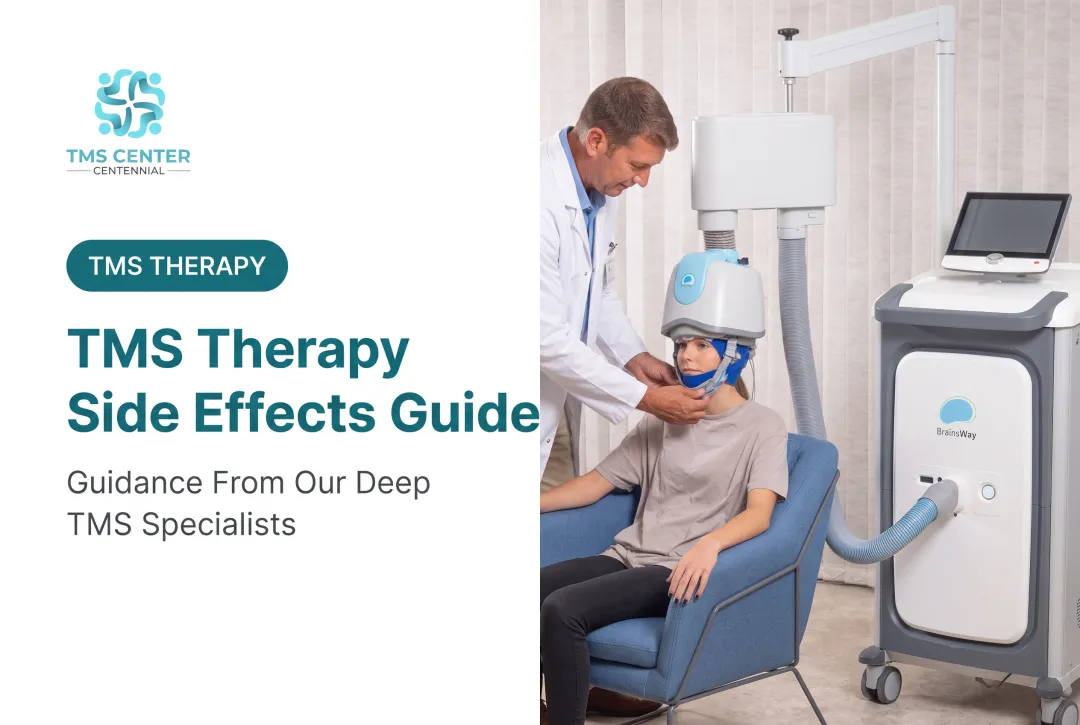
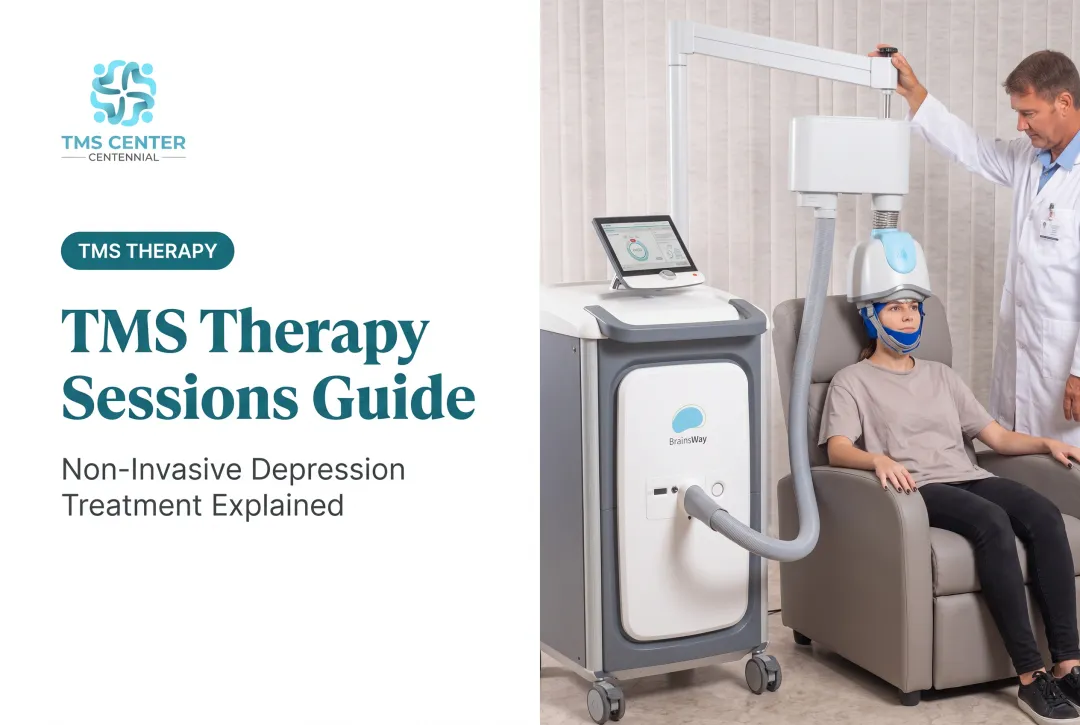
Each session, the coil rests against your scalp, targeting the prefrontal cortex. You'll wear earplugs to dampen the clicking sound the machine makes as it pulses.
What you'll feel:
- Tapping or pulsing sensations on the scalp
- Possible mild discomfort at the treatment site
- Jaw or facial twitching (a normal sign the coil is positioned correctly)
Sessions typically run about 20 minutes. The full appointment takes around 45 minutes including setup.
You don't need sedation, so you stay awake and alert the entire time. You're free to drive yourself home right after.
Comfort During the Session
Many patients relax, listen to music, or just close their eyes during treatment. At TMS Center Centennial, two therapy dogs, Finn and Furgus, often join sessions and will curl up on a patient's lap. One patient described it as feeling "like visiting a friend's house" rather than a medical appointment.

The Immediate Aftermath: Right After Each Session
Most side effects fade fast. Mild headache, scalp tenderness, or lightheadedness typically resolves within 30 to 60 minutes. There's no downtime after a session. You can go back to work, run errands, or drive immediately.
A few points patients often ask about right after treatment:
- Fewer than 5% of patients stop treatment because of side effects
- Temporary pain or discomfort is the most common complaint and usually fades within the first week
- Mild fatigue or brain fog in early sessions is normal — not a sign treatment is failing
The Weeks-Long Journey: Timeline of Results
Full courses generally run around 30 sessions over roughly six weeks. Here's the general arc most patients experience:
- Weeks 1-2: Subtle or no noticeable change yet
- Weeks 3-4: Improvements in sleep, energy, and ease with small daily tasks begin to appear
- Weeks 4-6: Clearer mood lift and broader symptom relief for many patients

Research on Deep TMS backs this up. One multicenter randomized trial found response rates of 38.4% and remission of 32.6% at week five, compared to sham treatment. In a study of late-life depression, the median onset of response occurred after 14 sessions, with remission following around session 15.
Some patients report a temporary dip mid-course, where symptoms briefly feel worse before improving. Clinics that see this often frame it as the brain responding to stimulation, not as a setback.
Progress doesn't always show up in mood first. Sleep, energy, and motivation often improve before the emotional lift feels obvious, and friends or family may notice the change before the patient does.
At TMS Center Centennial, 89% of patients report a significant positive response, with roughly 69% achieving complete remission after finishing their course.
Life After Completing TMS: Long-Term Outcomes
Benefits from a completed course often last 6 to 12 months or longer, though results vary by individual.
A systematic review of maintenance TMS protocols found relapse rates of just 37.8% with maintenance treatment, compared to 81.8% without it. That difference is a strong case for staying engaged with follow-up care.

If symptoms start creeping back, booster sessions are an option worth discussing with your care team. Many providers also recommend pairing TMS with ongoing support rather than treating it as a one-and-done fix.
At TMS Center Centennial, that support includes:
- Collaborative counseling with licensed therapists trained in trauma-informed care
- NeurOptimal® neurofeedback, a 33-minute non-invasive session using brainwave monitoring to help the brain self-regulate
Combining TMS with therapy or neurofeedback isn't required, but it gives your brain more tools to hold onto the gains you've made.
Frequently Asked Questions
How long does it take to see results from TMS therapy?
Most patients notice subtle changes within 2-3 weeks, often in sleep or energy first. Fuller mood improvements typically emerge by weeks 4-6 of consistent treatment.
Are 20 sessions of TMS therapy enough?
Standard protocols usually run closer to 30 sessions over about six weeks. Completing the full recommended course gives you better odds of lasting remission than stopping early.
What symptoms does TMS therapy help with?
TMS is FDA-cleared for major depressive disorder and OCD, and it's also used for anxiety and PTSD symptoms. It targets brain circuits tied to mood regulation, motivation, and compulsive thought patterns.
Does TMS therapy actually work?
Clinical studies show response rates in the 75-79% range for Deep TMS after a full course. TMS Center Centennial reports an 89% patient improvement rate and roughly 69% remission based on its own treatment outcomes.
What are the side effects, risks, and precautions for TMS therapy?
Most side effects are mild: scalp discomfort, headache, or jaw tension that fades within a week. Seizure risk is rare, estimated at fewer than 1 per 30,000 sessions, and TMS isn't suitable for people with certain metal implants near the head.
How does TMS therapy affect the brain?
Magnetic pulses stimulate underactive circuits in the prefrontal cortex tied to mood and anxiety regulation. It doesn't cause structural changes to the brain; it simply encourages more balanced activity in these networks.
Ready to Start Your TMS Journey?
If you've read this far, you probably have real questions about whether TMS could work for you. That's exactly what a consultation is for. At TMS Center Centennial, psychiatrists, certified TMS technicians, and therapists walk through your history, answer questions honestly, and build a plan around your situation.
Call (720) 642-6555 to schedule a consultation, or email info@tmscentercentennial.com. From the first call, you’ll get a compassionate, one-on-one conversation focused on your questions and next steps.