
Deep TMS gets mentioned as an FDA-approved option, but what does that actually mean for someone who's tried everything else? This article breaks down the real, measurable advantages of Deep TMS for OCD, backed by clinical research and grounded in what treatment actually looks like day to day.
TL;DR
- Deep TMS is FDA-approved for OCD (since 2018) and requires no medication or surgery
- Clinical trials show meaningful symptom reduction, including in patients who didn't respond to other treatments
- Sessions take under 30 minutes with no downtime or anesthesia
- Complements exposure and response prevention (ERP) or medication rather than replacing them
- TMS Center Centennial offers BrainsWay Deep TMS™ with certified technicians for patients across the Denver metro area
What Is Deep TMS (Brief Context)
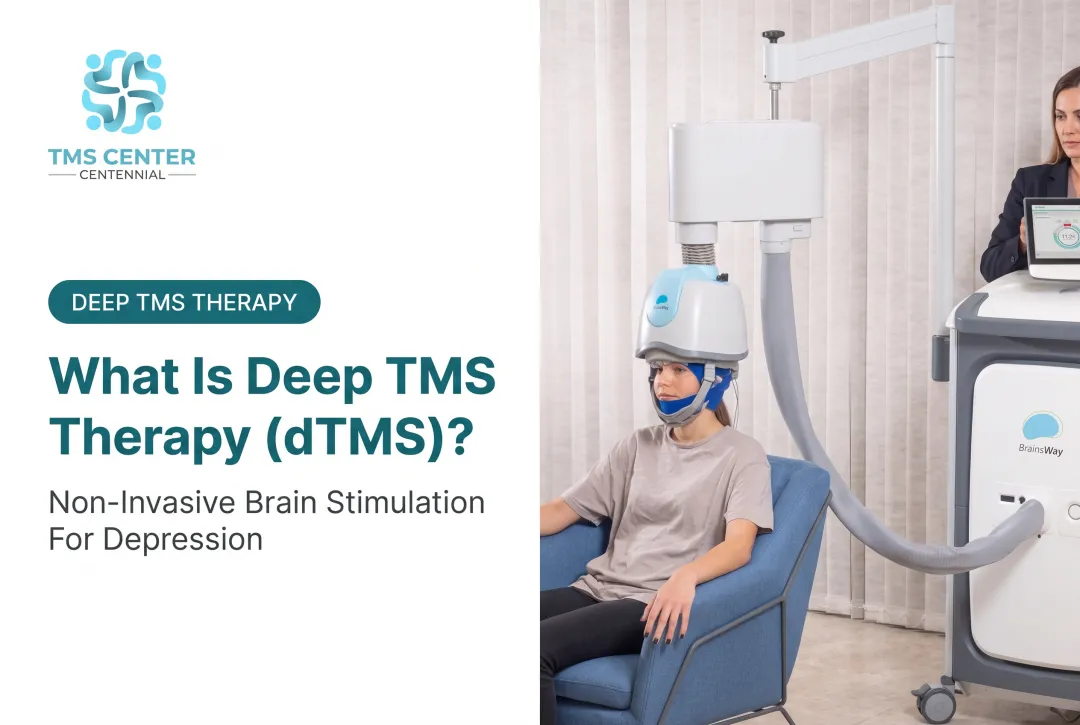
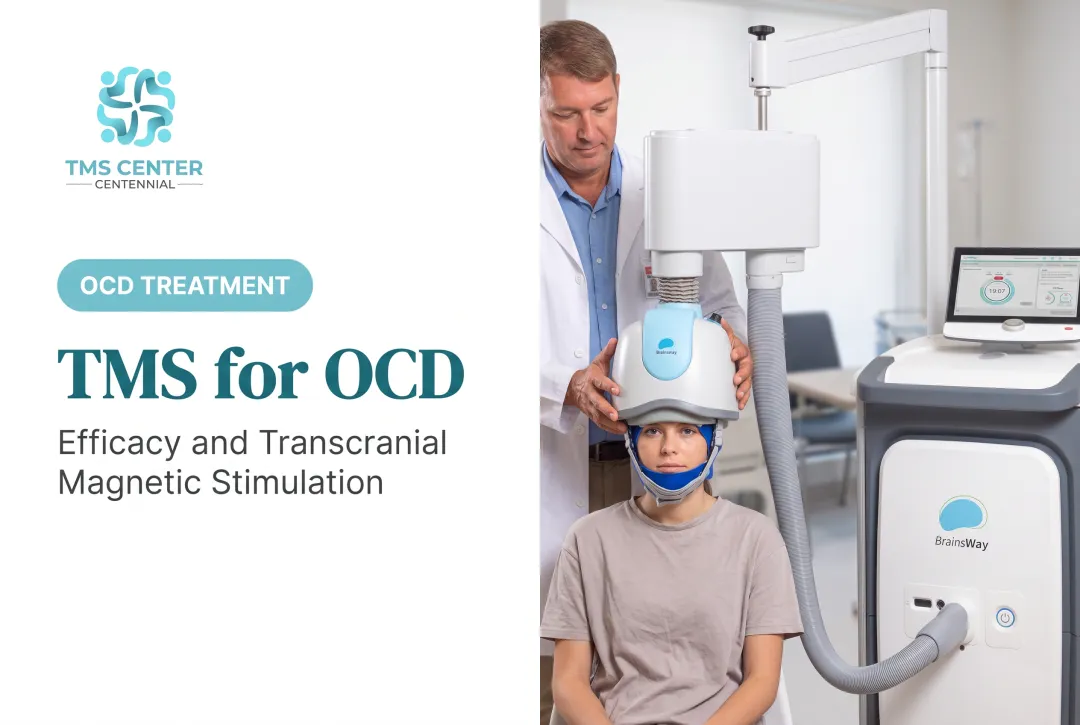
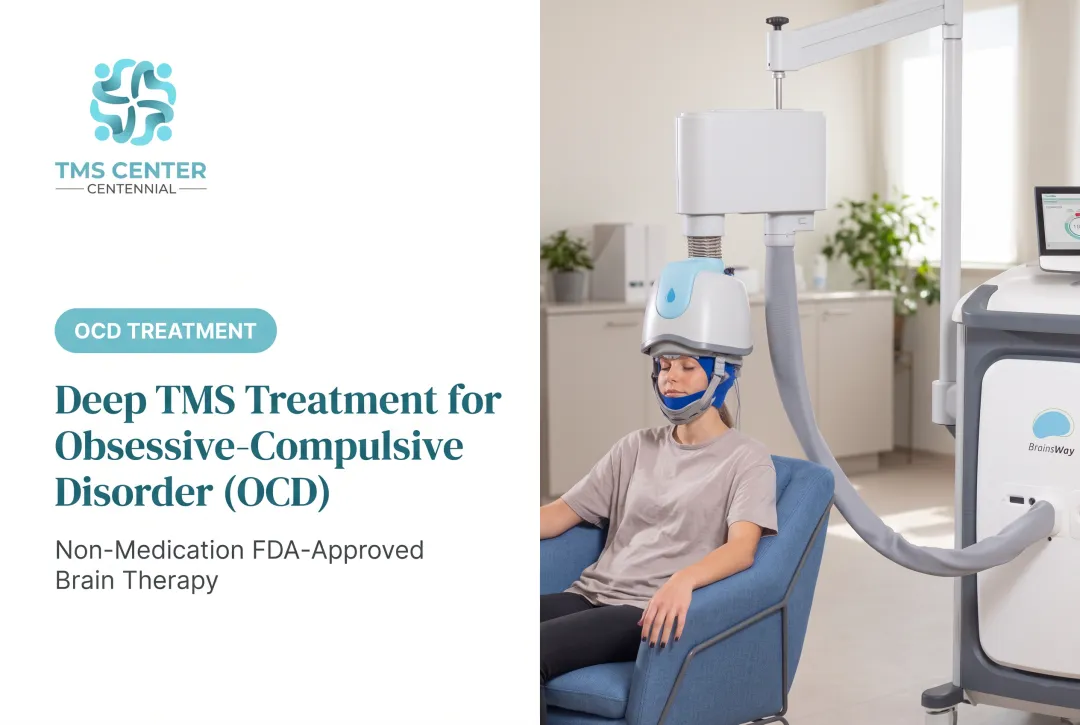
Deep TMS delivers magnetic pulses through a specialized H-coil that reaches deeper brain regions than standard TMS. For OCD, treatment focuses on circuits tied to obsessive-compulsive symptoms:
- Dorsomedial prefrontal cortex (dmPFC)
- Anterior cingulate cortex (ACC)
Clinicians also use it for depression and anxiety when first-line treatments have not fully worked. Deep TMS does not cure OCD on its own. It is a tool built to lower symptom severity and help patients reclaim more of the day from rituals and intrusive thoughts.
Key Advantages of Deep TMS for OCD
The advantages below focus on outcomes patients and families actually track: how often compulsions occur, how much time gets lost to rituals, medication burden, and overall quality of life. These are measurable results, not theoretical claims.
Advantage 1: Significant, Research-Backed Symptom Reduction
Deep TMS targets the dmPFC and ACC, the exact circuits shown to be hyperactive in OCD. Treatment combines repeated stimulation sessions with brief symptom "provocation," a technique that intentionally triggers mild obsessive distress right before stimulation to help retrain those circuits over time.
That targeting is especially useful for patients who've plateaued on medication and therapy alone. In the FDA's pivotal multicenter trial, 38.1% of patients responded to active Deep TMS versus 11.1% on sham treatment after six weeks, according to research published in the American Journal of Psychiatry.
The gap widened at one-month follow-up, with 45.2% responding versus 17.8% on sham.

What this means in practice:
- Compulsion frequency and intensity often decrease measurably
- Obsession-driven distress eases as circuits recalibrate
- Y-BOCS scores (the standard OCD severity measure) show statistically significant improvement over sham treatment
This advantage is most relevant for treatment-resistant OCD patients: those who've tried at least one medication and a course of therapy without finding full relief. Deep TMS adds another layer rather than requiring you to abandon what's already working.
Advantage 2: Non-Invasive, Medication-Free Treatment Path
There's no surgery, no anesthesia, no systemic medication. Patients walk into the office, sit through the session, and drive themselves home right after. No recovery time needed.
OCD medication augmentation, often with antipsychotics like risperidone or aripiprazole, carries real risks. A 2020 review on treatment-resistant OCD pharmacotherapy notes these drugs can cause weight gain, metabolic changes, sedation, and movement-related side effects, according to research published on PMC.
SSRIs themselves aren't side-effect-free either, with nausea, insomnia, and sexual dysfunction among common complaints.
Deep TMS's side-effect profile looks different. The FDA's review of the pivotal trial found:
- No serious adverse reactions tied to the device
- Headache as the most frequent side effect (37.5% active vs. 35.3% sham, barely different)
- Mild, temporary effects like jaw or facial discomfort that resolved shortly after sessions

For patients worried about long-term medication dependency or who've had bad reactions to OCD medications before, this is often the deciding factor. Patients can typically continue their current prescribed medications during Deep TMS treatment too, with any changes guided by their prescribing clinician rather than forced by the therapy itself.
Advantage 3: Convenient, Outpatient-Friendly Treatment Schedule
Sessions typically run under 30 minutes. Most acute treatment courses involve daily sessions across the work week for around six weeks, fitting around jobs and school without requiring hospital stays or recovery time.
Compare that to more invasive alternatives like deep brain stimulation, which involves actual neurosurgery. Deep TMS's outpatient model means:
- No time off work for recovery: patients typically resume normal activities immediately after each session
- A defined treatment window: most protocols run about six weeks, not an open-ended commitment
- Manageable disruption: sessions fit into lunch breaks or before/after work hours for many patients

On the cost side, Medicare and most major private insurers already cover Deep TMS for depression, and coverage for OCD indications continues to expand as more providers, including BrainsWay, work with insurers on this.
TMS Center Centennial accepts Cigna, Anthem Blue Cross Blue Shield, Tricare, United Healthcare, and Aetna, and the team handles the authorization paperwork directly. That schedule and coverage mix matters most for working adults, students, and caregivers who can't set aside weeks of downtime for treatment to work.
What Happens When OCD Goes Untreated or Undertreated
Sticking with a treatment plan that isn't working has real costs. Left undertreated, OCD tends to compound rather than plateau:
- Compulsions worsen and consume more time — rituals that once took 20 minutes can stretch to hours
- Avoidance behaviors increase, often leading to social isolation
- Relationships, work, and school performance suffer under the weight of untreated symptoms
- Medication doses climb with diminishing returns and growing side-effect burden
- The window for durable remission narrows the longer symptoms go unaddressed
People with OCD show diminished quality of life across every measured domain compared to the general population, according to a 2013 systematic review.
In one clinical sample, 38% of OCD patients reported being unable to work due to their symptoms, per a study available on PMC. Waiting it out rarely makes things better on its own.
How to Get the Most Value from Deep TMS Treatment
Deep TMS works best as part of a broader plan, not a standalone fix. Results are strongest when it's paired with ongoing ERP therapy or medication management, not used alone.
A few things make a measurable difference:
- Complete the full course. Stopping at session 10 because you feel better rarely holds up long-term. Finish the recommended sessions.
- Choose a provider with real OCD experience, not only general depression TMS training. OCD protocols use provocation and need a different clinical approach.
- Keep your therapy team in the loop. Treatment and counseling reinforce each other when they're coordinated, not siloed.
At TMS Center Centennial, Deep TMS™ is delivered with collaborative counseling from a multidisciplinary team. Psychiatric, technical, and therapeutic care stay coordinated throughout treatment.
Conclusion
Deep TMS for OCD is a research-backed, non-medication option for patients who've tried the standard path and still haven't found relief. FDA clearance backs that claim with clinical evidence. Those benefits compound when Deep TMS is paired consistently with therapy and monitored by a team that actually understands OCD, not just depression protocols.
If treatment-resistant OCD has been running your life for months or years, it's worth a conversation with a provider who specializes in this. TMS Center Centennial, serving patients throughout Centennial, Denver, and the surrounding metro area, is one option worth exploring.
Frequently Asked Questions
How many TMS sessions are needed for OCD?
A typical course involves daily sessions over roughly four to six weeks, often including brief symptom provocation exercises before each stimulation session. Your provider will tailor the exact schedule to your response and symptom severity.
Is TMS treatment good for OCD?
Yes. The FDA approved Deep TMS for OCD in 2018 after trials showed meaningful symptom reduction in many treatment-resistant patients. Results vary by person, but the research supports real benefit for many patients.
What is the most successful treatment for OCD?
ERP therapy and SSRI medication remain first-line treatments and work well for many people. Deep TMS is most effective as an add-on for patients who haven't fully responded to those approaches, not as a replacement for them.
Does TMS help with irritability?
Indirectly, yes. As overall OCD and anxiety symptom burden decreases, many patients report that irritability tied to that distress eases as well. It's not a direct target of treatment, but a common secondary benefit.
What are the common symptoms of a TMS dip?
Common signs include a temporary drop in mood or a short-lived return of symptoms partway through the course. This is typically brief and tends to resolve as sessions continue, especially with ongoing therapy support.
Is it safe to fall asleep during TMS treatment?
For OCD protocols specifically, patients need to stay awake since the provocation exercises require active engagement. General relaxation is fine as long as the coil stays properly positioned throughout the session.