
That's a hard reality for anyone who's been cycling through prescriptions for months or years without relief. Transcranial Magnetic Stimulation (TMS) offers a different path: an FDA-approved, non-invasive treatment that doesn't involve medication or anesthesia. This article covers how TMS works, what the research shows about its effectiveness, what it costs, which conditions it treats, and what patients can expect at TMS Center Centennial in Colorado.
Key Takeaways
- FDA-approved since 2008: non-invasive depression treatment with no medication or sedation required
- About half of patients improve significantly; roughly one-third reach full remission in studies
- TMS Center Centennial: 89% improvement and 69% full remission with BrainsWay Deep TMS™
- Swift Deep TMS™ accelerated protocols finish a full course far faster than standard schedules
What Is TMS Therapy and How Does It Work?
TMS uses magnetic pulses, delivered through a coil placed against the scalp, to stimulate the areas of the brain tied to mood regulation. Think of it like a traffic jam: in depression, communication between certain brain regions slows down or gets stuck. TMS helps clear that jam, restoring healthier signaling patterns and supporting neuroplasticity, the brain's ability to rewire itself over time.
The FDA cleared the first TMS device for major depressive disorder in 2008. It's typically recommended for patients who haven't found relief through medication or talk therapy alone, according to the American Psychiatric Association.
What a Session Actually Looks Like
Sessions take place in an outpatient setting with no sedation required:
- Sit fully awake in a treatment chair for the entire session
- Feel light tapping on the scalp as the coil delivers magnetic pulses
- Drive yourself home and return to normal activities right away
- Complete a standard course over several weeks of daily visits
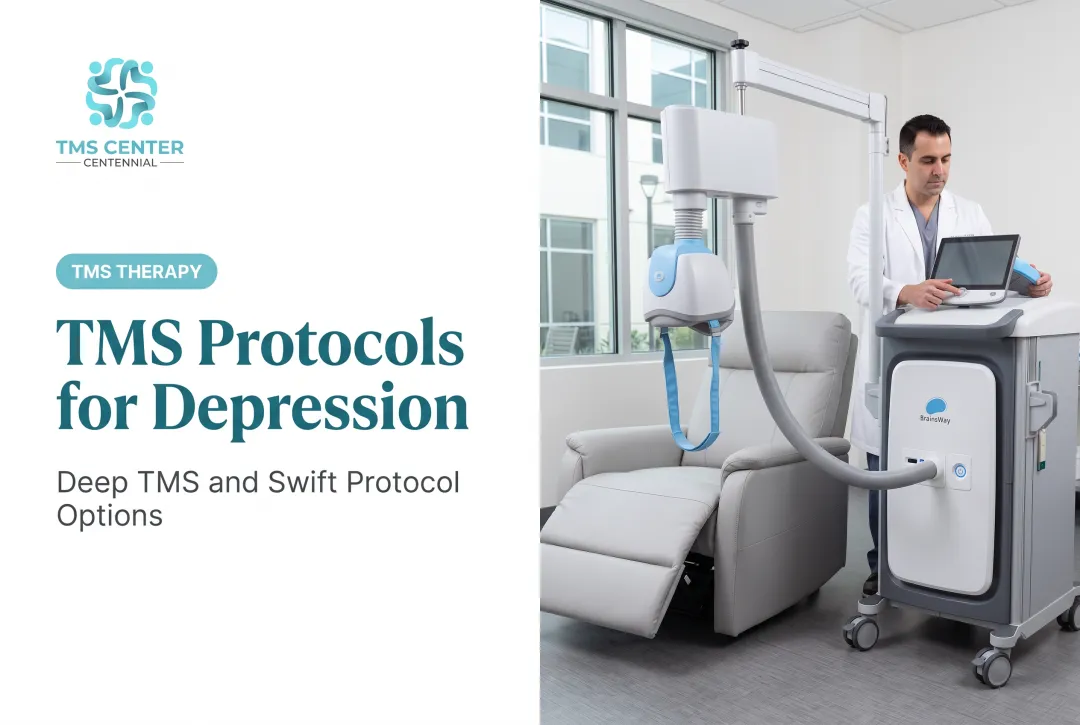
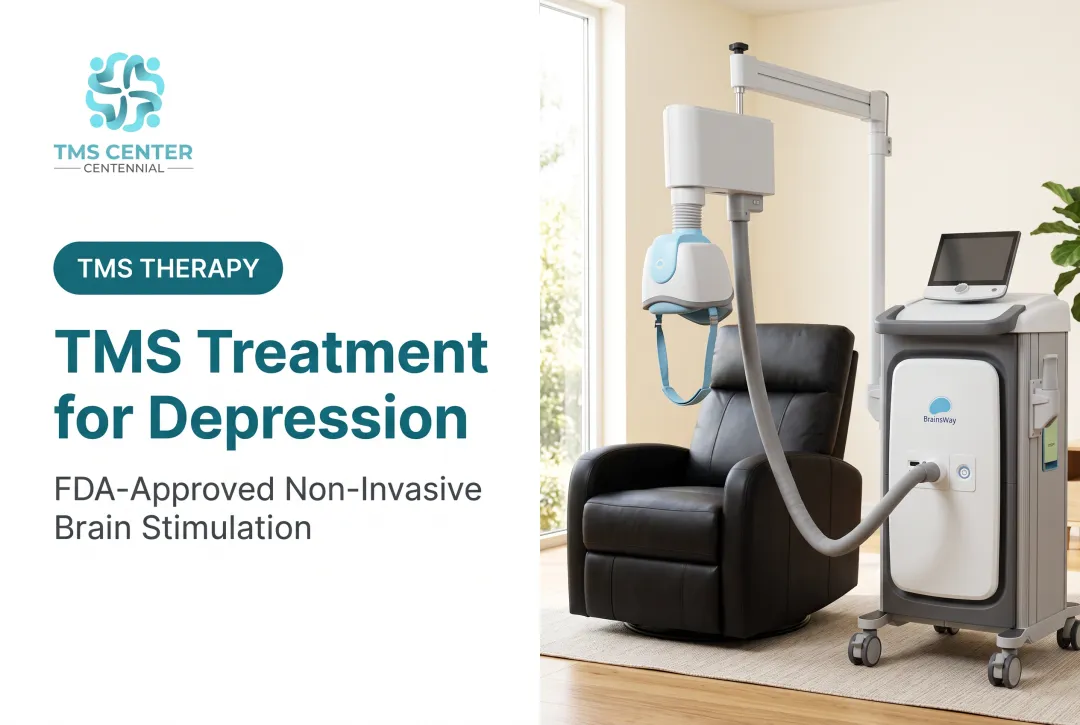
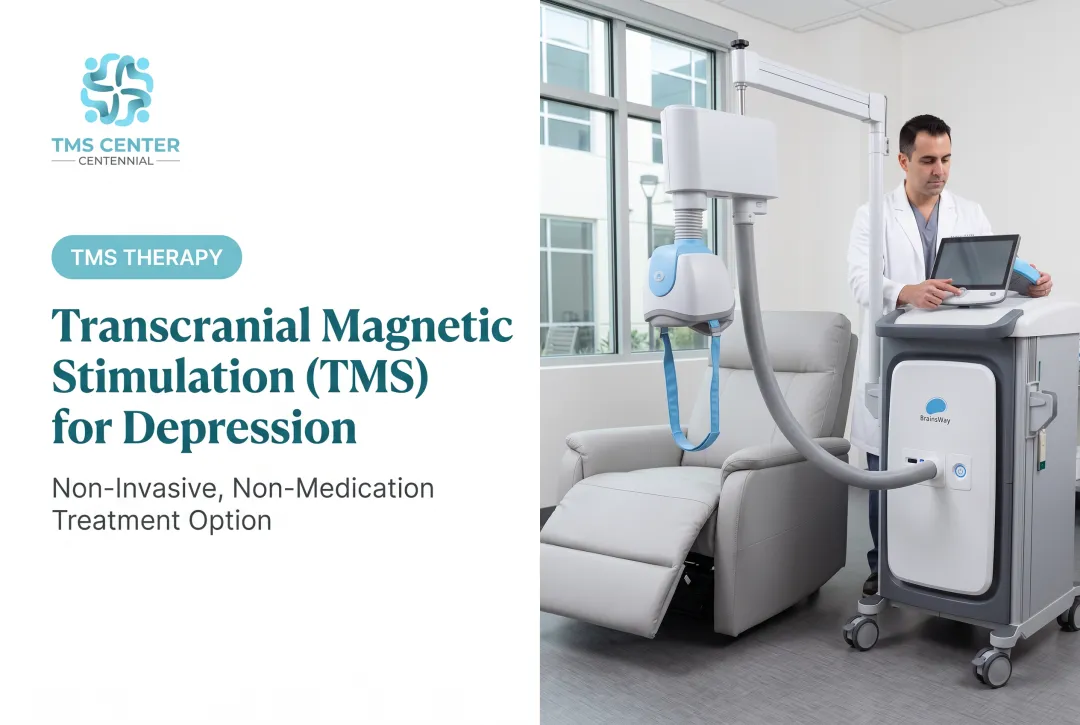
TMS Center Centennial uses BrainsWay Deep TMS™, which relies on patented H-Coil technology built into a helmet-shaped device. Compared to standard rTMS, Deep TMS reaches broader and deeper brain regions (about 4 cm of penetration versus roughly 3 cm for standard rTMS).

At the center, a typical session runs about 20 minutes, and you should allow 45 minutes total for the appointment. A full course consists of 30 sessions.
What Does the Research Say About TMS for Depression?
The numbers matter here, because depression treatment history is full of therapies that sound promising but don't hold up. TMS does.
According to the APA, one in two patients who undergo TMS show a significant response, and one in three achieve full remission. A 2023 meta-analysis pooling nine studies found a similar remission rate of roughly 35.7%. Patients receiving active TMS are notably more likely to reach remission than those receiving sham treatment.
Real-world results at TMS Center Centennial:
- 89% of patients experience a significant reduction in depression symptoms
- Approximately 69% achieve complete remission
Those figures reflect the clinic's own reported outcomes using BrainsWay Deep TMS, and they run higher than the pooled averages seen in broader research literature.

How Long Does Relief Last?
Research summarized in a 2018 consensus paper found clinical benefits typically persist between 3 and 12 months, and some patients maintain remission for a year or longer. Depression can return, as it can with any treatment, but additional rounds of TMS have helped patients who relapse regain symptom control.
Newer research helps explain why the effects last. Studies on BDNF (brain-derived neurotrophic factor) suggest TMS may physically repair neural circuits disrupted by chronic stress, not just mask symptoms temporarily. That differs from most antidepressants, which primarily adjust neurotransmitter levels rather than repair circuit-level damage.
What Is Advanced TMS Therapy? (Accelerated Protocols)
Traditional TMS takes four to six weeks. Newer accelerated protocols, sometimes called SAINT or aiTBS in the research literature, compress that timeline into about five days by delivering multiple sessions daily instead of one.
How accelerated protocols differ:
- Multiple TMS sessions per day instead of a single daily visit
- Brain imaging in protocols like SAINT to personalize the stimulation target
- Compressed timeline for patients who can't commit to six weeks of daily appointments
Stanford's original SAINT trial reported remission in over 90% of participants within five days — a striking figure, though it came from a small initial sample.
Clinics have adapted that compressed model for everyday care. TMS Center Centennial offers Swift Deep TMS™, which delivers multiple Deep TMS sessions over a shorter schedule than the standard 30-session course. Eligibility depends on a clinical evaluation to confirm the accelerated approach fits your situation.

Insurance coverage for accelerated protocols still lags behind standard TMS. Most insurers wrote their policies around the traditional 4-6 week schedule, so accelerated options may mean different out-of-pocket costs. Ask about coverage during your consultation.
Conditions TMS Can Treat Beyond Depression
TMS isn't limited to depression. The FDA has cleared TMS for several conditions and granted breakthrough designation for others:
- OCD (FDA-cleared since 2018 for treatment-resistant cases)
- Depression with comorbid anxiety symptoms
- Migraine (specific devices cleared since 2013)
- Smoking cessation (FDA-cleared in 2020)
- Bipolar disorder (breakthrough device designation, not yet full approval)
At TMS Center Centennial, treatment focuses on treatment-resistant depression, anxiety, PTSD, and OCD. That includes care for veterans and active-duty service members, and the center accepts Tricare.
Patients can also add NeurOptimal® neurofeedback and collaborative counseling with licensed therapists, pairing brain stimulation with talk therapy when a combined plan is the better fit.
How Much Does TMS Cost and Is It Covered by Insurance?
A standard TMS course involves daily sessions across several weeks. A full 20–30 session course typically runs between $6,000 and $12,000, though pricing varies by provider, location, and protocol.
Insurance coverage generally requires:
- A confirmed diagnosis of major depressive disorder
- Documentation of prior failed treatment attempts (medication trials, therapy, or both)
- Prior authorization through your insurance plan
Most major insurers cover TMS once a patient meets these criteria. TMS Center Centennial accepts most major plans, including Cigna, Anthem, Tricare, UnitedHealthcare, Aetna, and Medicare.
The clinic handles the insurance paperwork and provides a personalized benefits analysis before treatment begins, so you know your expected out-of-pocket costs up front. Private-pay options are also available if your plan does not qualify.

Because coverage details vary so much by plan, the most reliable next step is a direct consultation rather than trying to estimate costs from general figures.
What to Expect at TMS Center Centennial
Treatment starts with an evaluation from the center's board-certified psychiatrist to determine whether TMS is the right fit. From there, patients work with a multidisciplinary team:
- Board-certified psychiatrists overseeing clinical care
- Certified TMS coordinators and technicians running daily sessions
- Licensed therapists offering trauma-informed counseling alongside treatment
Several staff members bring personal experience to their roles:
- Rodney Placzek (co-founder) — retired Army Sergeant Major with firsthand insight into veterans and active-duty patients facing PTSD, anxiety, and depression
- Christine Cook (TMS Coordinator) — certified BrainsWay technician who came to the role after her own TMS treatment following a personal loss
Comfort features on-site:
- Two therapy dogs, Finn and Furgus, who can sit with patients during sessions
- Warm, naturally lit treatment rooms
- One-on-one care throughout each 20-minute session
If medication and therapy haven't brought the relief you hoped for, a free consultation can tell you whether TMS fits your situation. Call (720) 642-6555 or email info@tmscentercentennial.com to get started.
Frequently Asked Questions
How much does TMS for depression cost?
Cost varies by provider and how many sessions your protocol requires, generally falling between $6,000 and $12,000 for a full course. Most major insurance plans cover TMS for eligible patients, and TMS Center Centennial accepts most major insurers.
How long do TMS treatment effects last?
Remission often lasts a year or longer, based on published follow-up studies. If symptoms return, additional TMS rounds often restore the initial improvement.
What conditions can TMS treat besides depression?
TMS is FDA-approved or cleared for OCD, depression with anxious distress, migraine, and smoking cessation, with breakthrough designation for bipolar disorder. TMS Center Centennial specifically treats depression, anxiety, PTSD, and OCD.
What is advanced TMS therapy?
Accelerated protocols compress weeks of standard TMS into about five days by delivering multiple sessions daily, often guided by brain imaging for precise targeting. TMS Center Centennial offers its own accelerated option, Swift Deep TMS™.
What does the research say about TMS for depression?
Roughly half of patients respond significantly to TMS, and about a third achieve full remission in clinical studies. At TMS Center Centennial, reported outcomes include 89% symptom improvement and 69% complete remission.
Is TMS painful or does it require recovery time?
TMS is generally well-tolerated, with most patients describing the sensation as mild tapping or mild scalp discomfort. There's no sedation and no recovery period, so patients return to normal activities right after each session.