
TMS Center Centennial works with most major insurance plans, and Medicare coverage for TMS is more straightforward than most patients expect once you understand the rules.
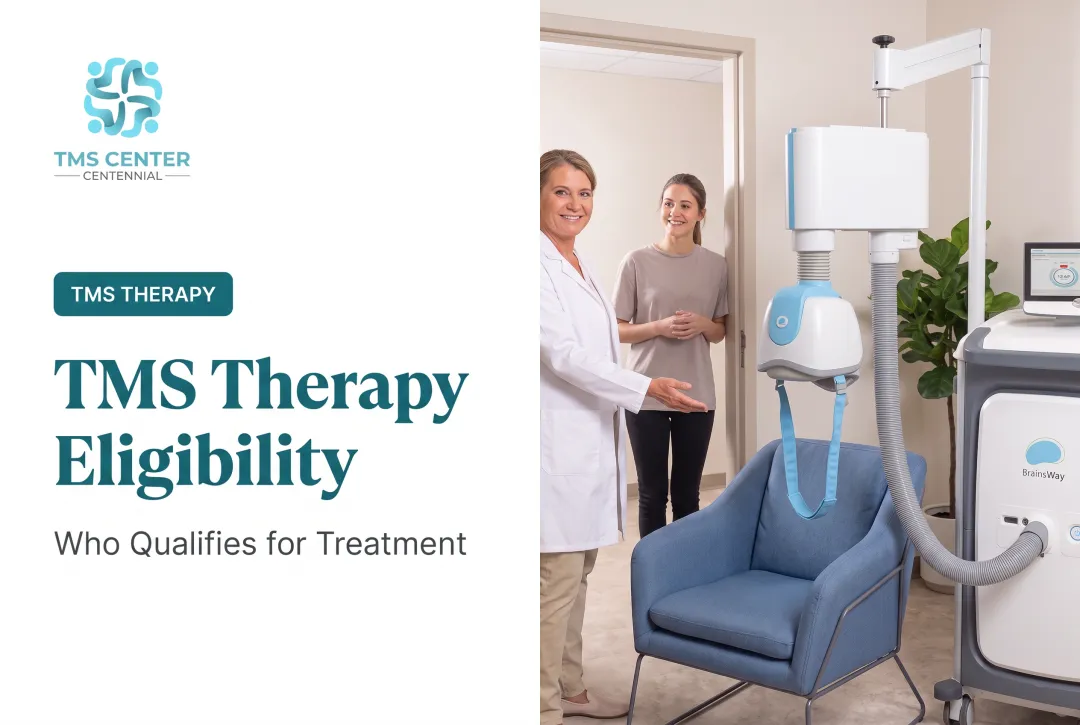
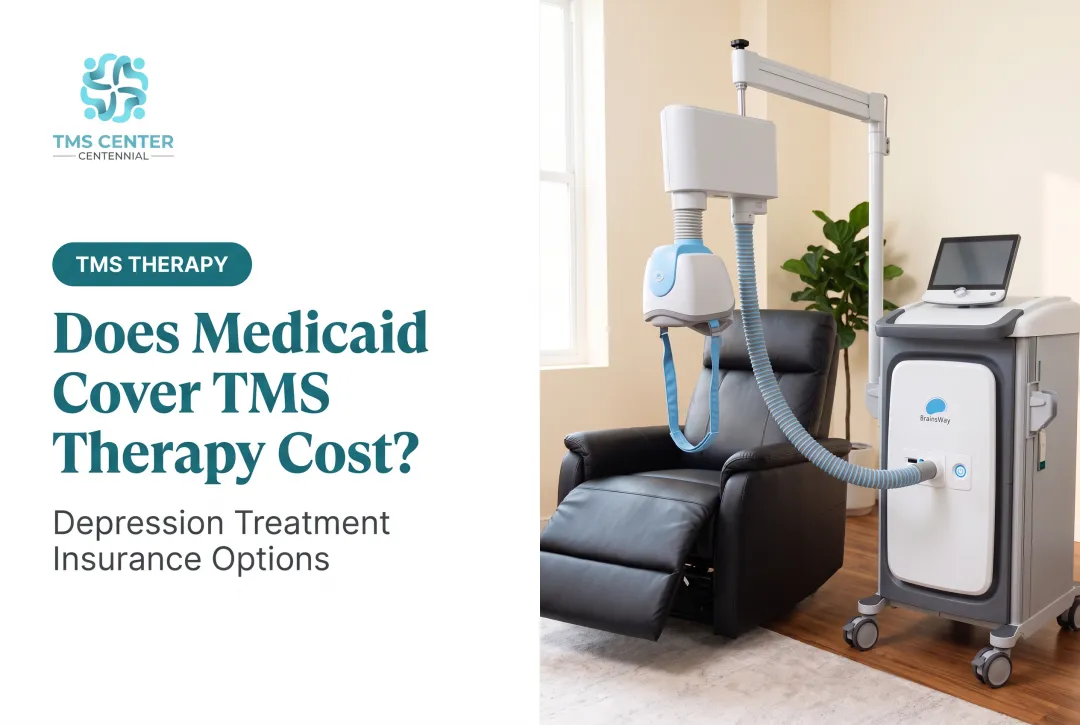
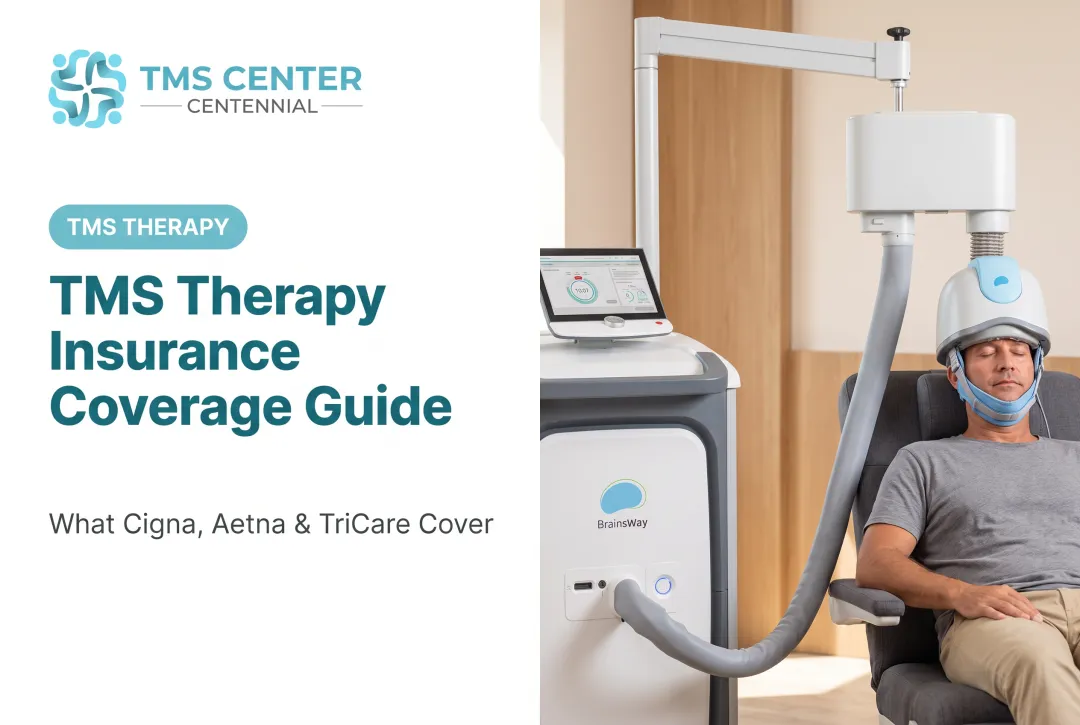
TMS (transcranial magnetic stimulation) is an FDA-approved, non-medication therapy that uses magnetic pulses to stimulate underactive areas of the brain linked to depression. This guide breaks down Medicare's 2026 coverage rules, who qualifies, what it costs, and where coverage stops.
The short answer: yes. Medicare covers TMS for severe major depressive disorder when it's medically necessary, but specific conditions apply.
Key Takeaways
- Medicare Part B covers TMS for severe major depressive disorder (MDD) only—not OCD, anxiety, or PTSD
- Eligibility requires a confirmed diagnosis, documented failed medication trials, and a psychiatrist’s order
- Coverage typically runs up to six weeks, roughly 36 sessions
- You'll pay 20% coinsurance after your Part B deductible; Medigap can cover that gap
- Metal implants near the head and some neurological conditions (such as seizure disorders) disqualify patients entirely
Does Medicare Cover TMS Therapy?
Original Medicare Part B covers TMS as an outpatient physician service for adults with severe major depressive disorder who haven't responded to standard treatments. There's no national coverage policy for TMS — instead, regional Medicare contractors set the rules through Local Coverage Determinations (LCDs).
Quick facts:
- Covered condition: Severe MDD, single or recurrent episode
- Medicare part: Part B (outpatient)
- Session limit: Up to six weeks of daily treatment (~36 sessions)
- Your cost: 20% coinsurance after the Part B deductible
Medicare Advantage and Medigap
If you have a Medicare Advantage (Part C) plan, it must cover everything Original Medicare covers, including TMS for severe MDD. Medicare Advantage plans may still add prior authorization steps, so check with your insurer before starting.
Medigap plans can cut your out-of-pocket share sharply. Most Medigap plans (A, B, C, D, F, G, and M) cover 100% of Part B coinsurance, so the 20% you'd otherwise owe for TMS is fully covered after you meet the Part B deductible.
TMS Center Centennial accepts most major plans, including most Medicare and Medicare Advantage policies, and helps patients confirm coverage before treatment starts.
Eligibility Requirements for Medicare-Covered TMS
Diagnosis and Treatment History
Medicare doesn't approve TMS just because someone feels depressed. You'll need:
- A confirmed diagnosis of severe major depressive disorder under DSM-5-TR criteria
- Documentation that you tried and failed—or could not tolerate—at least two standard antidepressant trials
This history has to be in your medical record, not just self-reported.
Prescribing and Documentation Standards
Beyond diagnosis, Medicare requires:
- A face-to-face evaluation with a psychiatrist (MD or DO) who reviews your treatment history
- A written treatment order from that psychiatrist before your first session
- Documentation that meets your regional Medicare contractor's specific criteria
Exact clinical requirements vary by Medicare Administrative Contractor (MAC). Regional Local Coverage Determinations (LCDs) set documentation standards for your state, so paperwork that works in one region may need extras in another.

At TMS Center Centennial, psychiatrist Dr. Cheryl Dasler conducts these evaluations and helps patients assemble the documentation Medicare requires before treatment begins.
How Much Does TMS Cost With Medicare?
For 2026, standard Medicare Part B costs are:
| Cost Item | 2026 Amount |
|---|---|
| Monthly premium | $202.90 |
| Annual deductible | $283 |
| Coinsurance | 20% of approved amount |
Once you've met your deductible, Medicare pays 80% of the approved cost for each TMS session. You cover the remaining 20%. Over a full course of ~36 sessions, that coinsurance can add up quickly, which is why supplemental coverage matters.
Comparing your options:
- Original Medicare alone: You pay 20% coinsurance per session, no cap
- Medicare Advantage: Similar coverage required, but copay structures and networks vary by plan
- Original Medicare + Medigap: Most Medigap plans cover your entire coinsurance, so your out-of-pocket cost for covered TMS could drop close to zero

For context, patients paying entirely out of pocket without insurance can face costs in the thousands for a full course. Medicare coverage can cut that burden sharply once you qualify.
Always verify your specific costs with the provider's billing office before starting treatment. Rates and coinsurance obligations vary by plan.
When Medicare Does Not Cover TMS
Medicare won't approve TMS for everyone. Two categories of exclusions apply.
Disqualifying implants and devices (due to magnetic interference):
- Cochlear implants
- Pacemakers or defibrillators
- Aneurysm clips or coils
- Other magnetic-sensitive implanted devices
Disqualifying medical conditions:
- Seizure disorders or epilepsy
- Active psychosis
- Dementia
- History of severe head trauma
- Central nervous system (CNS) tumors
Medicare currently does not cover TMS for OCD, anxiety, or PTSD as standalone diagnoses. TMS is used clinically and FDA-cleared for OCD, but Medicare limits coverage to severe MDD.
TMS Effectiveness and Safety: What to Expect
The research backing TMS for treatment-resistant depression is solid. A meta-analysis of 19 randomized, sham-controlled trials found response rates of nearly 40% among patients who'd already failed two antidepressant trials, more than double the sham response rate.
Real-world outcomes often look even better. A 2025 consensus review endorsed by the Clinical TMS Society cites response rates between 58% and 83%, with remission rates up to 62%.
Those results matter more because side effects are generally mild:
- Scalp discomfort during treatment
- Mild headaches
- Seizures in rare cases (less than 1% of patients)
Most patients maintain their improvement for months after finishing treatment, though some need occasional maintenance sessions. TMS Center Centennial reports that 89% of patients at its clinic experience significant symptom reduction, a useful real-world benchmark alongside the published research.

Getting Started: Verifying Your Medicare Coverage for TMS
Before starting TMS, take these three steps:
- Get a psychiatric evaluation — confirms your diagnosis and documents your medication history
- Have your provider verify benefits — billing staff confirm coverage under your Medicare or Medicare Advantage plan
- Check for secondary coverage — a Medigap policy could eliminate most of your out-of-pocket cost
TMS Center Centennial's coordinators assist patients across the Denver and Centennial area with insurance verification and paperwork before treatment starts.
If you're unsure whether you qualify, schedule a consultation to confirm eligibility and expected costs up front.
Frequently Asked Questions
Does Medicare cover TMS therapy for depression?
Yes. Medicare Part B covers TMS for severe major depressive disorder when medical necessity criteria are met, including confirmed diagnosis and documented medication failures.
What are Medicare's guidelines for TMS therapy?
You need a confirmed severe major depressive disorder (MDD) diagnosis, documented failed antidepressant trials, and a treatment order from a psychiatrist following a face-to-face evaluation.
How many TMS sessions does Medicare cover?
Medicare typically covers a six-week course, roughly 36 daily sessions, when supported by proper medical necessity documentation.
How much does Medicare pay for TMS therapy?
Medicare pays 80% of the approved amount after you meet your Part B deductible. You're responsible for the remaining 20% coinsurance, unless you have Medigap coverage.
How effective is TMS for treating depression?
Clinical research shows response rates near 40% in controlled trials, with real-world response rates ranging from 58% to 83% for treatment-resistant depression.
Is TMS effective for OCD?
TMS is FDA-cleared and clinically effective for OCD. However, Medicare does not currently cover TMS for that diagnosis, only for severe MDD.