
Here's the encouraging part: PTSD involves real changes in brain regions like the amygdala, prefrontal cortex, and hippocampus, but the brain's capacity for neuroplasticity means it can also relearn healthier patterns without a pill. This guide walks through evidence-based, medication-free treatments, including trauma-focused therapy, TMS, and neurofeedback, and how a clinic like TMS Center Centennial supports that recovery process.
Key Takeaways
- Trauma-focused therapy, TMS, and neurofeedback offer research-backed PTSD relief without daily medication
- Deep TMS™ offers non-invasive, FDA-cleared stimulation for treatment-resistant PTSD, including in veterans
- Pairing therapy with brain-based treatments and lifestyle changes outperforms any single approach alone
- Recovery isn't instant—some notice shifts within weeks; others need months of consistent work
Understanding PTSD and Why Some Choose to Avoid Medication
PTSD symptoms such as flashbacks, hyperarousal, avoidance, and emotional numbness aren't just psychological. They're tied to measurable dysregulation in brain circuits that govern threat detection and emotional memory.
Research points to an overactive amygdala, an underactive prefrontal cortex struggling to apply the brakes, and a hippocampus that has trouble filing traumatic memories as "past" rather than "present," according to neuroimaging research.
Common Reasons Patients Seek Non-Medication Treatment
People steer away from pharmaceuticals for several reasons:
- Side effects like weight gain, sexual dysfunction, or emotional blunting
- Treatment resistance, when medications simply haven't worked
- Pregnancy or breastfeeding, where drug exposure is a concern
- Preference for root-cause healing over symptom suppression
- Past negative experiences with psychiatric medications
Those concerns show up in real adherence data. One veteran study found that 34.6% of patients discontinued PTSD medication within 30 days, and 71.8% had stopped by 180 days Duek et al., 2021. Medication still helps many people, but staying on it is a genuine hurdle—and a large share of patients actively look for other options.

A non-medication path still involves professional care. Patients work with clinicians to choose evidence-based alternatives rather than managing recovery alone.
Evidence-Based Non-Medication Treatments for PTSD
Trauma-Focused Psychotherapy Comes First
The VA/DoD's 2023 clinical guideline ranks individual trauma-focused therapies over medication as first-line PTSD treatment:
- Prolonged Exposure
- Cognitive Processing Therapy (CPT)
- EMDR
In a randomized trial of 200 patients comparing Prolonged Exposure to sertraline, patients preferred therapy, with a number needed to benefit of 4.5. Both groups sustained gains over 24 months Zoellner et al., 2019. Therapy is the guideline-preferred option, not a backup to medication.
TMS: A Drug-Free Path for Underactive Brain Regions
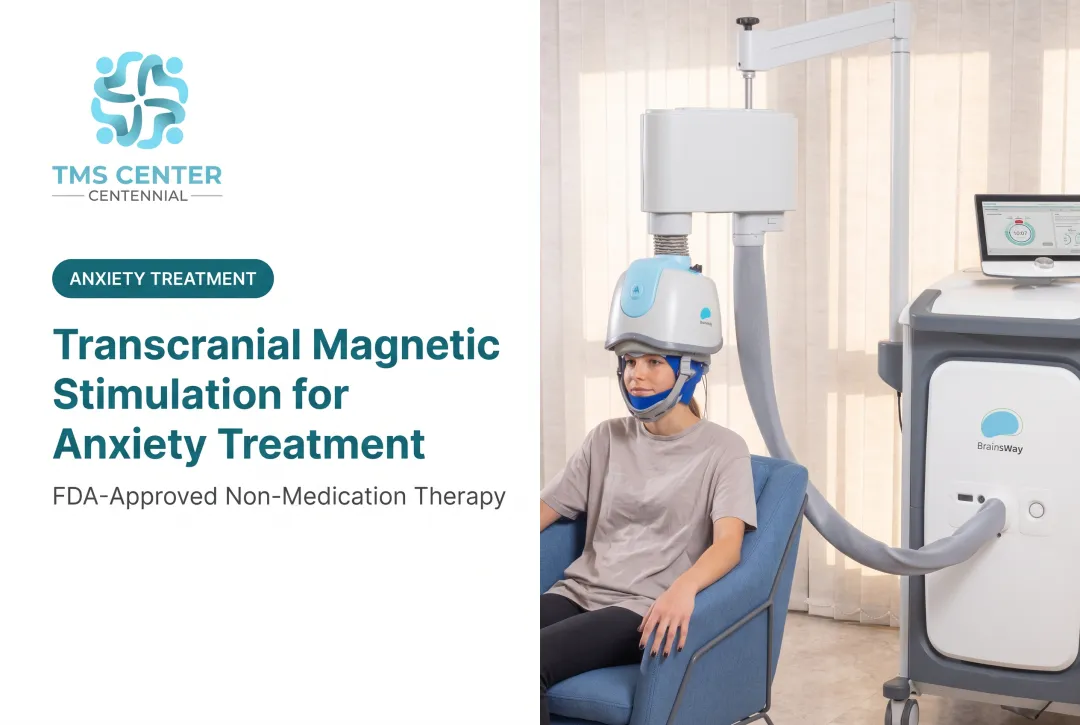
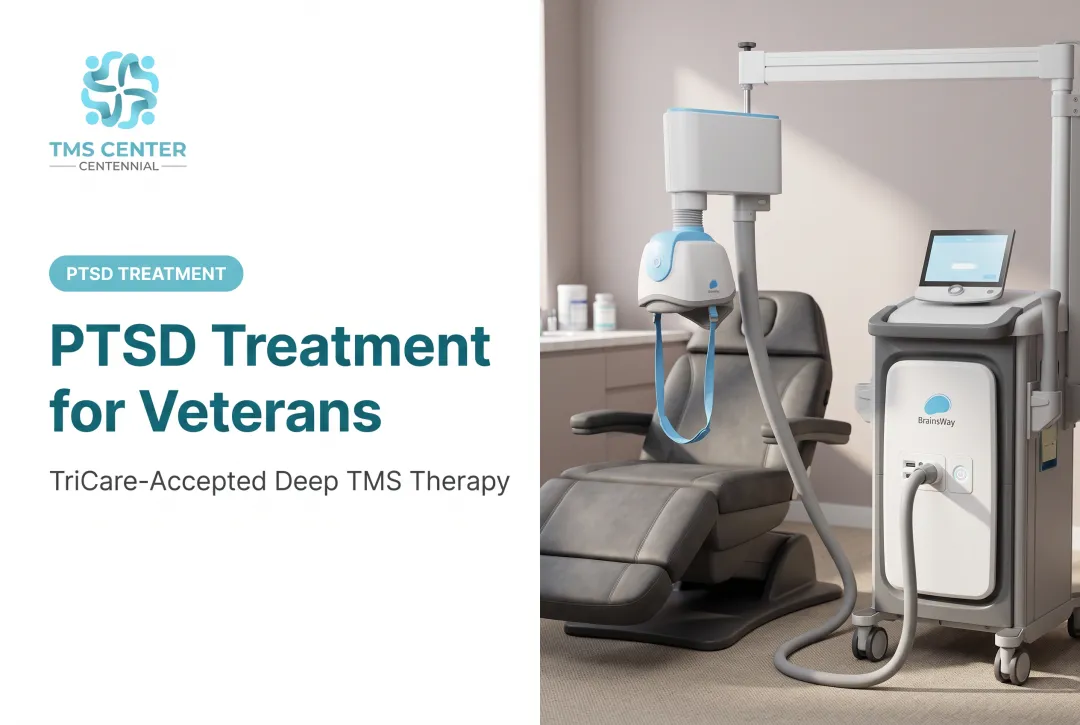
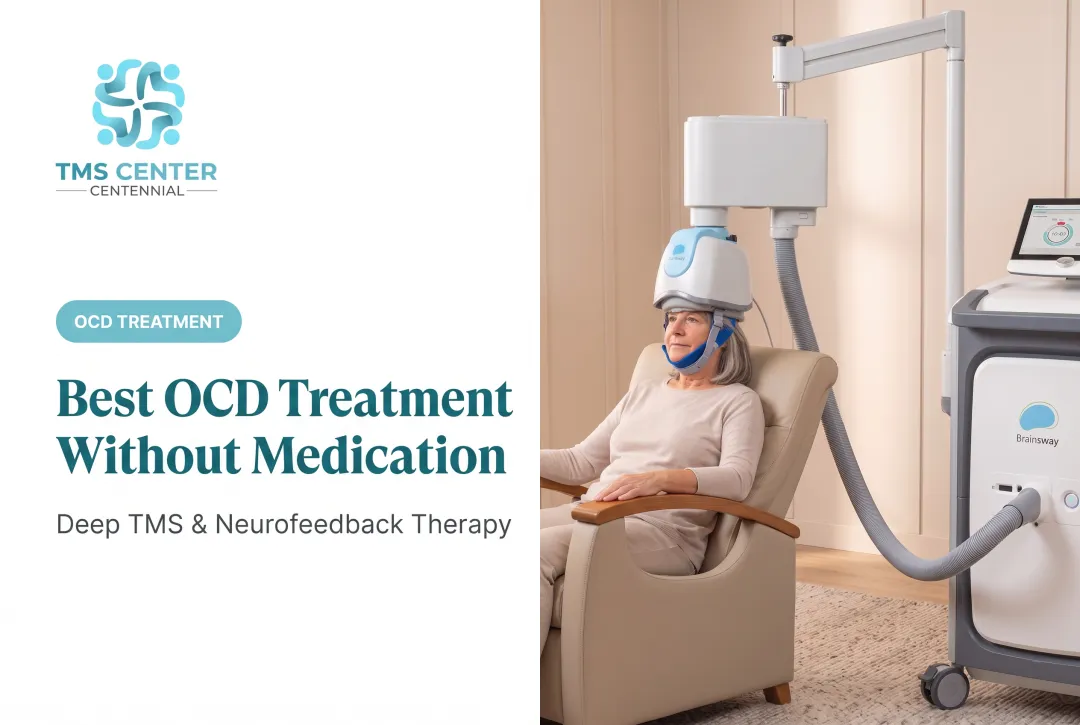
Transcranial Magnetic Stimulation uses magnetic pulses to stimulate brain regions tied to mood and threat regulation, without medication, sedation, or downtime. TMS Center Centennial delivers this through BrainsWay™ Deep TMS™ technology, which has been FDA-approved since 2007.
A 2018 randomized trial of 103 combat veterans found that adding rTMS before Cognitive Processing Therapy produced greater early symptom reduction than CPT alone. Gains held through six months Kozel et al., 2018.
At TMS Center Centennial, reported outcomes across the clinic's patient base show an 89% improvement rate and roughly 69% remission rate. Those figures come from the center's overall depression treatment data, not a PTSD-only study, and still show what brain-based, non-medication care can deliver.

Neurofeedback for Nervous System Regulation
NeurOptimal® neurofeedback trains the brain toward healthier self-regulation by monitoring brainwave activity in real time and giving the brain gentle feedback. A 2023 meta-analysis of 293 participants across 10 controlled studies found a large pooled improvement in PTSD symptoms. Remission reached 79.3% with neurofeedback versus 24.4% in controls, though evidence quality was low to moderate because protocols varied Askovic et al., 2023.

Sessions at TMS Center Centennial run about 33 minutes, using cortical sensors and calming audio cues, with no medication or invasive equipment.
Why Multidisciplinary Care Matters
Combining TMS, neurofeedback, and collaborative counseling tends to address more angles of PTSD than any single modality alone. TMS Center Centennial's team includes:
- Rodney Placzek, retired Army Sergeant Major and Clinical Director, who completed TMS after military-related trauma
- Christine Cook, certified BrainsWay™ technician and lead TMS Coordinator, who also completed TMS as a patient
- Licensed therapists trained in trauma-informed care and Emotionally Focused Therapy
That lived experience matters for veterans and active-duty patients who want providers who understand military-connected trauma firsthand.
Somatic and Holistic Approaches to Support Recovery
The Body Keeps Score, Too
Trauma isn't only stored in thought patterns. It often lives in the body as chronic tension, a racing heart, or a nervous system stuck in fight-or-flight. Somatic Experiencing addresses this directly, using body-based techniques to help release stored trauma responses. A 2017 randomized trial found that 44.1% of participants no longer met PTSD diagnostic criteria after 15 sessions, with effects maintained at follow-up Brom et al., 2017.
Yoga, Breathwork, and Mindfulness
A 2023 VA trial in 131 women veterans compared trauma-sensitive yoga to Cognitive Processing Therapy. Both groups improved meaningfully, with no significant difference between them. Yoga had notably higher completion rates (65.3% versus 45.8%). Yoga, breathwork, and mindfulness lower cortisol and improve vagal tone, helping the nervous system shift out of constant alert mode.
Other Non-Verbal Processing Tools
- Expressive arts and journaling for trauma too difficult to verbalize
- Movement therapy to rebuild a sense of safety in the body
- Sleep hygiene, nutrition, and reduced alcohol/caffeine to stabilize mood and energy
- Social support systems that counter the isolation PTSD often creates These practices work best alongside professional brain-based treatment such as TMS or neurofeedback, not as standalone cures.
Who Is a Good Candidate for Medication-Free PTSD Treatment?
Medication-free PTSD treatment works well when you have:
- Mild-to-moderate PTSD symptoms
- A strong support system at home or in their community
- Prior adverse reactions to psychiatric medications
- High motivation to engage consistently in therapy or treatment sessions
That said, medication or a combined approach may still be necessary for severe depression, active suicidality, or co-occurring disorders like substance use.
At TMS Center Centennial, intake begins with a full medical-history review. Your psychiatrist and treatment team then decide whether TMS alone, neurofeedback, or a plan that keeps your current medication is the right path.
What Recovery Looks Like: Setting Realistic Expectations
Recovery from PTSD isn't a straight line. Some people notice meaningful shifts within a few weeks; others need several months of consistent treatment before symptoms ease significantly.
Early progress often shows up as better sleep, fewer intrusive memories, and more capacity to handle daily stress—not a sudden erase of the past.
A typical non-medication treatment plan includes:
- Diagnostic assessment - reviewing symptoms, history, and treatment goals
- Therapy sessions - trauma-focused work with a licensed counselor
- TMS or neurofeedback protocol - TMS sessions usually last 20–30 minutes, five days a week, for four to six weeks; neurofeedback sessions run about 33 minutes on a clinician-set schedule
- Follow-up evaluation - tracking progress and adjusting the plan as needed

Patients can continue current medications throughout TMS or neurofeedback treatment. Any changes should happen under a prescribing doctor's supervision, usually after the treatment course ends.
Most major insurance plans, including Cigna, Aetna, TRICARE, United Healthcare, and most Medicare plans, cover non-medication PTSD treatments like TMS. Coverage details vary by plan and diagnosis, so get written pre-service confirmation before starting.
Frequently Asked Questions
Is it possible to recover from PTSD without medication?
Yes. Many people get meaningful relief from trauma-focused therapy, TMS, and neurofeedback—especially with mild-to-moderate PTSD and strong support. Severe cases may still do best with combined care.
What is the most effective non-drug treatment for PTSD?
Trauma-focused psychotherapy (CPT, Prolonged Exposure, EMDR) has the strongest research backing and is recommended by VA/DoD guidelines. TMS is a promising, well-studied complement, especially for treatment-resistant cases.
How long does it take to see results from TMS for PTSD?
Many patients notice changes within a few weeks of consistent sessions. A full course typically runs four to six weeks, though timelines vary by individual response.
Can neurofeedback really help with PTSD symptoms?
Yes. Neurofeedback trains the brain toward healthier regulation patterns, and research shows meaningful symptom improvement over time—though results depend on the protocol used.
Is TMS covered by insurance for PTSD treatment?
Many major plans, including TRICARE, cover TMS, but PTSD-specific coverage isn’t guaranteed on every policy. Always verify your benefits before starting treatment.
When should someone consider medication alongside non-drug PTSD treatments?
Consider medication when symptoms are severe, suicidality is present, or conditions like substance use disorder co-occur. In those cases, meds alongside therapy, TMS, or neurofeedback can improve safety and stability.