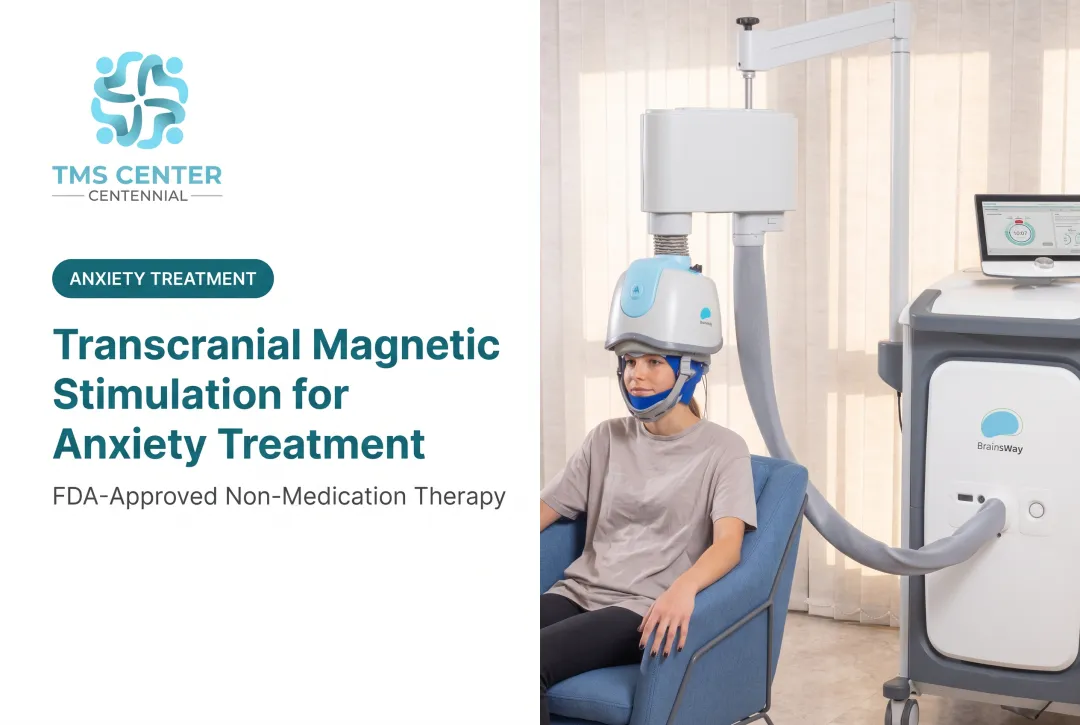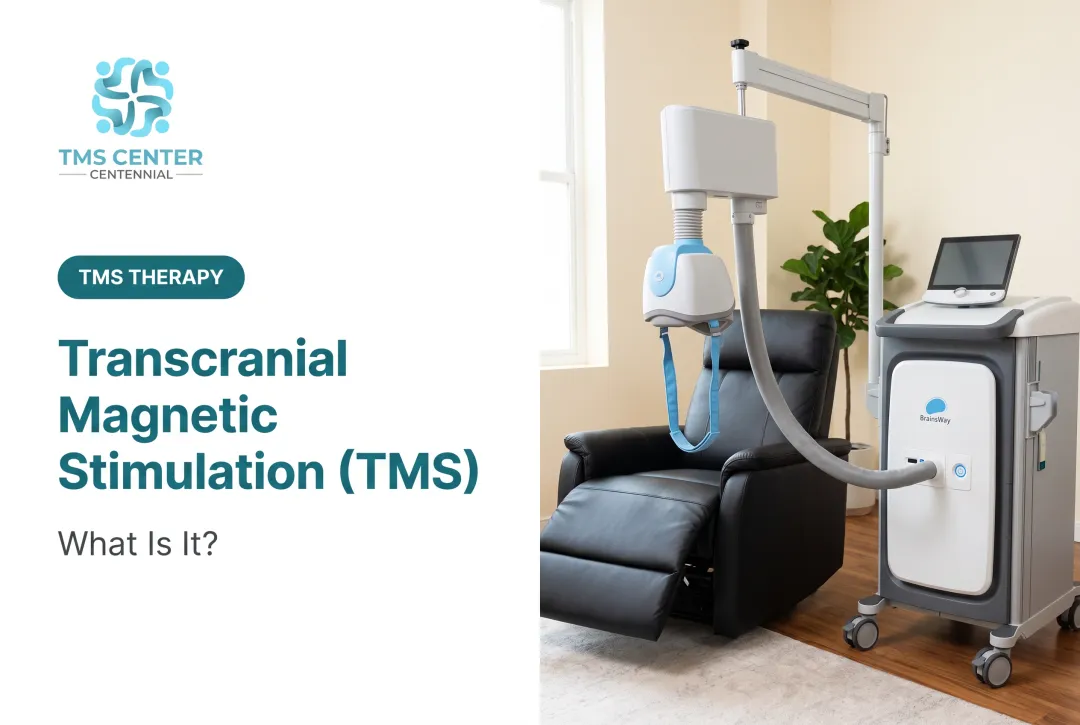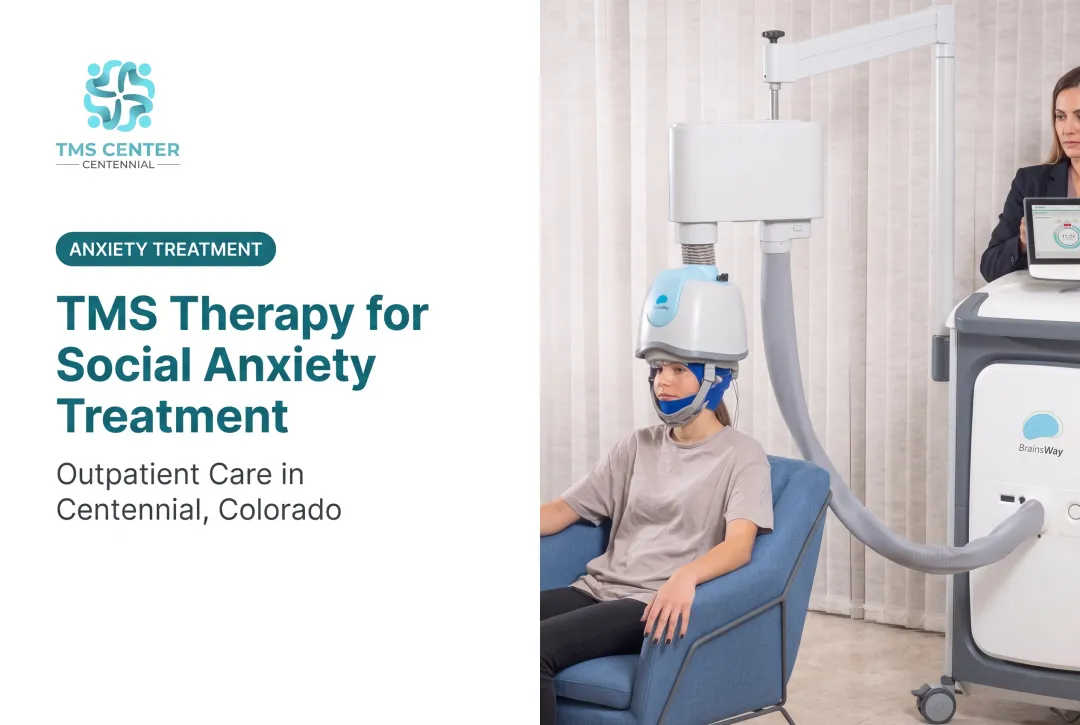

Transcranial Magnetic Stimulation (TMS) is an FDA-cleared, non-medication treatment that uses magnetic pulses to target the brain circuits driving anxiety. At TMS Center Centennial, patients throughout the Denver and Centennial area receive BrainsWay Deep TMS™ for anxiety, depression, and related conditions.
This article covers how TMS works for anxiety, what the research shows, what a treatment course looks like, and how to know if it's right for you.
Key Takeaways
- TMS targets the dorsolateral prefrontal cortex to calm overactive fear circuits tied to anxiety
- Research shows symptom reductions in generalized anxiety disorder, especially when anxiety co-occurs with depression
- Care is non-invasive and drug-free, with brief sessions usually scheduled daily for several weeks
- TMS Center Centennial pairs Deep TMS™ with neurofeedback and counseling in one coordinated plan
Does TMS Work for Anxiety? What the Research Shows
TMS is FDA-cleared for anxiety symptoms that occur alongside Major Depressive Disorder (MDD). It's also used off-label for standalone anxiety disorders like generalized anxiety disorder (GAD), based on a growing body of clinical evidence.
A 2022 meta-analysis published in the International Journal of Neuropsychopharmacology found that repetitive TMS produced significant reductions in anxiety symptom severity for adults with GAD. Newer systematic reviews continue to support this finding.
Why Medication Often Falls Short
Antidepressants are the first-line treatment for many anxiety disorders, but they don't work for everyone:
- Only about one-third of patients remit on their first antidepressant, per NIMH's STAR*D study
- Response can take weeks to months to kick in
- Side effects like weight gain, sexual dysfunction, and fatigue drive many patients to stop treatment altogether
TMS offers a different mechanism entirely. Instead of altering brain chemistry systemically, it stimulates a specific brain region tied to emotional regulation.
That targeted approach is why clinics like TMS Center Centennial run a distinct Anxiety Protocol alongside standard depression protocols, matched to how anxiety presents in the brain. Their published 89% improvement and 69% remission figures are depression-specific, not anxiety outcomes — useful context for Deep TMS™ performance, not a substitute for anxiety data.
TMS is not a guaranteed cure, and results vary. For patients who have not found relief from medication and therapy, the research above supports it as a credible next option.
How Does TMS Therapy Work for Anxiety?
Anxiety disorders are linked to a specific pattern in the brain: an overactive amygdala (the brain's fear center) paired with an underactive dorsolateral prefrontal cortex, or DLPFC. The DLPFC normally helps regulate emotional responses, but when it's underperforming, fear signals run unchecked.

Restoring Balance Through Neuroplasticity
TMS delivers magnetic pulses to the DLPFC, encouraging it to fire more effectively. Over repeated sessions, this can strengthen the neural pathways between the DLPFC and deeper emotion-processing regions like the amygdala. That repeated stimulation drives neuroplasticity, helping the brain form healthier communication patterns over time.
Why Deep TMS™ Specifically
TMS Center Centennial uses BrainsWay Deep TMS™ rather than standard figure-8 TMS coils. According to BrainsWay's technology documentation, Deep TMS activates broader and deeper brain structures than traditional rTMS, reaching circuits that standard coils often miss.
The treatment experience stays simple for patients:
- Remain fully awake with no sedation required
- No incisions, anesthesia, or systemic drug effects
- Read, listen to music, or relax during each session

What Emotional and Cognitive Symptoms Can TMS Help With?
Anxiety affects more than mood. It touches thinking, focus, sleep, and emotional control at once. Research and clinical observation point to symptom improvement across several domains:
- Excessive worry that won't quiet down, even when nothing's wrong
- Racing thoughts that interfere with sleep or focus
- Difficulty concentrating at work or in conversations
- Emotional reactivity, snapping easily or feeling overwhelmed
- Sleep disruption, including trouble falling or staying asleep
Many patients also notice physical relief alongside psychological improvement: less muscle tension and a heart rate that no longer feels constantly elevated.
For patients who also struggle with focus and emotional regulation, TMS Center Centennial offers NeurOptimal® neurofeedback as a complementary therapy. These 33-minute sessions monitor brainwave activity and help train the brain toward calmer, more regulated patterns, working alongside TMS rather than replacing it.
What to Expect: The TMS Treatment Process
TMS starts with a clinical evaluation. A physician reviews your history and builds a personalized treatment plan.
Next comes a mapping session. The team sets helmet placement and finds your motor threshold—the minimum stimulation level needed for effective treatment.
The Typical Schedule
- Frequency: Five sessions per week
- Course length: Four to six weeks
- Session length: About 45 minutes for anxiety protocols (depression sessions typically run 20–30 minutes)

What a Session Feels Like
During treatment, you’ll hear clicking sounds and feel a light tapping on your scalp. Anxiety protocols often have a steady, metronome-like rhythm that feels distinct from standard depression patterns.
You’re free to relax, watch TV, or close your eyes. There’s no downtime afterward—you can drive yourself home and return to your day right away.
Safety, Side Effects, and Candidacy
TMS has a strong safety profile, and most side effects stay mild and short-lived.
Common, mild side effects:
- Scalp discomfort at the treatment site
- Mild headache
These typically resolve within the first week of treatment as your body adjusts.
Seizure risk is rare, estimated at less than 0.1% based on safety review data.
Before starting, TMS Center Centennial runs a suitability screening of your medical history. That review checks for non-removable metal implants near the head (such as cochlear implants or deep brain stimulators) and any seizure history.
You may be a good candidate if:
- Treatment-resistant anxiety hasn't responded to medication or therapy alone
- Depression occurs with co-occurring anxiety
- PTSD symptoms appear alongside anxiety
- A non-medication option fits your goals and you can commit to daily sessions
Why Choose TMS Center Centennial for Anxiety Treatment
Anxiety treatment works best when care is coordinated in one place. TMS Center Centennial brings together a board-certified psychiatrist, licensed therapists, and certified BrainsWay technicians at one Centennial location.

A few things set this clinic apart:
- Insurance accepted: Cigna, Anthem BCBS, Tricare, United Healthcare, and Aetna
- Veteran-friendly care: Founder Rodney Placzek is a retired Army Sergeant Major who used TMS in his own recovery
- Lived TMS experience: Rodney and lead TMS Coordinator Christine Cook both completed TMS as patients before joining the team
- On-site therapy dogs: A small comfort that helps ease the nerves of starting something new
- Deep TMS™ focus: FDA-approved BrainsWay treatment with reported 89% symptom reduction and 69% remission in BrainsWay clinical data
If anxiety still isn’t responding the way you need, a different approach may help. Schedule a consultation with TMS Center Centennial to see whether Deep TMS™ is a fit.
Frequently Asked Questions
Does TMS for anxiety work?
Yes. TMS has FDA clearance for anxiety symptoms tied to depression, plus strong off-label evidence for generalized anxiety disorder. Results vary, but many patients see meaningful symptom reduction.
What emotional or cognitive symptoms can TMS help with?
TMS may reduce excessive worry, racing thoughts, and difficulty concentrating while improving sleep and emotional regulation. Many patients also report less physical tension alongside these mental shifts.
How does TMS therapy work?
TMS uses magnetic pulses to stimulate the dorsolateral prefrontal cortex, a brain region that helps regulate the amygdala's fear response. Over repeated sessions, this can restore healthier communication between these brain regions.
Is TMS covered by insurance for anxiety treatment?
Coverage often applies when anxiety occurs alongside depression, though rules vary by plan and insurer. TMS Center Centennial accepts most major insurance plans, but it's best to verify your specific benefits directly with the center.
How long does a course of TMS treatment take?
Most treatment courses run four to six weeks, with sessions scheduled five days per week. Individual session length varies, with anxiety protocol appointments typically running around 45 minutes.
Can TMS be combined with therapy or medication?
Yes. TMS often works best alongside counseling or medication. TMS Center Centennial coordinates with your prescribing doctor throughout treatment. Most patients continue current medications, with changes typically considered after the TMS course.