
Transcranial Magnetic Stimulation (TMS) is an FDA-approved, non-medication treatment that's helped thousands of patients who didn't respond to standard care. But not everyone qualifies. Eligibility depends on your diagnosis, treatment history, and certain health factors.
At TMS Center Centennial, the clinical team evaluates every patient individually before recommending treatment. Here's what determines whether you're a candidate.
Key Takeaways
- FDA-approved for treatment-resistant depression and OCD, with off-label use for PTSD and anxiety
- Most candidates are 15+, have a confirmed diagnosis, and have tried at least one prior treatment
- Metal implants, seizure history, and unmanaged safety risks can disqualify candidates
- TMS Center Centennial patients see 89% significant symptom reduction and 69% complete remission with BrainsWay Deep TMS™
Who Qualifies for TMS Therapy? Core Eligibility Criteria
Diagnosis and Treatment History
TMS candidates typically need a confirmed diagnosis of major depressive disorder (MDD) or treatment-resistant depression (TRD) from a psychiatrist. Self-diagnosis isn't enough; a formal clinical evaluation comes first.
Most candidates have also tried standard treatment without meaningful relief. That usually means:
- One to two antidepressants from different medication classes
- A reasonable course of psychotherapy
- Adequate dosing and duration, not just a quick trial
Roughly 30% of people with major depression are considered treatment-resistant, meaning standard antidepressant regimens haven't worked for them (PMC review on treatment-resistant depression). For this group, TMS is often the next evidence-based step.

Medication Intolerance Also Counts
Not every candidate has "failed" medication in the sense of no response. Some simply can't tolerate the side effects — weight gain, sexual dysfunction, nausea, or emotional blunting. If antidepressants are working against your quality of life more than for it, that intolerance can also open the door to TMS eligibility.
Age and Symptom Status
- Minimum age: typically 15+, though this varies by device and clinic
- No upper age limit, though older adults may need additional cardiac or cognitive screening
- Active symptoms required: candidates should be in a current depressive episode, not in remission
Medications during treatment: Patients generally stay on their prescribed medications throughout TMS. Any medication changes are guided by the prescribing clinician and are typically made after the course ends, not during it.
Conditions TMS Can Treat
Depression and Treatment-Resistant Depression
Depression is the primary FDA-cleared use for TMS. Standard rTMS received clearance for adult major depressive disorder (MDD) in 2008, and BrainsWay Deep TMS™ followed in 2013.
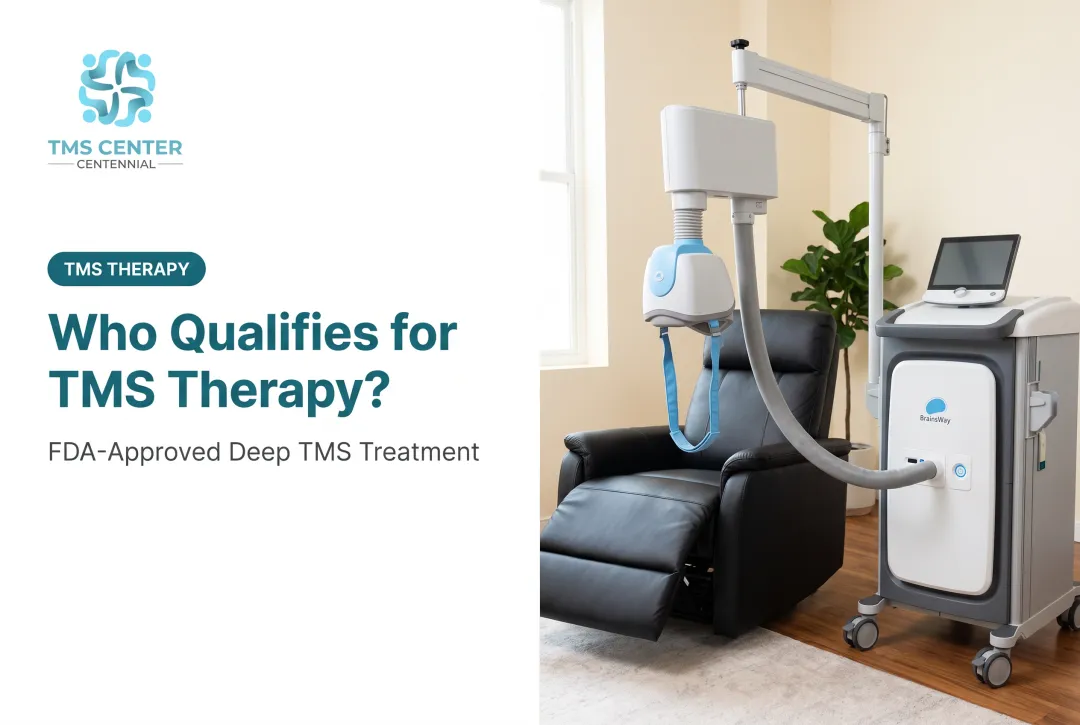
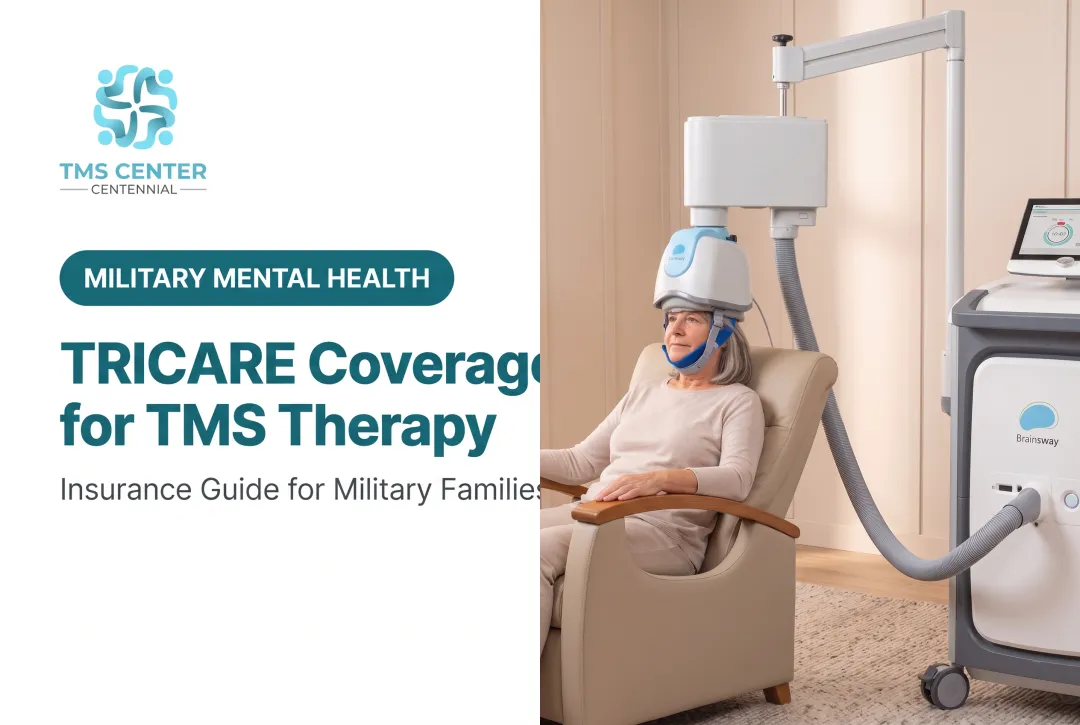
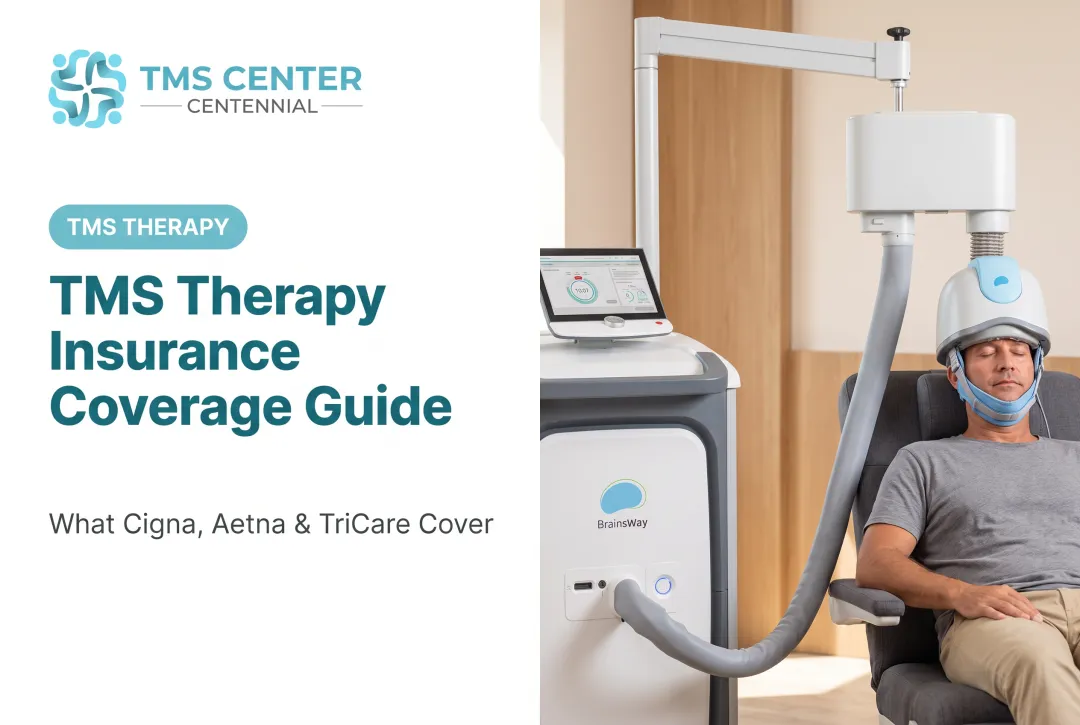
Deep TMS uses a helmet-shaped coil to reach broader, deeper mood-regulating brain regions than older coil designs. TMS Center Centennial built its program around this approach for treatment-resistant depression.
OCD, Anxiety, and PTSD
OCD received FDA De Novo clearance for Deep TMS in 2018. It is an approved adjunct to therapy, not a standalone replacement.
Anxiety and PTSD remain off-label. That does not mean the evidence is thin. Study findings include:
- Veteran-focused research: 65.3% saw clinically meaningful PTSD symptom reduction; 46.1% no longer met the diagnostic threshold
- 2025 VA cohort (756 patients): 63–78% response rates and 47–49% remission

Those results align with how TMS Center Centennial supports veterans and active-duty service members. Clinical Director Rodney Placzek, a retired Army Sergeant Major who went through TMS in his own recovery, shaped the center's Veterans & Active Military Mental Health Program.
Other Emerging Uses
Researchers are also studying TMS for ADHD, cognitive or focus issues, and sleep disorders. These uses are promising but are not primary FDA-cleared or routinely insurance-covered indications.
TMS Center Centennial addresses focus and sleep concerns with NeurOptimal® neurofeedback—a separate 33-minute brain-training session—rather than with TMS itself.
Who Should NOT Get TMS: Medical Exclusions and Contraindications
TMS uses magnetic pulses, so certain hardware and health conditions rule it out.
Contraindicated implants:
- Pacemakers or implanted electronic devices
- Aneurysm clips or coils
- Cochlear implants
- Deep brain stimulators or vagus nerve stimulators
Any non-removable conductive metal in or near the head is generally disqualifying.
Neurological risk factors: A personal or family history of seizures or epilepsy typically rules out candidacy. TMS carries a small seizure risk—estimated at roughly 1 in 30,000 treatments—so providers screen carefully before approving a course of care.
Active safety concerns: Active suicidal ideation, uncontrolled psychosis, or unmanaged substance use generally need to be stabilized before TMS is considered.
Pregnancy and breastfeeding: Safety data are limited here, so these situations require individual discussion with a provider.
A licensed provider must complete a full medical and psychiatric evaluation before confirming eligibility. At TMS Center Centennial, this suitability screening is performed in-house by psychiatrists and certified TMS technicians.

What Happens During a TMS Eligibility Evaluation
- Initial consultation. A psychiatrist reviews your diagnosis, medication history, and overall health background to determine whether TMS makes clinical sense for you.
- Brain mapping. Once you qualify, a certified TMS technician working with the clinic's physician maps coil placement on your head and creates a personal cap you'll use for the rest of treatment.
- Treatment planning. The team builds a protocol tailored to your diagnosis and symptom severity.
TMS Center Centennial's multidisciplinary team (a psychiatrist, LMFT therapists, and certified TMS coordinators) collaborates on each plan. Many patients pair TMS sessions with collaborative counseling, since therapy and stimulation reinforce each other rather than working in isolation.
If you move forward, standard sessions run 20-30 minutes, five days a week, for four to six weeks (about 20-30 total sessions). The center also offers Swift Deep TMS™, an accelerated protocol that delivers multiple treatments per day over roughly two weeks when a faster course is a better fit.

Cost, Insurance, and Access Considerations
Most major insurance plans cover TMS once eligibility is documented, including:
- Cigna
- Aetna
- Anthem BCBS
- United Healthcare
- Tricare
- Medicare (for adult MDD meeting coverage criteria)
Insurers often set a higher bar than the FDA's minimum. While FDA labeling reflects one prior antidepressant failure for standard TMS, many private payers require three to four failed medication trials before authorizing coverage. Verify your plan's criteria early—FDA eligibility alone does not guarantee insurance approval.
Out-of-pocket costs vary widely by clinic, protocol, and coverage. There is no standardized national price. When TMS is covered, patients generally pay their normal plan copay or coinsurance rather than the full session rate.
That variability is why benefits checks matter before you start. TMS Center Centennial handles insurance paperwork and benefits verification directly and provides a personalized benefits analysis before treatment begins. For veterans and active-duty patients, Tricare acceptance plus a military-experienced Clinical Director makes the center a practical option for service members across the Denver metro area.
Frequently Asked Questions
How do you qualify for TMS therapy?
You need a confirmed depression or OCD diagnosis, at least one prior treatment that didn't provide adequate relief, and a passing safety screening for metal implants or seizure risk.
What is the typical protocol for TMS therapy?
Standard treatment involves daily sessions of 20–30 minutes, five days a week, for four to six weeks (about 20–30 total sessions).
How many TMS treatments does it take to feel better?
Most patients need several weeks of consistent sessions before noticing meaningful change. Many report clear improvement around the four- to six-week mark.
How much does one session of TMS cost?
Cash-pay rates vary by clinic. With major insurance, most patients pay a standard copay or coinsurance instead of the full per-session rate.
Do you need to be certified to provide TMS therapy?
Yes. TMS should only be administered by trained, certified technicians working under psychiatric supervision, which is the standard at reputable clinics, including TMS Center Centennial.
What do neurologists think of TMS therapy?
Neurologists generally regard TMS as a safe, evidence-based brain-stimulation treatment, supported by FDA clearance and a documented seizure risk of roughly 0.01% per session.