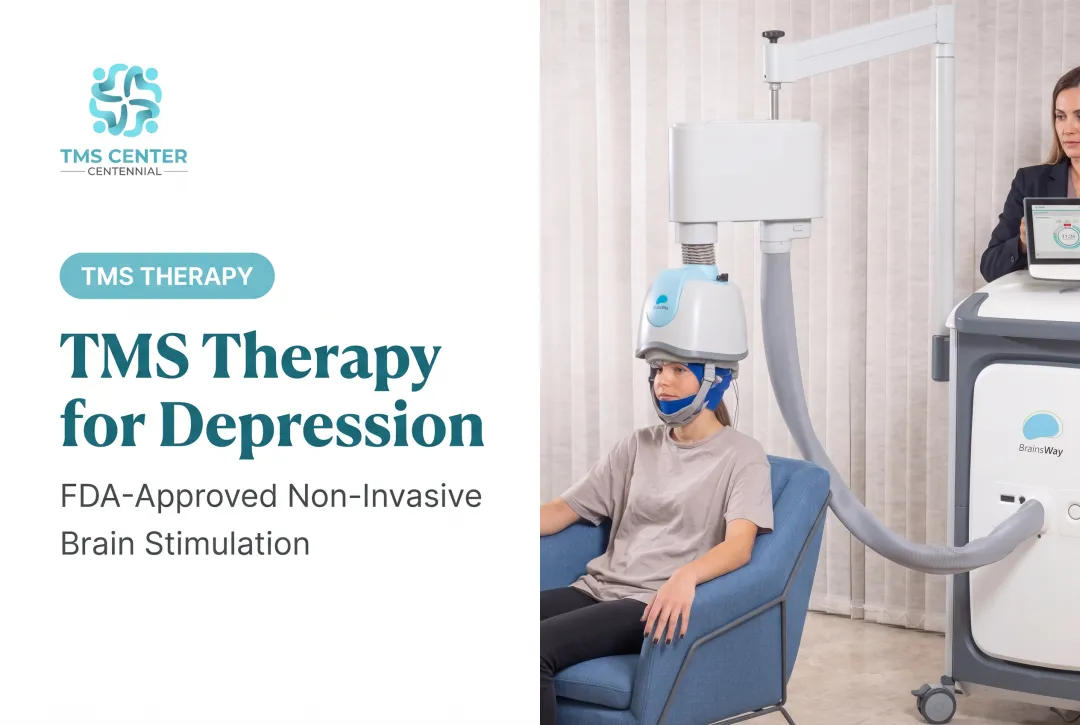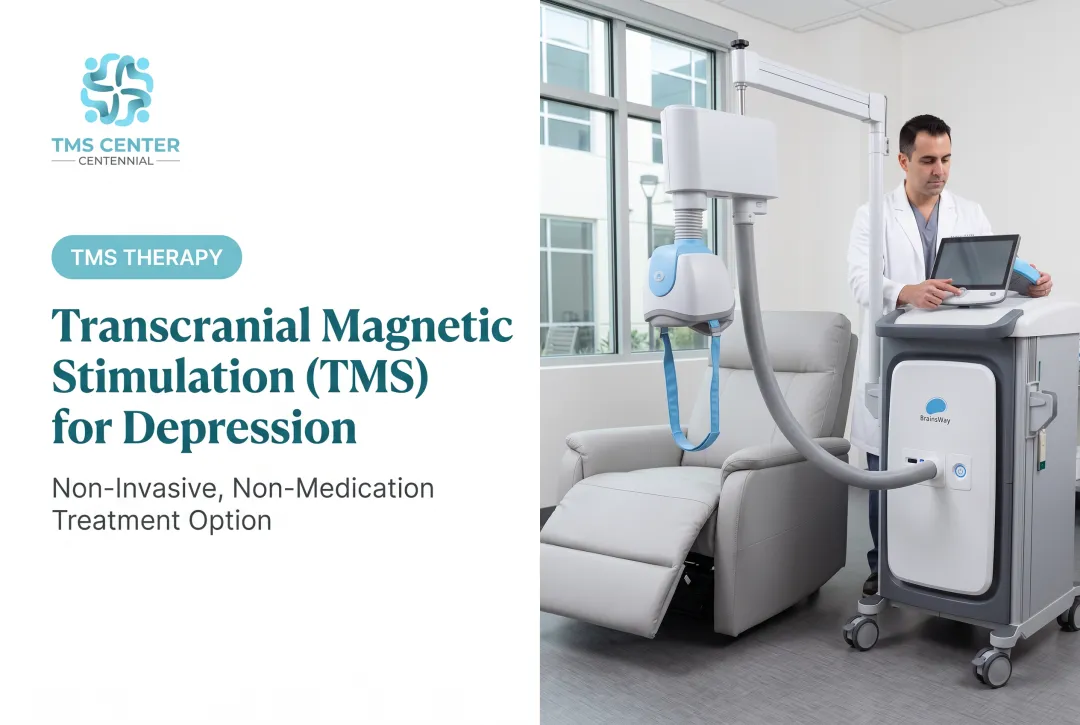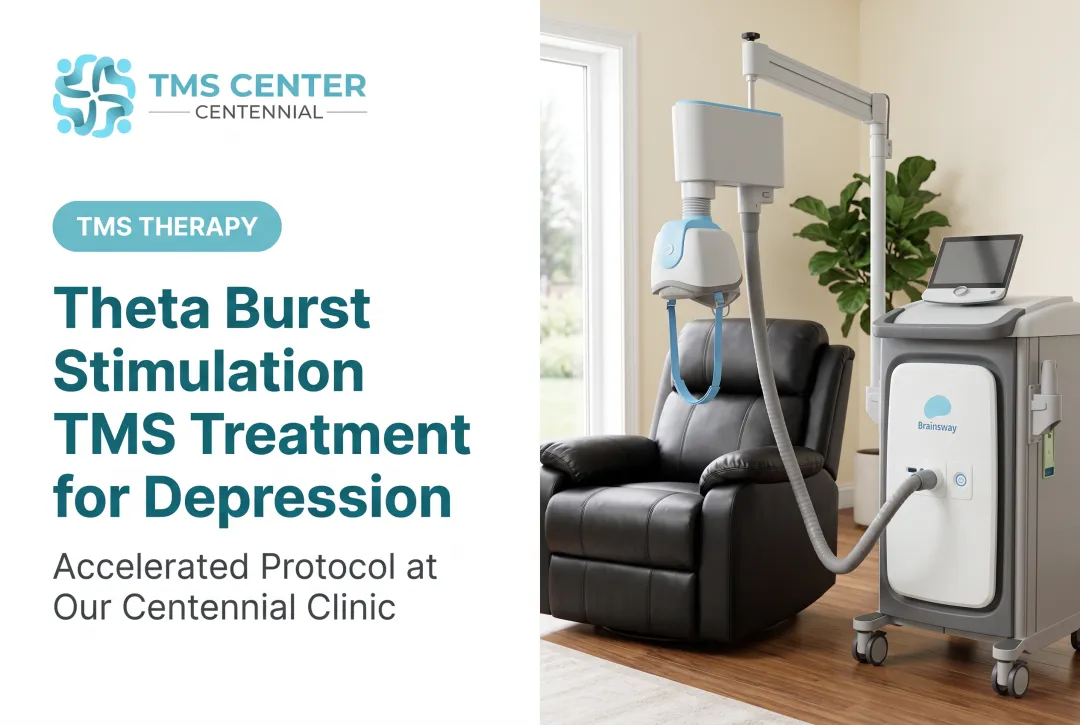

Transcranial Magnetic Stimulation (TMS) offers a different path. Instead of adjusting brain chemistry throughout your entire body, TMS uses magnetic pulses to stimulate a specific brain region tied to mood. It's FDA-approved, non-invasive, and doesn't require anesthesia or downtime.
This guide breaks down the main TMS protocols, standard rTMS, Deep TMS, and theta burst stimulation, so you understand what each involves and how to figure out which one fits your situation.
Key Takeaways
- Protocol choice shapes session length, total weeks in treatment, and how deeply stimulation reaches the brain
- Deep TMS™ (BrainsWay) uses an H-coil designed to reach broader, deeper brain regions than standard figure-8 coils
- Most major insurance plans cover TMS after documented failure of prior antidepressants
- Standard protocols run 4-6 weeks; accelerated protocols can compress that course into a matter of days
Understanding How TMS Protocols Target Depression
TMS targets the left dorsolateral prefrontal cortex (DLPFC), a brain region that tends to be underactive in people with depression. This area also plays a role in motivation and executive function, which is why many patients notice improvements beyond mood alone.
Antidepressants work systemically, circulating through your bloodstream and affecting your whole body. TMS works locally, delivering magnetic pulses directly to the neural circuit tied to mood regulation.
Research on DLPFC connectivity shows that when this region's link to emotion-regulation hubs weakens, the brain struggles to suppress negative emotion—a pattern seen consistently in depression connectivity research. TMS has been FDA-approved for depression since 2008 (Neuronetics NeuroStar), with BrainsWay Deep TMS cleared in 2013.
Setting the Dose: Motor Threshold Mapping
Before any treatment begins, clinicians determine your "motor threshold," the minimum stimulation intensity needed to trigger a small involuntary movement.
At TMS Center Centennial, this mapping happens during an initial session with a certified TMS technician and your physician. The process is straightforward:
- You sit upright, and the treatment cap is positioned on your head.
- Small pulses are delivered while the team watches for involuntary finger or facial twitches.
- This threshold becomes your personal calibration point for treatment intensity.
That calibrated intensity guides every session so stimulation stays effective without unnecessary discomfort.
Comparing the Main TMS Protocols for Depression
Standard Repetitive TMS (rTMS)
Standard rTMS uses a figure-8 coil positioned over the DLPFC using scalp landmarks. The traditional protocol runs daily sessions, five days a week, for 4-6 weeks, typically 20-30 sessions total. In the pivotal clinical trial for this technology, response rates reached 24.5% and remission hit 15.5% in active treatment groups, compared to 13.7% and 8.9% in sham groups, according to research published in Biological Psychiatry. Real-world outcomes tend to run higher: one 2022 study found 42.9% response and 16.7% remission rates outside controlled trial settings.
Deep TMS™ (BrainsWay)
Deep TMS uses an H-coil design designed to reach broader and deeper cortical regions than a standard figure-8 coil. At TMS Center Centennial, certified BrainsWay™ technicians deliver and calibrate this protocol. The peer-reviewed pivotal trial for Deep TMS showed:
- 38.4% response rate vs. 21.4% for sham at week 5
- 32.6% remission rate vs. 14.6% for sham at week 5 TMS Center Centennial's internal outcomes show an 89% significant symptom reduction rate and roughly 69% complete remission rate among patients who finish a full course. These are real-world clinic results, not a substitute for the peer-reviewed trial numbers above.
Theta Burst Stimulation (iTBS)
iTBS compresses each session into about 3 minutes by delivering pulses in bursts that mimic natural brain rhythms — versus the 37.5 minutes required for standard 10Hz rTMS. The landmark THREE-D trial, involving 414 patients, found iTBS was non-inferior to standard high-frequency rTMS for reducing depressive symptoms, with similar dropout rates and side effects, according to research published in The Lancet. TMS Center Centennial offers theta burst stimulation at no additional cost as part of its treatment protocols, with sessions available Monday through Saturday. Some clinics combine iTBS with accelerated, multi-session daily schedules. TMS Center Centennial's Swift Deep TMS option, for example, delivers 30 sessions over just six days, roughly two weeks total instead of six.
| Protocol | Session length | Typical course | Standout evidence |
|---|---|---|---|
| Standard rTMS | ~37.5 minutes | 20–30 sessions over 4–6 weeks | Pivotal trial: 24.5% response, 15.5% remission |
| Deep TMS (BrainsWay) | Standard visit length | Multi-week daily course | Pivotal trial: 38.4% response, 32.6% remission at week 5 |
| iTBS | ~3 minutes | Often paired with standard or accelerated schedules | THREE-D: non-inferior to high-frequency rTMS |

Choosing the Right Protocol
The right protocol depends on:
- Treatment history — prior medications and therapies tried
- Insurance coverage — what your plan authorizes
- Symptom severity — how quickly you need relief
- Scheduling flexibility — whether an accelerated course fits your life Your psychiatrist should guide this choice. At TMS Center Centennial, the clinical team reviews diagnosis, prior antidepressant response, and medical suitability before recommending standard Deep TMS or the accelerated Swift protocol.
What a TMS Treatment Course Looks Like
Before your first session, you'll go through a psychiatric evaluation and motor threshold mapping appointment. This establishes your baseline settings and confirms TMS is appropriate for your situation.
On treatment days, here's what happens:
- You sit in a reclining chair while the technician positions the coil against your scalp.
- Magnetic pulses run for a few minutes with theta burst, or about 20–30 minutes with standard Deep TMS.
- You stay fully alert the entire time, with no sedation involved.
- When the session ends, you can drive yourself home and return to normal activities right away.

A standard course involves around 30 sessions over 4–6 weeks.
To make those visits more comfortable, TMS Center Centennial brings therapy dogs into the office during sessions. Two West Highland Terriers, Finn and Furgus, are available for patients to hold while treatment runs. Several patients report this makes the appointment feel less clinical and more like visiting a friend's house.

Effectiveness, Side Effects, and Safety
Response and remission rates vary by protocol and study, but general ranges across TMS therapies show:
- Standard rTMS: roughly 25–43% response and 15–37% remission
- Deep TMS: 38.4% response and 32.6% remission in pivotal trials; BrainsWay clinical data reports higher real-world rates—about 89% symptom reduction and 69% remission
- iTBS: outcomes comparable to standard rTMS in head-to-head trials
Common side effects are mild and temporary:
- Scalp discomfort at the treatment site
- Headache
- Jaw or facial twitching during pulses
These typically fade after the first few sessions as your scalp adjusts. According to NIMH's safety commentary, headache and scalp discomfort occur in fewer than 5% of patients.
The rare, serious risk is seizure, estimated at under 1% and, per manufacturer data, closer to 1 in 30,000 treatments under standard clinical protocols. Clinics screen for seizure history and certain medical conditions before starting treatment to minimize this risk further.

That risk profile still differs sharply from medication. Unlike antidepressants, TMS doesn't cause systemic side effects such as weight gain, sexual dysfunction, or withdrawal symptoms when you stop.
Who Is a Good Candidate for TMS Protocols
TMS is typically indicated for patients who've tried at least two antidepressants without adequate relief, meeting the clinical definition of treatment-resistant depression.
Within that group, veterans and active-duty service members are a particularly strong fit. TMS Center Centennial accepts Tricare and includes staff with military backgrounds, including a Clinical Director who is a retired Army Sergeant Major and TMS patient himself.
Even strong candidates need a safety screen first. Contraindications include:
- History of seizure disorder
- Certain metal implants or devices near the head
- Current acute suicidal crisis requiring emergency care
A thorough intake evaluation screens for these factors before treatment begins.
Insurance Coverage and What to Expect at TMS Center Centennial
Most major insurance plans cover TMS after documented failure of antidepressant medications, including:
- Cigna
- Anthem Blue Cross Blue Shield
- Tricare
- United Healthcare
- Aetna
- Most Medicare plans
Coverage details, copays, and deductibles vary by individual plan. TMS Center Centennial handles the insurance legwork for you:
- Initial paperwork
- Benefits verification
- Prior authorization
On site, a multidisciplinary team supports treatment from start to finish: a board-certified psychiatrist, licensed marriage and family therapists, and certified TMS coordinators. The therapists provide collaborative counseling alongside TMS so clinical care and talk therapy reinforce each other.
If you're in Centennial, Denver, Greenwood Village, or nearby Colorado communities, a consultation is the first step to see which protocol fits your needs.
Frequently Asked Questions
Does TMS help with motivation?
Yes. TMS targets the dorsolateral prefrontal cortex (DLPFC), a region tied to mood regulation and executive function. Many patients report improved motivation and focus alongside reduced depressive symptoms.
How long does a full TMS protocol take?
Standard protocols run 4-6 weeks of daily sessions. Accelerated options like Swift Deep TMS compress this into roughly two weeks by delivering multiple sessions per day.
Is Deep TMS different from regular TMS?
Yes. Deep TMS uses an H-coil that reaches broader and deeper cortical regions, while standard rTMS uses a figure-8 coil with more surface-level, targeted reach.
What happens if TMS doesn't work the first time?
Your clinical team may adjust the protocol, recommend a different coil technology, or combine TMS with counseling. Retreatment is also an option for patients who respond partially the first time.
Will insurance cover TMS for depression?
Most major insurers, including Cigna, Anthem BCBS, Tricare, United Healthcare, and Aetna, cover TMS after documented antidepressant failures. TMS Center Centennial verifies your specific benefits before treatment starts.
Can TMS be combined with therapy or medication?
Yes. TMS is often paired with counseling for best results, and patients can typically continue current medications during treatment, with any adjustments guided by their prescribing clinician.