
Introduction
You've done the work. Therapy sessions, maybe an SSRI or two, maybe exposure exercises for intrusive thoughts that just won't quit. And yet the loop continues — the same rumination at 3 a.m., the same compulsion to check the lock five times before you can leave the house.
You're not alone in this. In the landmark STAR*D trial, only 36.8% of depression patients reached remission after their first antidepressant trial, meaning nearly two-thirds needed a different approach (Rush et al., 2006). OCD tells a similar story — SSRIs help, but response rates top out around 60%, leaving a substantial group still searching for relief.
That's where Transcranial Magnetic Stimulation (TMS) comes in. It's FDA-cleared, drug-free, and doesn't require surgery or sedation. Clinics like TMS Center Centennial in Centennial, Colorado offer Deep TMS™ for Denver-area patients who need more than medication alone.
This guide covers how TMS works for OCD and depression, who qualifies, what a typical course looks like, and what results the research supports.
Key Takeaways
- FDA-cleared for depression since 2008 and OCD since 2018, with different brain targets for each condition
- Clinical trials show OCD response rates around 38% at six weeks, rising to 45% a month later
- Most major insurers cover TMS for both conditions once treatment resistance is documented
- Works alongside medication and therapy rather than replacing either
- TMS Center Centennial pairs Deep TMS™ with NeurOptimal® neurofeedback for dual-condition, non-medication care
What Is TMS and How Does It Work?
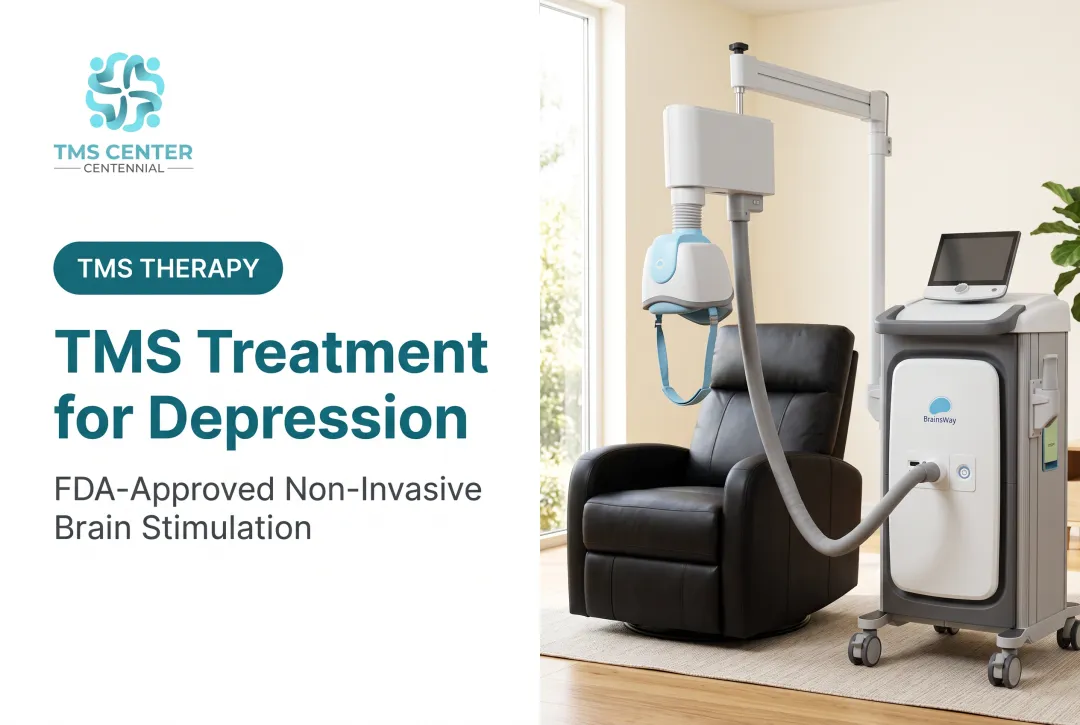
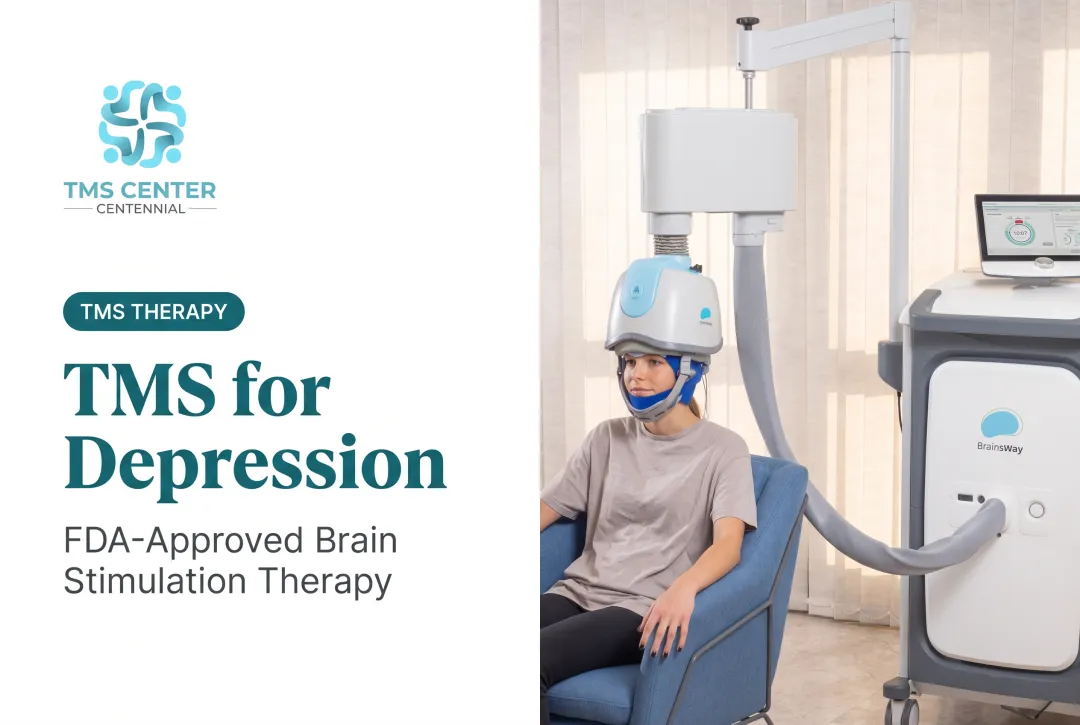
TMS uses a magnetic coil positioned against your scalp to send targeted pulses through the skull. Those pulses stimulate brain regions tied to mood and behavior regulation. No incision, no anesthesia, no downtime.
During a session, you sit in a chair, fully awake. Most people describe the sensation as a tapping or clicking against the head, sometimes accompanied by a brief muscle twitch in the face or fingers. It's odd at first, but tolerable within a few sessions. Once treatment ends for the day, you can drive yourself home or head straight back to work.
Deep TMS vs. Standard TMS
Standard TMS reaches brain tissue about 2-3 centimeters below the surface. That's enough for some depression targets, but OCD circuitry sits deeper and involves a broader network.
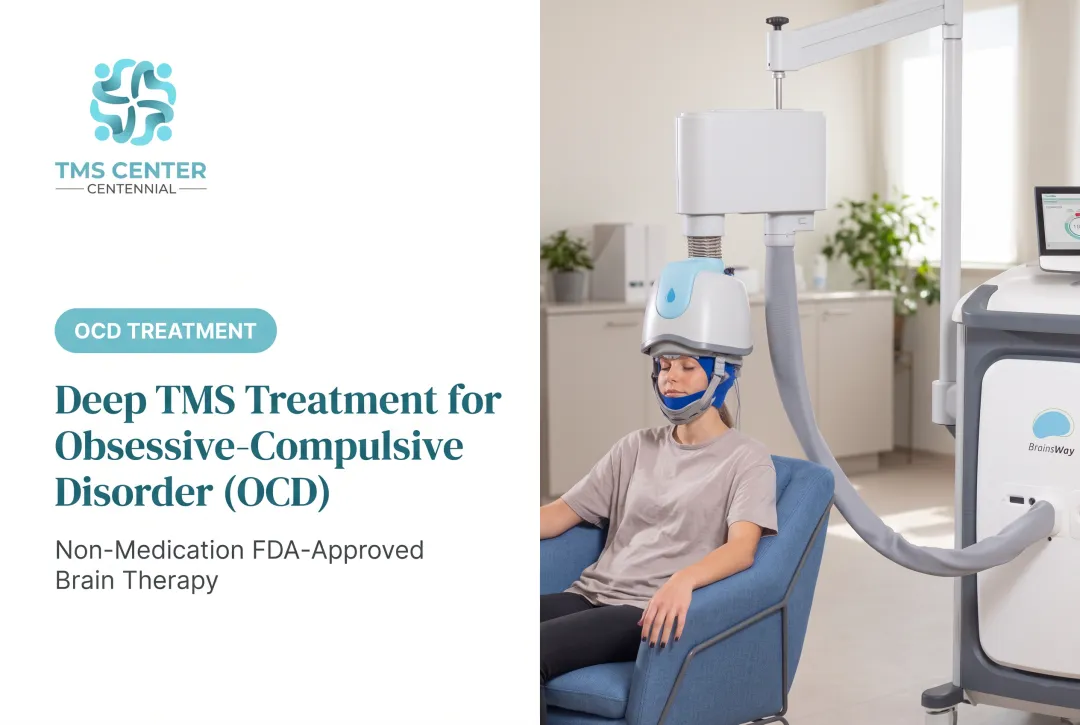
Deep TMS (dTMS) solves this with a specialized H-coil design that reaches farther and stimulates a wider field of neurons.
TMS Center Centennial uses BrainsWay Deep TMS™, one of the systems FDA-cleared for both depression (since 2013) and OCD (since 2018). The center's OCD protocol relies on BrainsWay's H7-coil system, which targets the frontal lobes involved in obsessive-compulsive circuitry.

The "Recipe" Behind TMS Treatment
Effective TMS isn't one-size-fits-all. Three variables have to line up correctly:
- The device/coil: standard coil versus H1 or H7 Deep TMS coils
- The stimulation protocol: frequency, pulse count, and session length
- The brain target: which region the coil is positioned over
Depression and OCD use different combinations of all three. A coil positioned correctly for depression won't do much for OCD symptoms, and vice versa. That's why the two protocols below look so different.
TMS for Depression: How It Works and What to Expect
Depression is linked to dysregulated activity in the dorsolateral prefrontal cortex (DLPFC), a region involved in mood regulation and rumination. TMS targets this area with high-frequency pulses to help restore healthier activity patterns.
Typical protocol:
- Sessions five days a week for four to six weeks
- A depression session takes about 30 minutes in the office (or only a few minutes with Theta Burst)
- BrainsWay's H1 Deep TMS pivotal trial used 20 sessions over four weeks, followed by continuation treatment
Response rates vary by study design. A sham-controlled Deep TMS trial found 38.4% response and 32.6% remission among patients with treatment-resistant depression (Levkovitz et al., 2015). Naturalistic studies have reported response rates closer to 58%.
TMS Center Centennial reports these clinic outcomes after a full course of treatment:
- 89% of patients showed significant symptom improvement
- 69% achieved complete remission
Who qualifies? Adults with major depressive disorder who haven't responded adequately to at least two antidepressant trials at an appropriate dose and duration. Exceptions may exist, though they call for a more in-depth medical evaluation.
Remission isn't always permanent. Many providers recommend maintenance or "preservation" sessions—periodic follow-up treatments—to help sustain results after the acute course ends. Your treatment team can build a maintenance plan around your response and relapse risk.
TMS for OCD: How It Works and What to Expect
OCD behaves differently in the brain than depression does. Instead of the DLPFC, the relevant circuit involves the dorsomedial prefrontal cortex (dmPFC) and anterior cingulate cortex (ACC), structures that sit deeper and need a different stimulation approach.
The Role of Symptom Provocation
Before certain OCD sessions, clinicians may briefly prompt a patient's obsessive thoughts or urges — sometimes through an image, word, or scenario tied to their specific triggers. The idea is to activate the targeted circuit right before stimulation, making the treatment more precise. This step is a defining feature of the FDA-cleared OCD protocol, distinguishing it clearly from standard depression treatment.
FDA-Cleared OCD Protocol
- High-frequency stimulation (20 Hz) using an H7-style coil
- Five sessions weekly for about six weeks (roughly 30 sessions total)
- An OCD session takes about 30 minutes in the office
What the Research Shows
In the pivotal Carmi et al. trial, active Deep TMS produced a 38.1% response rate versus 11.1% for sham treatment at six weeks. Response climbed to 45.2% versus 17.8% one month later (Carmi et al., 2019).
Real-world results are stronger still. A 2021 post-marketing study found a 72.6% first-response rate and a 52.4% sustained response rate, with most patients responding around session 18-20.

A few important clarifications: TMS for OCD works alongside medication and/or ERP therapy. It is not designed as a standalone replacement.
On prescriptions specifically: yes, patients can continue their current medications during the TMS protocol. Patients should stay stable on those medications during treatment. Keeping medications stable helps limit variables during treatment, so the clinical team can tell what is actually working. Any medication changes should be made under medical supervision, and preferably after finishing the TMS protocol rather than during it. Any changes should always be guided by the prescribing clinician.
Brain target matters here. Ask your provider which coil and target they're using. Off-target placement can mean the difference between a treatment that works and one that doesn't.
Is TMS Right for You? Candidacy and Contraindications
The ideal candidate has a confirmed OCD or depression diagnosis and has already tried at least one adequate medication trial, therapy course, or both, without enough relief to feel like themselves again.
That said, TMS isn't right for everyone. Certain factors can require extra caution. Frame these as things we need to know about, not automatic turn-aways:
Things we need to know about metal (keep removable and implanted categories separate):
- Removable (earrings, necklaces, hearing aids, hairpins, and similar items around the head and neck): taken off before the session and not a disqualifier.
- Implanted or permanent (need a clinical evaluation): cochlear implants, aneurysm clips, stents, deep brain stimulators, and pacemakers; metal within about 30 centimeters of the treatment area; retained bullet fragments or other ferrous metal fragments; tattoos containing inks formulated with metals.
Other screening factors:
- History of seizures or a neurological condition that raises seizure risk
- Certain medications that lower the seizure threshold (your care team will review your full medication list)
- Pregnancy, which calls for individualized risk-benefit review with your provider
Other considerations:
- TMS is generally intended for adults; safety trials typically enrolled patients in their 20s through 60s
- A referral isn't always mandatory; many centers, including TMS Center Centennial, conduct their own in-house diagnostic evaluation before starting treatment
If any of these apply to you, TMS is not automatically off the table. The next step is a more detailed conversation with a provider. Please raise anything you are unsure about during your evaluation.
Your TMS Journey at TMS Center Centennial
Getting Started and What Sessions Are Like
The process starts with a consultation covering your medical history, prior treatments, and current medications. From there:
- Evaluation: The clinical team determines whether TMS fits your diagnosis and history
- Motor threshold mapping: A technician and physiatrist set your coil placement and stimulation intensity. Small pulses may cause brief twitches in the fingers or face
- Insurance verification: The center handles paperwork and authorization, then shares a personalized benefits analysis before your first paid session
- Daily treatment: Sessions take about 30 to 45 minutes in the office, depending on the protocol, five days a week, for four to six weeks depending on your condition
You can drive yourself to and from every appointment. There's no sedation, no recovery room, no missed workday.
Why Patients Choose TMS Center Centennial
The center's team includes board-certified psychiatrists, including Dr. Cheryl Dasler, Psychiatrist, and certified BrainsWay™ technicians, several of whom have personally gone through TMS treatment themselves.
Patients often point to these practical differences:
- Combined therapies: Deep TMS™ alongside NeurOptimal® neurofeedback for a broader non-medication plan
- Broad insurance acceptance: Cigna, Anthem, Tricare, United Healthcare, Aetna, and most Medicare plans
- Veteran-friendly care: Clinical Director Rodney Placzek, a retired Army Sergeant Major, understands military mental health firsthand
- Therapy dogs on-site: Finn and Fergus, two West Highland Terriers, often sit with patients during sessions to ease pre-treatment anxiety
One patient drives an hour each way for the quality of care and the dogs' company during treatment. That loyalty shows how the clinic softens a process that can otherwise feel purely clinical.

Frequently Asked Questions
Does TMS work for OCD?
Yes. TMS is FDA-cleared as an adjunct treatment for OCD, with clinical trials showing response rates around 38% at six weeks and up to 45% a month later. Real-world data suggests even higher rates over a full course.
Does insurance cover TMS for OCD?
Many major insurers cover TMS for OCD once treatment resistance is documented, though coverage is less standardized than for depression. TMS Center Centennial accepts Cigna, Anthem, Tricare, United Healthcare, and Aetna, and handles benefits verification for patients.
What is the most effective treatment for OCD?
ERP (exposure and response prevention) therapy and SSRIs remain first-line treatments for OCD. TMS is typically introduced when those approaches haven't provided adequate relief, working alongside rather than replacing them.
What disqualifies someone from TMS for OCD?
Things we need to know about metal: removable items such as earrings, necklaces, hearing aids, and hairpins are taken off before the session and are not a disqualifier. Implanted or permanent metal needs a clinical evaluation, including pacemakers, cochlear implants, deep brain stimulators, aneurysm clips, stents, metal within about 30 centimeters of the treatment area, retained bullet fragments or other ferrous metal fragments, and tattoos containing inks formulated with metals. A history of seizures or use of medications that lower seizure threshold also requires careful evaluation. Please raise anything you are unsure about during your evaluation.
How does TMS for OCD differ from TMS for depression?
OCD treatment targets the dmPFC and ACC using a deeper H7 coil, while depression targets the DLPFC with a different protocol. OCD sessions also often include symptom provocation right before stimulation — a step depression treatment doesn't use.
How long does it take to see results from TMS?
Most patients notice changes within the first few weeks of the standard four-to-six-week course. For OCD specifically, real-world data shows many patients respond around session 18-20, with improvement sometimes continuing after treatment ends.