
Treatment-resistant depression (TRD) affects roughly 30% of people diagnosed with major depressive disorder, according to a 2023 World Psychiatry review. That's millions of Americans still searching for relief after standard treatment falls short.
This guide covers what actually qualifies as TRD, why depression sometimes resists treatment, and the full range of solutions available today, including Deep TMS, from a Denver-area clinic that treats TRD patients every day.
Key Takeaways
- TRD is diagnosed when depression fails at least two adequate antidepressant trials
- TRD is treatable: Deep TMS™ is linked to high response rates, with about 69% of patients reaching remission
- Combining medication, therapy, and brain stimulation often works better than any single approach
- TMS Center Centennial provides FDA-approved Deep TMS™, covered by most major insurance plans
What Qualifies as Treatment-Resistant Depression?
Clinically, treatment-resistant depression (TRD) is defined as a failure to respond adequately to at least two different antidepressants, each given at a proper dose for an adequate duration, typically 4-8 weeks. A rough week on a new prescription does not meet that bar. Clinicians look for a documented pattern of non-response despite genuine effort.
Doctors also distinguish between:
- Partial resistance — some improvement, but symptoms still interfere with daily life
- Complete resistance — little to no measurable improvement at all
The Pseudo-Resistance Trap
Not everyone who seems treatment-resistant actually is. Pseudo-resistance happens when the real problem is inadequate dosing, inconsistent adherence, or a missed diagnosis, such as undiagnosed bipolar disorder or an untreated thyroid condition mimicking depression. Ruling this out is a critical first step before labeling someone truly TRD.
Persistent symptoms in true TRD typically include:
- Low mood that doesn't lift
- Anhedonia (loss of interest in things once enjoyed)
- Disrupted sleep and appetite
- Chronic fatigue
- Trouble concentrating
- Hopelessness
- Physical symptoms like headaches or unexplained chronic pain

Why Depression Sometimes Resists Treatment
Biological and Genetic Factors
Some people simply metabolize antidepressants differently. Genetic variations affect how quickly the liver breaks down medication, which can blunt its effect before it ever reaches a therapeutic level. Hormonal shifts compound the problem. Elevated inflammatory markers like IL-6, TNF-α, and CRP have been linked to poorer antidepressant response in multiple meta-analyses — depression isn't always a purely "chemical imbalance" story.
Psychological and Environmental Factors
Biology doesn't act alone. These life and mental health factors frequently blunt treatment response:
- Unresolved trauma and chronic stress
- Co-occurring anxiety or PTSD
- Social isolation
- Ongoing financial hardship
Medication alone rarely fixes what's rooted in life circumstances.
Most Effective Treatments for Treatment-Resistant Depression
Medication and Therapy Adjustments
When a first antidepressant fails, doctors often:
- Switch drug classes (SSRI to SNRI or MAOI)
- Augment with a mood stabilizer, atypical antipsychotic, or lithium
- Use combination regimens when a single agent only partially helps
When standard talk therapy plateaus, clinicians often add CBT, DBT, or trauma-focused work. A 2017 randomized controlled trial found supplementary CBT reduced symptoms in pharmacotherapy-resistant patients, with benefits lasting at least 12 months.
Transcranial Magnetic Stimulation (TMS) and Deep TMS™
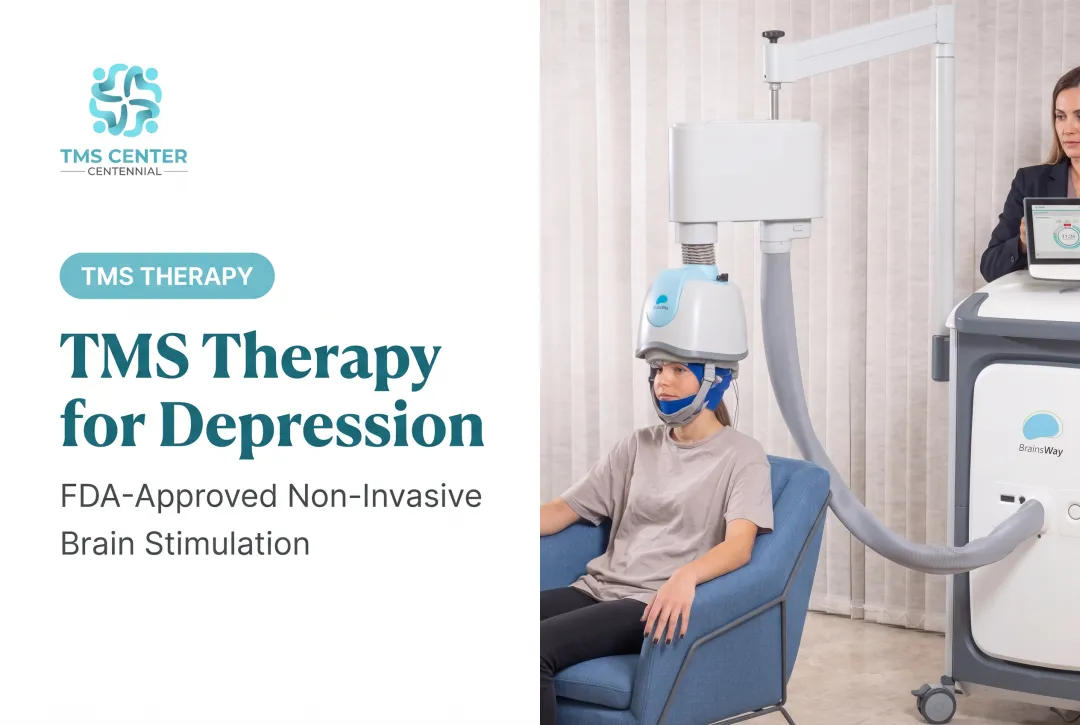
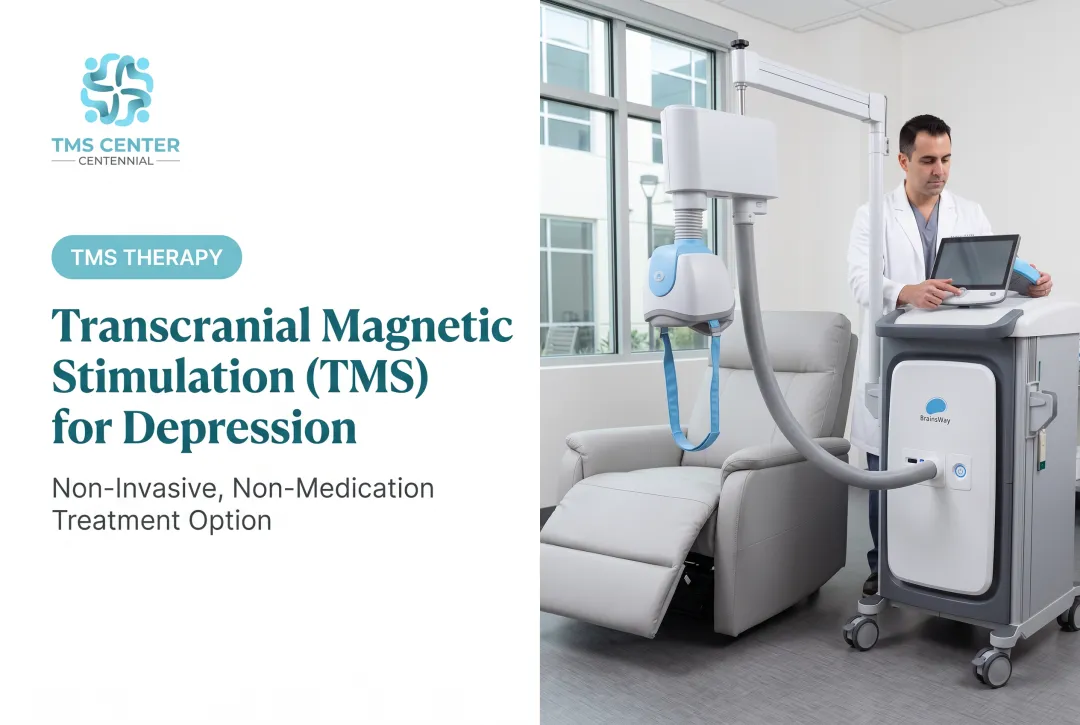
When medication and therapy still leave residual symptoms, many patients turn to TMS. It uses magnetic fields to stimulate underactive brain regions tied to mood regulation. Treatment is non-invasive, needs no anesthesia, and avoids the systemic side effects of medication.
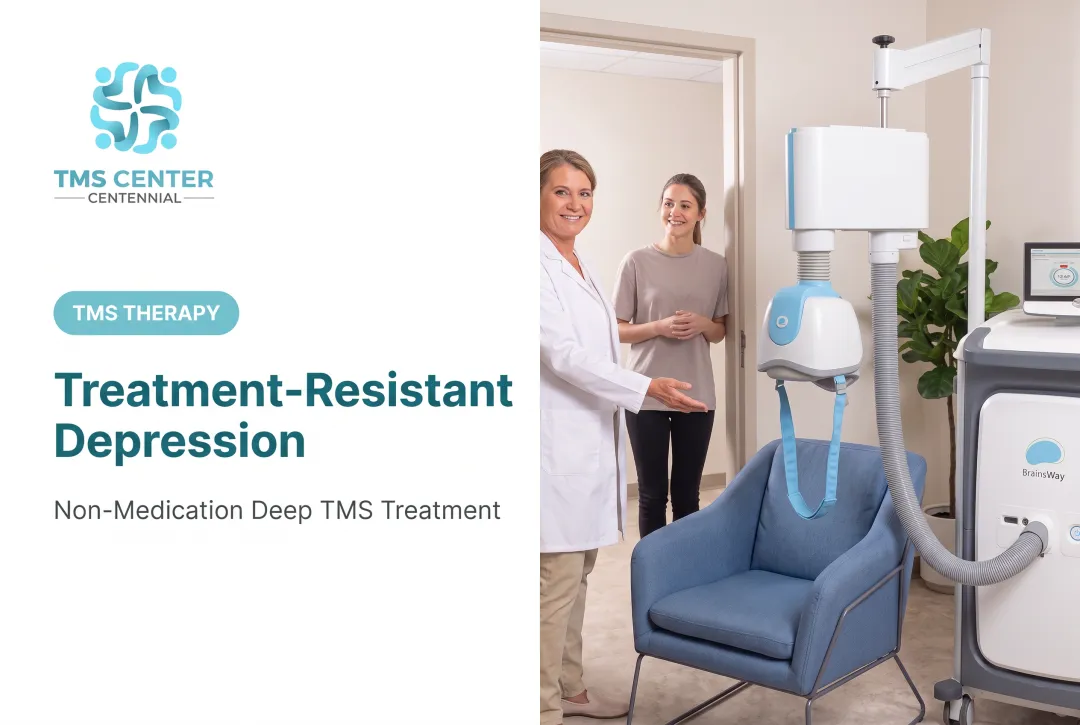
Deep TMS™ (BrainsWay) is an FDA-approved option for major depressive disorder and reaches deeper cortical targets than standard rTMS. At TMS Center Centennial in Centennial, Colorado, care typically looks like this:
- Sessions last about 20 minutes
- Many patients notice improvement within 4–6 weeks
- 89% experience significant symptom reduction
- About 69% reach complete remission

Those outcome rates align with results reported in Deep TMS clinical research.
The center also offers NeurOptimal® neurofeedback as a complementary, non-medication option. Each 33-minute session monitors brainwave activity in real time and uses subtle audio cues to help the brain recalibrate. It is often paired with TMS to support focus, sleep, and emotional regulation.
Other Advanced Options
When TMS and medication combinations haven't worked, some patients move on to:
- ECT (electroconvulsive therapy) — highly effective; requires anesthesia and a specialized clinical setting
- Ketamine or esketamine (Spravato®) — FDA-approved nasal spray; cleared as monotherapy for TRD in January 2025 per the manufacturer's announcement
Clinicians usually reserve these for cases where first-line combinations and TMS have not delivered enough relief.
How Treatment Algorithms Guide TRD Care
Psychiatrists don't jump straight to interventional treatments. They follow a stepwise process:
- Confirm the diagnosis — ruling out bipolar disorder, thyroid dysfunction, or substance use that could be mimicking depression
- Optimize dosage and duration — making sure the current medication has had a fair trial
- Try augmentation — adding a second medication before abandoning the first entirely
- Escalate to interventional treatments — TMS, ECT, or ketamine/esketamine when steps 1–3 haven't worked

A multidisciplinary team makes this process work. At TMS Center Centennial, psychiatrists, an LMFT, and certified TMS coordinators review a patient's history together before recommending next steps.
Patients can generally continue their current medications during TMS, with any changes handled by their prescribing doctor.
What If TMS or ECT Don't Work? Next Steps
A non-response to TMS or ECT isn't the end of the road. It's a signal to reassess and adjust. Options at this stage include:
- Combining modalities (TMS plus therapy, or medication augmentation alongside neurofeedback)
- Trying ketamine or esketamine if not already attempted
- Revisiting the diagnosis for pseudo-resistance factors that might've been missed
Emerging options are expanding the toolkit. Psilocybin-assisted therapy is in Phase 3 trials for TRD and is not yet standard care. Theta-burst TMS is already used clinically and can shorten sessions compared with standard protocols.

Integrated care—therapy, lifestyle changes, and brain stimulation together—tends to outperform any single treatment alone.
Can Treatment-Resistant Depression Be Cured? Finding the Right Care
"Cured" isn't quite the right word. Remission is the more accurate goal, and it's an achievable one. Many patients reach lasting, significant symptom relief once they find the right combination of treatments—often including options beyond medication alone, such as Deep TMS™ or neurofeedback.
What matters most is choosing care that reflects that reality:
- A multidisciplinary team, not a single provider working in isolation
- Insurance acceptance that makes ongoing treatment financially realistic
- Real experience specifically with TRD, not just general depression
That is the model TMS Center Centennial is built around. Psychiatrists, LMFTs, and certified TMS technicians work under one roof, with dedicated TRD experience rather than general depression care alone.
The clinic accepts most major plans, including Cigna, Anthem BCBS, TRICARE, United Healthcare, and Aetna. Coverage details vary by plan, so patients receive a personalized benefits analysis before treatment starts.
If you've been cycling through medications without relief, a different path may be worth exploring. Schedule a free consultation to see whether Deep TMS™ or neurofeedback is a fit for your next step.
Frequently Asked Questions
What qualifies as treatment-resistant depression?
TRD means depression hasn't responded to at least two adequate antidepressant trials, each at a proper dose and duration. Definitions vary slightly, but this two-trial threshold is the most widely used standard.
What are the most effective treatments for treatment-resistant depression?
Medication augmentation, psychotherapy approaches such as CBT, and interventional options like Deep TMS™, ECT, or ketamine/esketamine are the leading approaches. Most patients do best when more than one is combined.
What are the treatment algorithms for treatment-resistant depression?
Doctors follow a stepwise approach: confirm diagnosis, optimize current medication, try augmentation, then escalate to interventional treatments like TMS or ECT if symptoms persist.
What are the next steps if TMS or ECT don't work for treatment-resistant depression?
Options include combining modalities, trying esketamine or ketamine, and rechecking factors that can look like true resistance—such as underdosing, a missed diagnosis, or adherence issues.
Can treatment-resistant depression be cured?
"Remission" is a more realistic goal than "cure." Many patients achieve lasting symptom relief with the right combination of medication, therapy, and brain stimulation treatments like Deep TMS™.