
Many people searching for relief want options beyond medication. Side effects, dosing concerns, or simple personal preference all play a role. The good news: effective, medication-free OCD treatment exists, and it's more accessible than most people realize.
This guide walks through the evidence-based non-medication paths available today — from gold-standard therapy to FDA-cleared brain stimulation — and how to figure out which one fits your situation.
TL;DR
- OCD often improves with non-medication care such as ERP, CBT, ACT, and Deep TMS
- ERP combined with CBT is the gold-standard foundation for OCD recovery
- Deep TMS is an FDA-cleared, non-invasive alternative for patients who haven't responded to therapy or medication alone
- Best-fit care depends on symptom severity, prior treatment history, and personal preference
- Many people get stronger results when therapy and neuromodulation are combined
Understanding OCD and Why Non-Medication Treatment Matters
OCD is a neurobiological condition, not a habit or a personality quirk. It's tied to overactivity in a specific brain circuit connecting the orbitofrontal cortex, striatum, and thalamus — the loop responsible for detecting threats and triggering repetitive behaviors.
The National Institute of Mental Health reports that 1.2% of US adults had OCD in the past year, with a 2.3% lifetime prevalence. Women are affected at more than three times the rate of men (1.8% versus 0.5%).
SSRIs remain the standard medication route for OCD. That path is more demanding than many patients expect, according to the International OCD Foundation:
- OCD dosing typically runs two to three times higher than doses used for depression or anxiety
- An adequate trial takes 8-12 weeks, with at least six weeks at those higher doses
- Higher doses raise the chance of side effects and treatment dropout

That tradeoff pushes many patients toward non-medication paths. Below, we break down the top options available today.
Top Non-Medication Treatment Options for OCD
These selections are based on clinical evidence, FDA clearance status, and effectiveness data from published research.
TMS Center Centennial (Deep TMS™ Therapy)
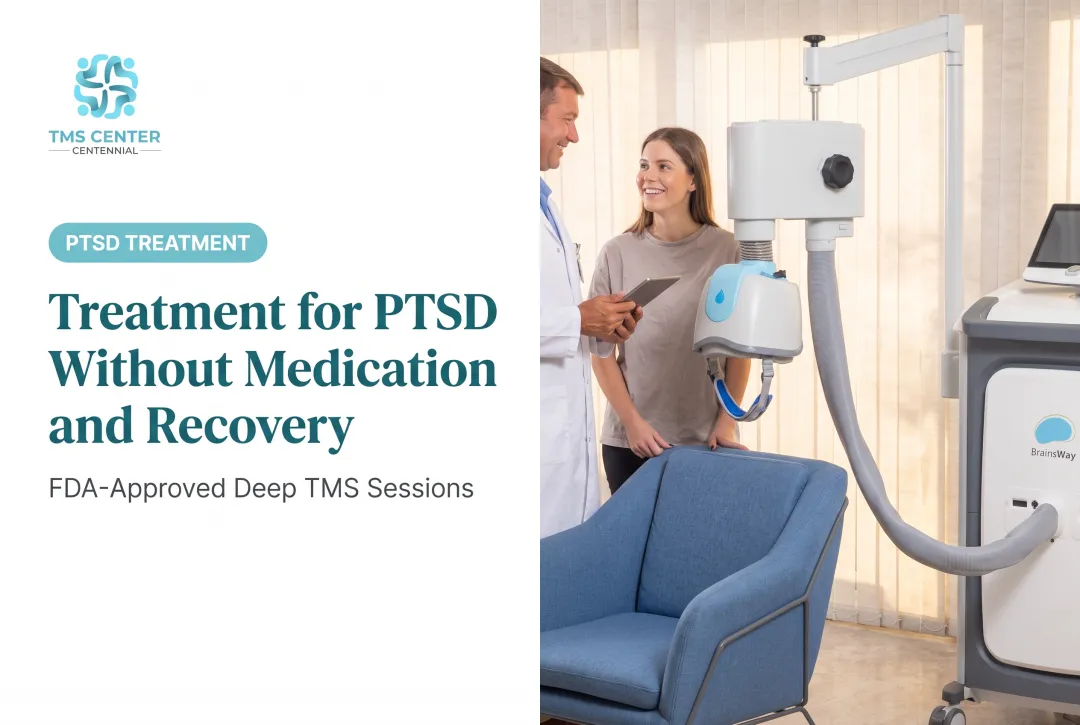
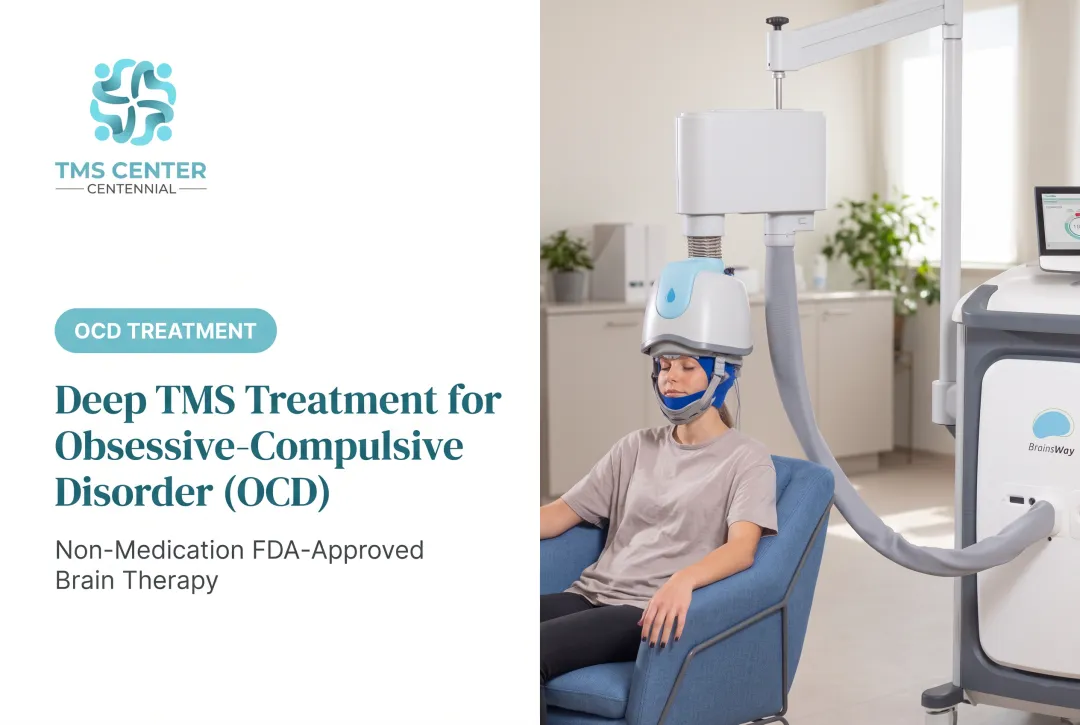
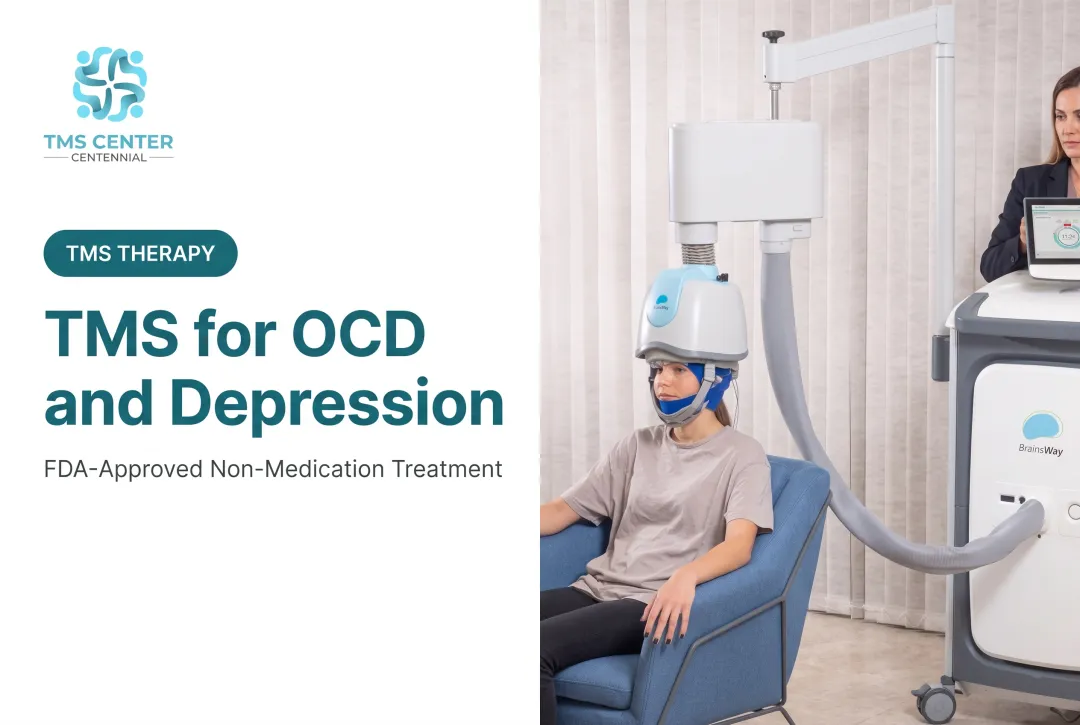
Located in the Denver metro area, TMS Center Centennial was founded in 2017 by Rodney Placzek, a retired Army Sergeant Major who first experienced TMS as a patient. That background shapes a multidisciplinary model: a medical director, board-certified psychiatrists, certified TMS technicians, and on-site therapy dogs. The clinic offers FDA-cleared Deep TMS™ using BrainsWay's H7-coil system, alongside NeurOptimal® neurofeedback and collaborative counseling. Deep TMS is typically considered for OCD patients whose symptoms haven't sufficiently improved with medication or CBT. A history of psychotherapy is generally required as part of the clinical evaluation - you'll just need to tell us who you saw for therapy and roughly when. Clinical research backs the approach. In a multicenter BrainsWay OCD study, active treatment produced significant improvement over sham after six weeks on the Yale-Brown Obsessive-Compulsive Scale (p=0.0127).
| Category | Details |
|---|---|
| Treatment Type | FDA-cleared Deep TMS™ (BrainsWay), non-invasive magnetic stimulation |
| Typical Course | Around 30 sessions over 6 weeks, 5 days/week, about 30 minutes in the office each |
| Insurance & Accessibility | Accepts Cigna, Anthem BCBS, TriCare, United Healthcare, Aetna |
| The clinic's often-cited 89% improvement rate reflects depression treatment outcomes at TMS Center Centennial, not an OCD-specific figure. | |
| For OCD, the clearest published signal remains the BrainsWay multicenter trial referenced above. |

Exposure and Response Prevention (ERP) Therapy
ERP is a specialized form of CBT and the frontline behavioral treatment for OCD. The concept is straightforward, even if the practice is hard: gradually face feared triggers while resisting the urge to perform the compulsive ritual.
- No medication side effects
- Strong, decades-long evidence base
- Real between-session commitment (not a passive treatment)
According to a 2019 peer-reviewed review, more than 90% of patients experience meaningful clinical change after ERP, with roughly 70% achieving long-term recovery.
One research caveat matters in practice: patients who skip between-session exposure homework tend to have worse outcomes. Progress depends on what you rehearse outside the therapist's office.
Category Details Approach Gradual exposure to feared triggers while resisting compulsions Effectiveness 90%+ report clinical change; ~70% long-term recovery (per review data) Time to Results Typically 12-20 sessions, about one hour each

Cognitive Behavioral Therapy (CBT) with Acceptance and Commitment Therapy (ACT)
CBT for OCD generally means ERP paired with cognitive restructuring: identifying and challenging the distorted beliefs that fuel compulsions. ACT takes a different angle, building psychological flexibility so intrusive thoughts lose their grip without needing to argue with them. A 2018 randomized controlled trial found ACT combined with ERP performed just as well as ERP alone. Both were highly effective, with no meaningful difference between groups. ACT is not a proven upgrade to ERP, but it can help patients who struggle with rigid thinking or avoidance.
| Category | Details |
|---|---|
| Core Technique | Cognitive restructuring, mindfulness, values clarification |
| Best For | Patients with rigid thinking patterns or heavy avoidance behaviors |
| Delivery Format | In-person, telehealth, or structured self-study programs |
Neurofeedback Therapy
Neurofeedback trains the brain using real-time EEG feedback, aiming to regulate the activity patterns tied to anxiety and compulsive loops. It's painless and typically used alongside talk therapy or Deep TMS rather than as a standalone fix. The evidence here is promising but still developing. An 8-week EEG-biofeedback trial reported improved symptoms and cognitive function in OCD patients. Separately, a 2023 sham-controlled fMRI-neurofeedback study found a small but statistically significant benefit. Results are encouraging, though neurofeedback is not yet a first-line standard.
| Category | Details |
|---|---|
| Technology | Systems like NeurOptimal® for dynamic, non-invasive brain training |
| Session Format | ~33-minute sessions, painless, complements TMS or talk therapy |
| Ideal For | Patients seeking a holistic, adjunct approach to OCD management |

How We Chose the Best Non-Medication OCD Treatments
A common mistake is assuming one treatment method has to work alone. Many patients get better outcomes combining evidence-based therapy with options like Deep TMS, even though rigorous head-to-head data on that exact combination is still limited.
Our evaluation criteria:
- FDA clearance status — clearance or recognition specifically for OCD
- Clinical research backing — peer-reviewed trials, not testimonials alone
- Patient-reported outcomes — real-world response and remission data
- Accessibility — insurance coverage and session logistics
Living With OCD: Practical Guidance
Daily life with OCD is manageable for many people once symptoms are treated and routines are supported. These practical answers cover independence, severity, and family dynamics.
Can someone with OCD live alone?
Yes. With effective treatment and solid coping tools, most people with OCD can live independently. Severity still matters: during a bad flare-up, short-term support from family, roommates, or a clinician can help until symptoms stabilize.
What do severe OCD symptoms look like?
Severe OCD often means rituals that consume hours each day, such as:
- Repeated checking or counting
- Excessive washing or cleaning
- Mental compulsions that disrupt work, relationships, or basic routines
Many severe cases also involve co-occurring anxiety or depression, which can intensify the cycle.
Is it hard living with someone who has OCD?
It can be. Loved ones often get pulled into accommodating rituals or answering repeated reassurance questions. Learning not to reinforce compulsions, setting calm boundaries, and involving a qualified clinician helps both the person with OCD and the household.
Conclusion
Medication-free OCD treatment is an effective, research-backed path in its own right. ERP, CBT, ACT, and technologies like Deep TMS give patients multiple evidence-based options to work with.
The right starting point depends on your symptom severity and what you've already tried. That's a conversation worth having with a specialist, not a guessing game.
If you're in the Denver metro area and exploring non-medication OCD treatment, TMS Center Centennial offers consultations to review your history and determine whether Deep TMS or another approach fits your situation. Reach out at (720) 642-6555 or info@tmscentercentennial.com.
If you already take psychiatric medication, you do not generally have to stop first. Patients can continue their current medications during the TMS protocol when those prescriptions are already in place, and they should stay stable on their medications during treatment. Keeping medications stable helps limit variables during treatment, so the clinical team can tell what is actually working. Any medication changes should be made under medical supervision, and preferably after finishing the TMS protocol rather than during it. Those decisions should always be guided by the prescribing clinician.
Frequently Asked Questions
How can I overcome OCD and anxiety?
ERP and CBT are the most effective starting points, teaching you to tolerate uncertainty instead of seeking constant reassurance. Pairing therapy with sleep consistency and stress management strengthens results; if symptoms stay severe, non-medication options like Deep TMS may be considered.
What should I do when OCD is bad?
Get a professional evaluation soon - untreated OCD tends to worsen over time, not improve on its own. For severe or treatment-resistant cases, options like Deep TMS exist alongside traditional therapy.
What does severe OCD look like?
Time-consuming rituals that disrupt work, relationships, or basic daily tasks. It often overlaps with significant anxiety or depression, making early treatment especially important.
Can someone with OCD live alone?
Many people with well-managed OCD live independently without issue. Support systems become more valuable during symptom flare-ups or major life stress.
Is it hard living with someone with OCD?
It can be challenging, especially when family members get pulled into rituals or reassurance requests. Education and family-inclusive therapy reduce accommodation patterns and ease conflict for everyone involved.