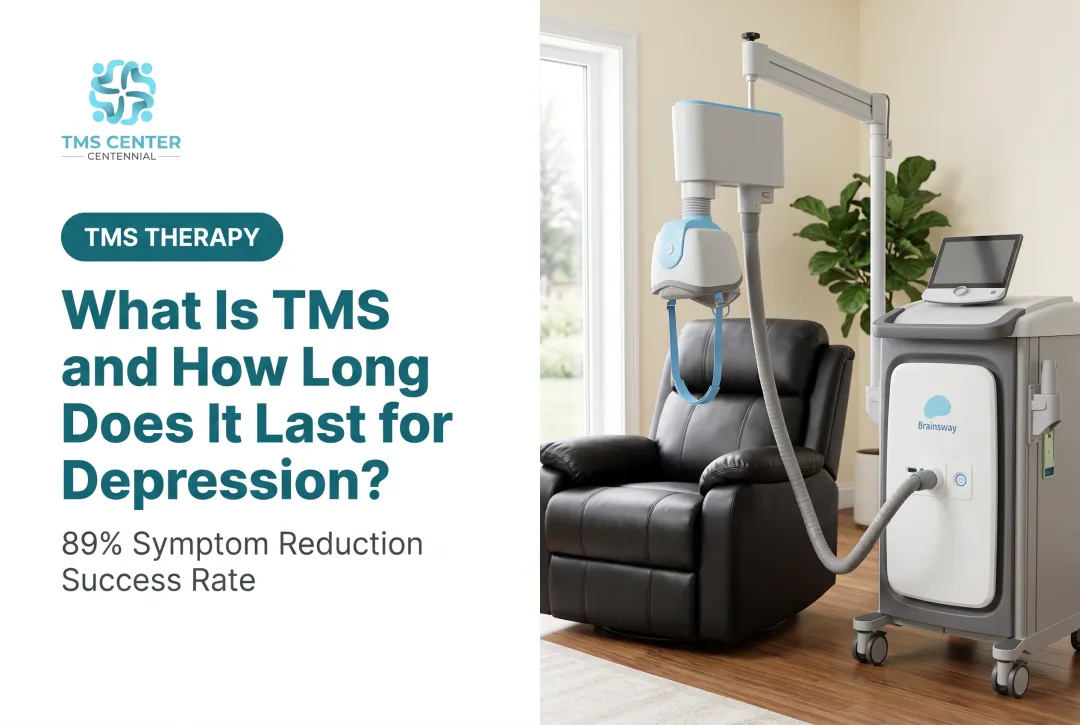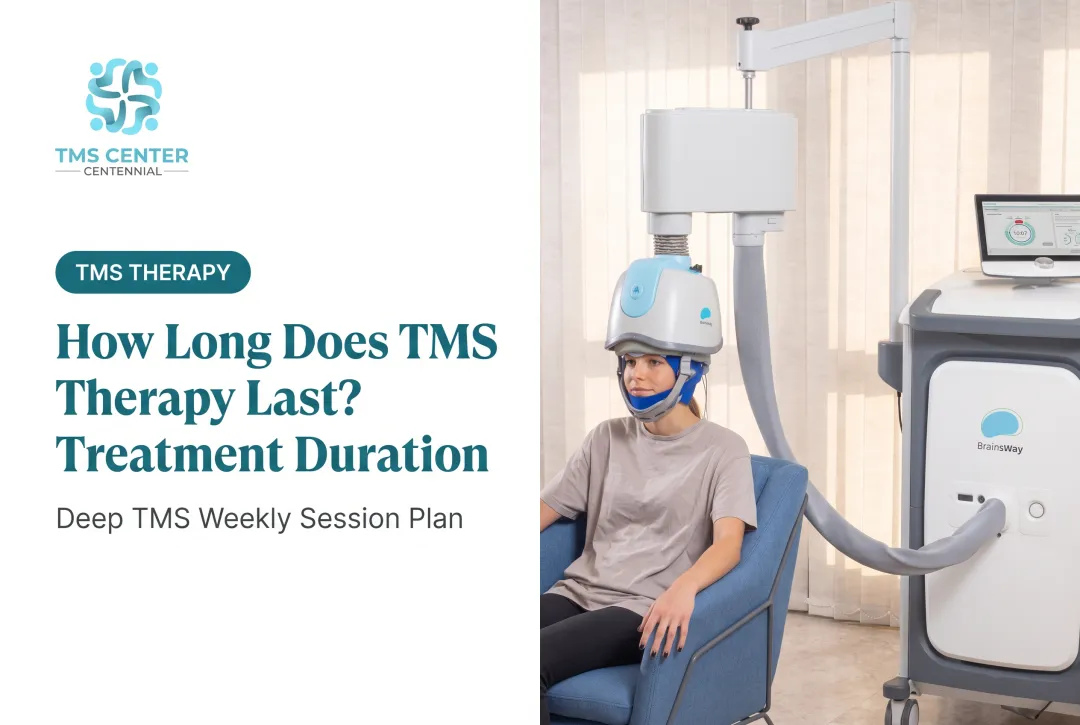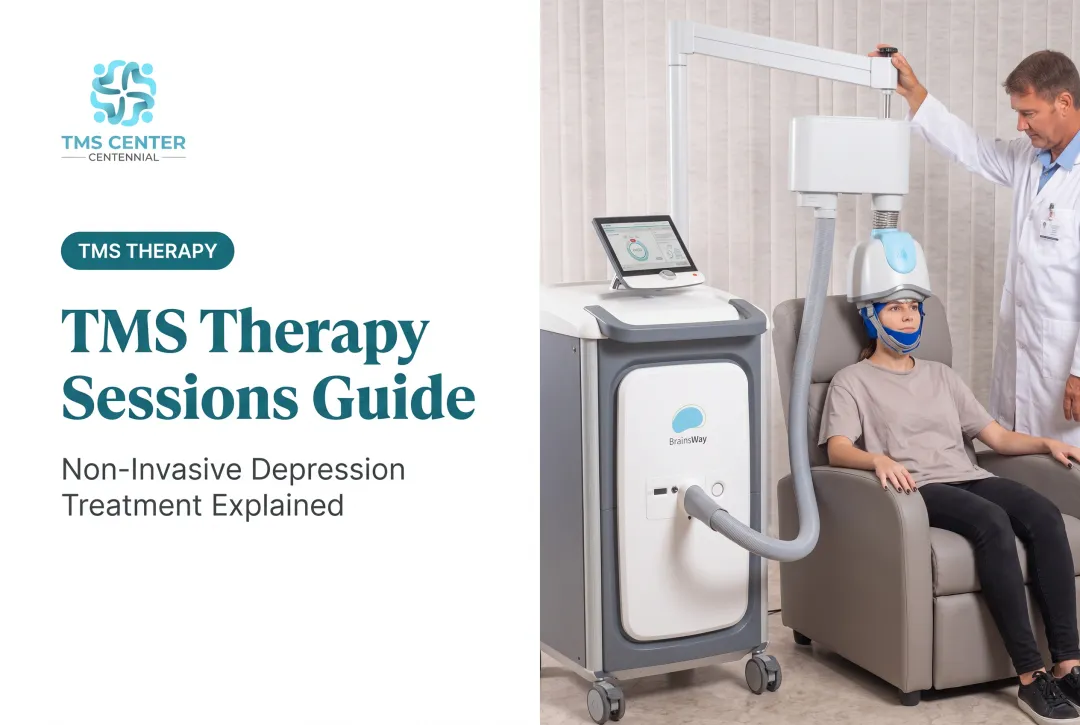

Here's the short answer: most people don't need lifelong TMS. Transcranial Magnetic Stimulation is an FDA-cleared, non-medication treatment for major depressive disorder, with additional clearances for OCD and anxiety symptoms tied to depression. It works by stimulating specific brain circuits involved in mood regulation, and for many patients, one course is enough to produce lasting change.
But depression can be a recurring condition, and some patients do benefit from follow-up care. This article covers what the research says about how long TMS results last, who's more likely to need maintenance, the different maintenance approaches available, and how TMS Center Centennial in Centennial, Colorado, supports patients through this next chapter.
Key Takeaways
- Most TMS responders keep symptom relief for months after their acute course ends
- Maintenance isn't automatic—it depends on residual symptoms and past episode history
- Tapering, clustered sessions, and rescue/booster treatment are the main maintenance options
- Catching early warning signs typically means a shorter booster course, not a full restart
- TMS Center Centennial builds personalized follow-up plans with BrainsWay Deep TMS™ and a full clinical team
How Long Do TMS Results Actually Last?
TMS doesn't work like a pill you take every day. It produces measurable neuroplastic changes in brain circuits tied to mood, and those changes don't simply switch off when treatment stops. That said, depression is a chronic, often recurring illness, so some risk of symptoms returning is real regardless of what treatment you used.
A widely cited meta-analysis by Senova and colleagues found that initial TMS responders maintained improvement at these rates:
- 66.5% at 3 months
- 52.9% at 6 months
- 46.3% at 12 months
These numbers pool patients across different follow-up approaches (some received continuation treatment, others didn't), so they reflect general durability trends rather than a guarantee for any one path.

A separate follow-up study by Janicak and colleagues tracked 99 patients over 24 weeks and found:
- 38.4% showed measurable symptom worsening that met a predefined threshold
- Only 10% experienced a full relapse (Kaplan-Meier estimate: 12.9%)
- Of those who received brief retreatment, 84.2% regained their prior level of benefit
That gap between "worsening" and "full relapse" matters. For most patients, symptom return isn't a sudden collapse back to square one — it tends to show up gradually, as a dip that builds over a week or two. Proactive monitoring, rather than waiting for a crisis, catches that dip early.
Compared to daily medication, which requires ongoing dosing just to hold steady, TMS's effects come from changes already made to your brain circuitry. Most patients who eventually need more treatment need less of it over time, not more. That pattern is nothing like the daily dosing medication requires.
Who Is Most Likely to Need TMS Maintenance?
Individual variability is high. Some patients stay in remission for years after a single course. Others need periodic support.
A 2019 systematic review by Miljevic and colleagues looked specifically at relapse predictors after TMS. No single factor reliably determines who needs maintenance, but several candidates showed up repeatedly enough to matter.
Higher-Risk Factors for Needing Maintenance
Studies have associated the following with a greater chance of symptom return:
- Incomplete remission after the acute course (residual symptoms remaining)
- Three or more lifetime depressive episodes
- Longer illness duration before starting TMS
- Multiple failed medication trials in the past
- Comorbid anxiety alongside depression
Factors Associated with Longer-Lasting Results
These patterns tend to show up in patients who go longer without needing follow-up treatment:
- Achieving full remission (not just partial response) during the acute course
- A shorter depression history before starting treatment
- Younger age at time of treatment
- Active engagement in concurrent therapy
- Healthy lifestyle habits, including sleep and exercise
- Well-tolerated concurrent medication, when applicable
Residual symptoms after the acute course are among the most consistently studied signals, though research stops short of calling them a guaranteed predictor. That makes a strong case for getting the acute course right: thorough treatment from experienced technicians gives you the best odds of not needing a second round.

Types of TMS Maintenance Protocols
Maintenance isn't one-size-fits-all. Clinics generally rely on three distinct approaches, and picking the right one depends on your risk profile, schedule, and how your acute course went.
Tapering Protocols
Tapering is a structured step-down that closes out the acute phase rather than stopping abruptly. Instead of finishing treatment one day and having nothing the next, sessions gradually spread out. Visits often move from daily, to a few times a week, to less frequent intervals, covering the highest-risk window right after your course ends.
Cluster Maintenance
Cluster maintenance condenses treatment into a few consecutive days rather than spreading it across weeks. This model appeals to patients who travel for care or have scheduling constraints that make weekly visits impractical. An open-label study by Fitzgerald and colleagues tested five sessions delivered over two days each month for treatment-resistant patients. Researchers described the approach as promising, though still preliminary.
Rescue / Booster Sessions
This is a reactive model: treatment restarts only when early warning signs appear, rather than on a fixed calendar. It's supported by some of the strongest data available on retreatment. In the Janicak study cited earlier, patients who needed rescue treatment averaged around 14 sessions and 84.2% recaptured their prior benefit.
For many patients, this is the least intensive option: you only return to the chair when you actually need to.
Warning Signs You May Need a Booster Session
Catching symptom changes early is what keeps a booster session short instead of turning into a full retreatment course. Watch for:
- Sleep disruption (trouble falling asleep, early waking, or oversleeping)
- Declining energy or motivation for daily tasks
- Resurfacing negative thought patterns
- Loss of interest in activities you'd normally enjoy
None of these on their own means treatment failed. But if they persist for a couple of weeks, it's worth a call to your care team rather than waiting it out.
Simple self-monitoring helps too. A basic mood journal or a short symptom check-in before follow-ups gives your provider concrete details instead of a vague "I've been feeling off lately."
What TMS Maintenance Looks Like at TMS Center Centennial
At TMS Center Centennial, post-treatment planning is individualized rather than templated. Dr. Cheryl Dasler, Psychiatrist, oversees treatment initiation for patients with resistant major depression. Clinical Director Rodney Placzek, a retired Army Sergeant Major who went through TMS recovery himself, brings firsthand understanding to how maintenance decisions feel from the patient's side. When care begins, a history of psychotherapy is generally required as part of the clinical evaluation - you'll just need to tell us who you saw for therapy and roughly when.
The center uses FDA-cleared BrainsWay™ Deep TMS technology. Certified coordinators Christine Cook, Chrissy Latta, and Megan Stephens work with patients to adjust scheduling around risk factors and life circumstances.
The clinic reports:
- 89% of patients experience a significant reduction in depression symptoms
- Roughly 69% achieve complete remission

That is why a solid acute course plus a tailored follow-up plan matters more than any one-size-fits-all maintenance schedule.
Practical details for patients:
- Insurance accepted: Cigna, Anthem BCBS, TriCare, United Healthcare, and Aetna
- On-site therapy dogs are available for comfort during sessions
- Maintenance TMS can be paired with NeurOptimal® neurofeedback or collaborative counseling for a fuller relapse-prevention approach
Extending Your Results Between Sessions
What you do outside the treatment chair matters, too. A few habits support the neuroplasticity changes TMS creates:
- Stay in therapy. Concurrent psychotherapy—such as CBT or collaborative counseling with Carolyn Riviere, LMFT—is linked to better long-term response.
- Protect your sleep. Irregular sleep disrupts the same brain systems TMS targets.
- Move regularly. Exercise supports mood stability and general brain health.
- Limit alcohol. Heavy drinking can undercut the gains you've made.
Most important: keep your scheduled follow-ups. They let your care team catch early warning signs and adjust your plan before a dip becomes a full relapse. During acute TMS and afterward, yes - patients can continue their current medications. Most people remain on their prescribed medications throughout treatment. Staying stable on medications during the protocol is encouraged - keeping medications stable helps limit variables during treatment, so the clinical team can tell what is actually working. If medication changes become necessary, they should be made under medical supervision, and preferably after finishing the TMS protocol rather than during it. Any changes should always be guided by the prescribing clinician.
Frequently Asked Questions
How often do you need TMS maintenance?
It varies by individual. Research shows roughly a third of patients experience measurable symptom worsening within six months, though many recover fully with brief retreatment rather than needing ongoing scheduled sessions.
Is TMS safe?
TMS is FDA-cleared and well-tolerated. The most common side effect is mild, temporary scalp discomfort or headache, and there are no systemic side effects since it targets specific brain regions locally.
What does the acronym TMS stand for?
TMS stands for Transcranial Magnetic Stimulation: a non-invasive treatment that uses magnetic pulses to stimulate brain regions involved in mood regulation.
How long do TMS results last without maintenance treatment?
Many responders maintain improvement for several months to a year. Research shows about 46% still meet response criteria at the 12-month mark—so some symptom return is common, but far from universal.
Is TMS maintenance treatment covered by insurance?
Acute TMS courses are commonly covered by major insurers, but maintenance and booster coverage varies by plan. TMS Center Centennial's team can verify your specific benefits before treatment begins.
What happens during a TMS maintenance session?
Maintenance sessions use the same equipment and general coil setup as your acute course, just far less often. Each visit takes about 30 to 45 minutes in the office, depending on the protocol, and most patients find it more comfortable since they already know what to expect.