
A standard rTMS session runs 20-40 minutes. An iTBS session can be done in 3 minutes. That difference affects how treatment fits into a workday, a school pickup schedule, or a commute across the Denver metro.
This matters because choosing the wrong protocol for your lifestyle can mean skipped sessions and inconsistent results. TMS Center Centennial offers BrainsWay Deep TMS™ technology with both standard and theta burst protocols, letting patients pick what actually fits their life.
Key Takeaways
- iTBS is a TMS protocol, not a separate treatment: same device, different pulse pattern
- Session time drops from 20–40 minutes with standard rTMS to as little as 3 minutes with iTBS
- The THREE-D trial found iTBS non-inferior to standard rTMS for depression symptoms
- Side-effect profiles are comparable, with nearly identical headache rates (64–65%)
- TMS Center Centennial includes TBS/iTBS as an add-on protocol at no extra cost
iTBS vs TMS: Quick Comparison
| Factor | Standard rTMS | iTBS |
|---|---|---|
| Session length | 20-40 minutes | 3-10 minutes |
| Pulse pattern | Steady, repetitive pulses | Bursts of 3 pulses at 50 Hz, repeated 5 times/second |
| FDA clearance | 2008 (NeuroStar) | 2018 (first device); 2021 (BrainsWay) |
| Weekly course | 5 days/week, 4-6 weeks | 5 days/week, 4-6 weeks; far less daily chair time |
| Effectiveness | Established for over a decade | Non-inferior to rTMS per major trials |
On FDA history: The FDA cleared the first standard rTMS device for depression in 2008. The first theta burst device followed a decade later, in 2018, with BrainsWay's three-minute theta burst protocol clearing in 2021.
On effectiveness: The landmark THREE-D trial published in The Lancet compared 10-Hz rTMS against iTBS in 414 patients with treatment-resistant depression. Depression scores dropped from roughly 23.5 to 13.4 in both groups. The researchers concluded iTBS was statistically non-inferior to standard rTMS, in a fraction of the stimulation time.

What Is TMS (rTMS)?
Repetitive Transcranial Magnetic Stimulation (rTMS) is the original TMS protocol. It uses steady, evenly-spaced magnetic pulses to activate the underactive prefrontal cortex region linked to depression.
Because the pulses are delivered at a fixed, moderate pace, reaching a therapeutic dose takes longer per visit. That's the trade-off: more time in the chair, but the most-studied protocol in the field, with over a decade of published outcomes behind it.
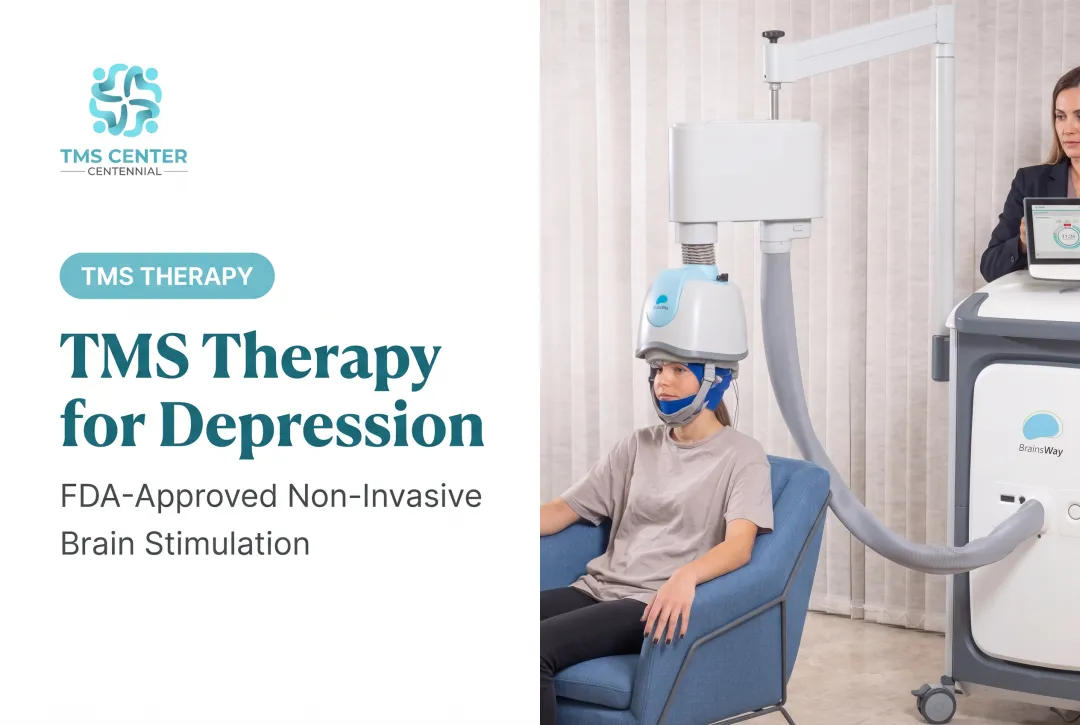
At TMS Center Centennial, a standard Deep TMS depression session takes about 30 minutes in the office.
That longer chair time is why some patients still choose standard rTMS over faster burst protocols.
Who Standard rTMS Suits Best
Standard rTMS tends to suit patients who:
- Prefer the protocol with the longest safety and efficacy track record
- Find rapid pulse bursts too intense for comfort
- Have flexible schedules and don't need the shortest possible visit
A large 2012 naturalistic study of 307 outpatients found clinician-assessed response rates of 58% and remission rates of 37.1% with standard rTMS in real-world clinical practice. That is solid evidence the original protocol still holds up outside the lab.

What Is iTBS?
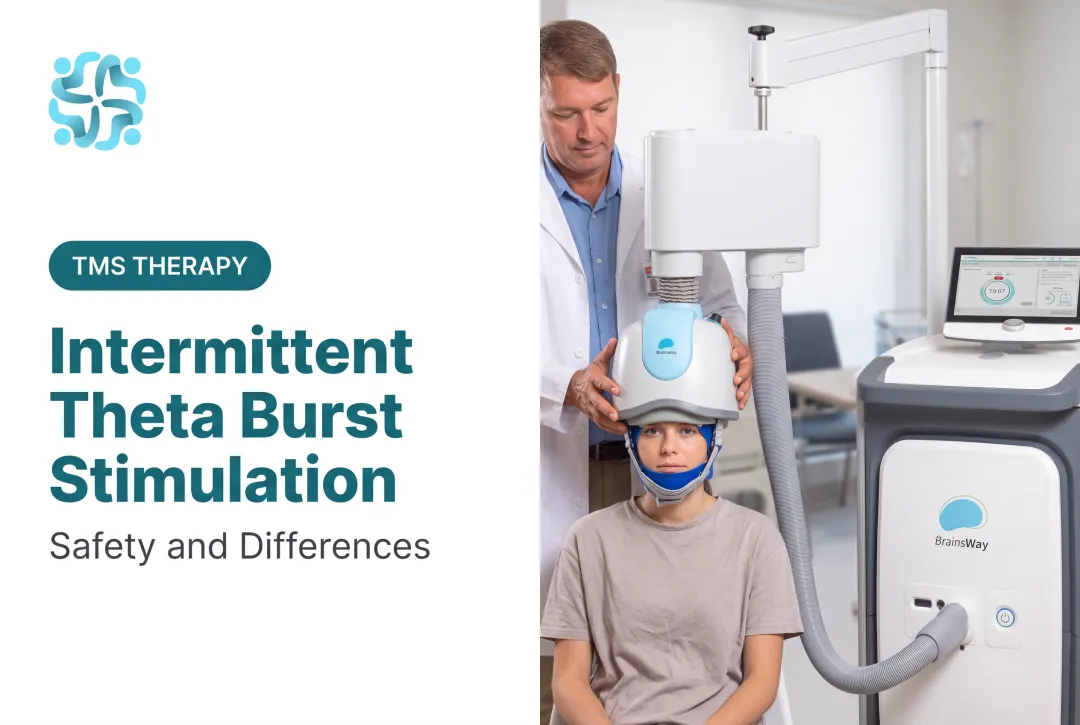
Intermittent Theta Burst Stimulation (iTBS) is a newer, patterned TMS protocol. Instead of steady single pulses, iTBS delivers rapid three-pulse bursts at 50Hz, repeated five times per second, mimicking the brain's natural theta rhythm.
The core advantage: a full stimulation dose in as little as 3 minutes, without giving up effectiveness. For patients juggling work, childcare, or long commutes, that's the difference between fitting treatment into a lunch break and rearranging an entire afternoon.
Theta burst stimulation comes in two main forms:
- iTBS (intermittent): excitatory; used in depression protocols
- cTBS (continuous): inhibitory; used when the goal is to quiet overactive brain regions
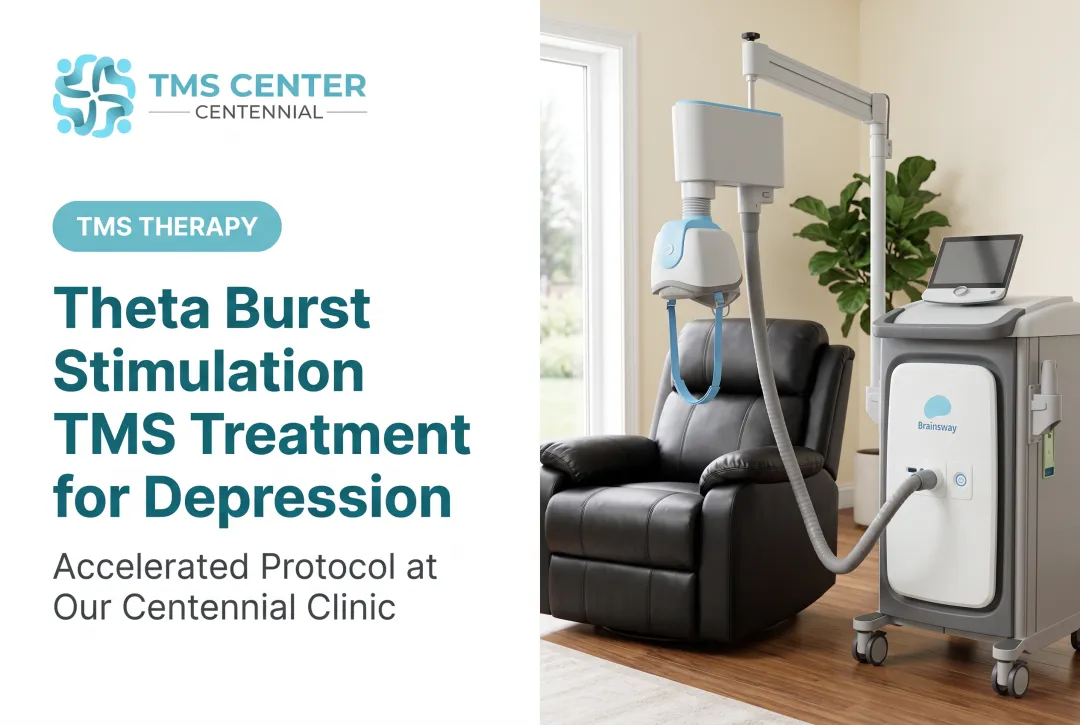
At TMS Center Centennial, theta burst stimulation is offered as an additional protocol targeting the same frontal-cortex region, at no added cost to the standard treatment plan.
Use Cases of iTBS
iTBS often fits patients who:
- Have demanding work or family schedules
- Struggle to sit still for a longer session
- Want to minimize total time away from daily responsibilities
That shorter visit still carries clinical weight. In the THREE-D trial's secondary analysis, iTBS showed a 49% response rate and 32% remission rate, compared with 47% and 27% for standard rTMS—results that held despite much shorter sessions.

iTBS vs TMS: Which Is Better for You?
Neither protocol wins on effectiveness alone. Research shows they're comparable, so the real decision comes down to three practical factors:
- Time commitment. If daily 20-40 minute sessions over six weeks don't fit your schedule, iTBS's shorter sessions may be the better fit.
- Sensation tolerance. iTBS pulses arrive in rapid, intense bursts. Some patients find this more noticeable than steady rTMS pulses, though pain scores in THREE-D were only slightly higher (3.8 vs 3.4 out of 10).
- Insurance coverage. Coverage can vary by protocol and provider, so verify your benefits before committing to a plan.
A short consultation at TMS Center Centennial can clarify which protocol fits your diagnosis, schedule, and comfort level.
Choosing Care in the Denver Area: Real Patient Outcomes
BrainsWay clinical data cited by TMS Center Centennial show 89% of patients with significant symptom reduction and about 69% achieving full remission with Deep TMS™.

Care is led by a multidisciplinary team that helps match standard TMS or theta burst to each patient:
- Dr. Cheryl Dasler, Psychiatrist
- Certified BrainsWay™ technicians supporting day-to-day treatment
The clinic accepts most major insurance plans, including Cigna, Anthem BCBS, Tricare, United Healthcare, Aetna, and most Medicare plans, which lowers a common cost barrier for TMS.
Co-founder and Clinical Director Rodney Placzek, a retired Army Sergeant Major who went through TMS in his own recovery, also brings direct experience working with veterans and active-duty patients.
Protocol choice is individualized. The clinical team weighs your diagnosis, schedule, and goals before recommending standard TMS or theta burst—not a generic default.
Ready to explore your options? Schedule a consultation with TMS Center Centennial to see whether standard TMS or theta burst stimulation fits your lifestyle and diagnosis.
Conclusion
iTBS is a faster-delivery form of the same TMS technology used in standard rTMS, not a separate competing therapy. Both offer comparable relief for depression, anxiety, and related conditions.
The real decision is practical: save time with iTBS's 3-minute sessions, or rely on the decade-plus track record of standard rTMS. Either way, a conversation with a qualified provider like TMS Center Centennial is the best next step toward choosing the right option for you.
Frequently Asked Questions
Is iTBS a form of TMS?
Yes. iTBS is a specific protocol within the broader TMS treatment category. It uses a different pulse pattern, rapid bursts instead of steady pulses, but relies on the same underlying magnetic stimulation technology.
Can TMS work after one session?
Most patients need multiple sessions over several weeks to see lasting benefits. Some report early improvements in sleep or energy within the first few days, though full results take time.
Is iTBS more expensive than standard rTMS?
Pricing is often similar since both use the same device. At TMS Center Centennial, theta burst is offered at no additional cost, though insurance coverage can differ by protocol and provider.
How do I know which protocol is right for me?
Your clinician will weigh your schedule, comfort with the pulse sensation, diagnosis severity, and insurance coverage. No single protocol is best for everyone. Across either protocol, yes, patients can continue their current medications during the TMS protocol. Most people remain on their prescribed medications throughout treatment and should stay stable on them. Keeping medications stable helps limit variables during treatment, so the clinical team can tell what is actually working. Any medication changes should be made under medical supervision, and preferably after finishing the TMS protocol rather than during it, always guided by the prescribing clinician.
What are the side effects of iTBS compared to rTMS?
Both share similar mild side effects, including scalp discomfort and headache. Clinical data shows headache rates are nearly identical (64-65%), though iTBS bursts may feel a bit more intense.
Does insurance cover iTBS treatment?
Coverage varies by insurer and plan. Verify benefits with TMS Center Centennial before you start treatment.